
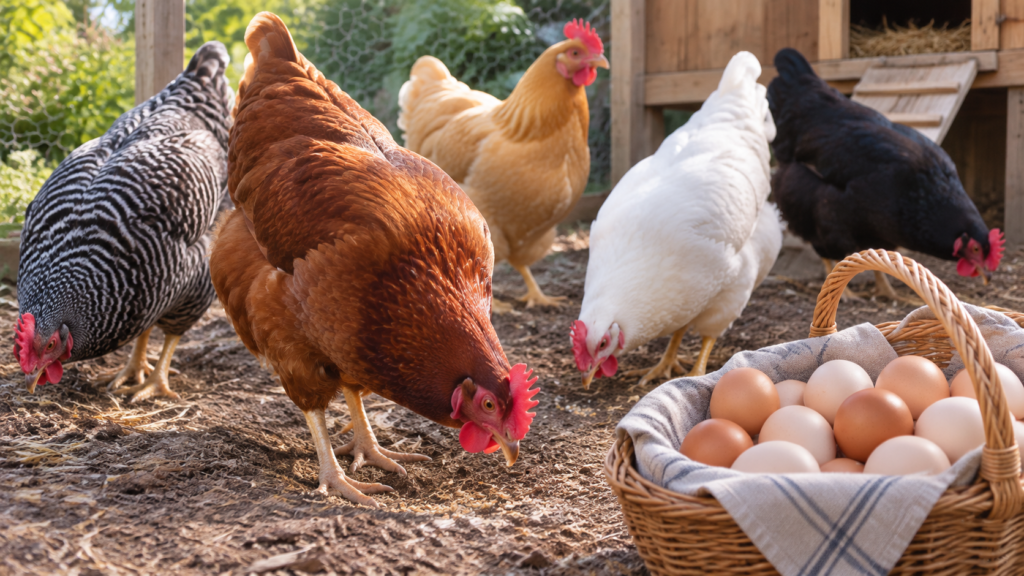
The best egg laying chickens are usually production hybrids like ISA Browns and Golden Comets, plus dependable heritage breeds such as Rhode Island Reds, Australorps, Leghorns, and Plymouth Rocks. If you want the most eggs per hen, choose a high-production hybrid; if you want a calmer backyard bird with solid laying, choose a proven heritage breed.
This guide explains which breeds lay best, how to choose the right hen for your goals, and what to expect from egg output, temperament, and care. It is for new keepers who want reliable eggs without guessing which breed belongs in their coop.
What Makes the Best Egg Laying Chickens?
Egg production is only one part of the decision. The best layers combine consistent laying, good feed efficiency, manageable temperament, and a body size that fits your coop and routine.
Some breeds are bred specifically for egg numbers, while others trade a little output for hardiness, calm behavior, or better winter performance. That matters because a hen that lays slightly fewer eggs but stays healthy and easy to handle is often the better backyard choice.
Climate, daylight, age, nutrition, and stress can change results more than breed alone. A great layer in poor conditions will still underperform, so breed selection works best when paired with solid daily care. One non-obvious tip: in small flocks, choose at least one breed known for strong laying in cooler months, so your egg basket does not collapse when daylight drops.
Best Egg Laying Chickens: Top Breeds and What They Offer
Use this list as a practical starting point, not a rigid ranking. “Best” depends on whether you want maximum egg count, beginner-friendly temperament, or a balanced backyard bird.
| Breed | Typical Egg Output | Why it matters |
|---|---|---|
| ISA Brown | Very high, often 280-320 eggs per year | One of the most reliable choices if your main goal is steady brown eggs. |
| Golden Comet | Very high, often 250-300+ eggs per year | Fast, dependable laying makes it a strong backyard egg machine. |
| White Leghorn | Very high, often 280-320 eggs per year | Excellent output with smaller body size and efficient feed use. |
| Rhode Island Red | High, often 200-280 eggs per year | Hardy, adaptable, and a classic choice for consistent backyard laying. |
| Australorp | High, often 200-280 eggs per year | Known for good production and an easygoing temperament. |
| Plymouth Rock | Moderately high, often 200-280 eggs per year | Good all-around bird for families who want decent eggs and a calm flock. |
For the highest output, start with ISA Browns, Golden Comets, or White Leghorns. For a more balanced backyard bird, Rhode Island Reds and Australorps are usually easier to live with and still lay well.
How to Choose the Best Egg Laying Chickens
Step 1: Decide your goal. If eggs are the priority, choose a production hybrid. If you want birds for both eggs and personality, lean toward Rhode Island Reds, Australorps, or Plymouth Rocks. The best breed for you depends on whether you care most about volume, calm behavior, or overall hardiness.
Step 2: Match the breed to your climate. Hot, humid climates can stress heavy-feathered birds, while cold weather affects some lighter breeds more. Ask whether the breed is known for winter resilience or heat tolerance before you buy. That single choice can change how many eggs you see across the year.
Step 3: Check flock temperament. If you are keeping chickens in a suburban yard or with children, a calmer breed often makes daily care easier. The CDC’s backyard poultry guidance is a good reminder that healthy handling habits matter as much as breed choice when you keep birds close to home.
Step 4: Plan for housing before you buy. Productive hens still need enough coop room, clean nesting boxes, and dry bedding. If the coop is too small or poorly ventilated, stress can reduce laying even in a top breed. For layout help, Cedar & Cluck’s guide on how big a chicken coop should be is a useful companion.
Step 5: Buy birds at the right age. Pullets are usually the best choice if you want eggs soon, because younger laying hens will reach production faster than chicks. According to many extension programs, most hens begin laying around 18 to 24 weeks, depending on breed and season. That timeline is normal, so patience matters.
Step 6: Feed for production, not guesswork. A layer ration with the right protein, calcium, and energy supports consistent eggs better than scraps or mixed feed. If you are still building your feeding routine, start with Cedar & Cluck’s guide on what to feed chickens so your hens get the basics right from day one.
Step 7: Expect seasonal changes. Even excellent layers often slow down in winter when daylight falls, which is normal and not always a sign of illness. Once you understand that pattern, you can judge breed performance more fairly and avoid worrying when egg baskets dip.
What Are the Best Egg Laying Chickens for Beginners?
For beginners, the best egg laying chickens are usually Rhode Island Reds, Australorps, Plymouth Rocks, and Golden Comets. These breeds are generally easier to manage than high-strung layers, while still giving you a strong egg basket.
If you want maximum egg numbers and do not mind a leaner, more active bird, White Leghorns are excellent. If you want a hen that feels easier for a first flock, a balanced brown-egg layer is often the safer choice.
| Option | Best for | What to expect |
|---|---|---|
| ISA Brown | Maximum eggs | Very steady production, but often less suited to “pet chicken” expectations. |
| Rhode Island Red | Beginners | Hardy, reliable, and easier to handle in many backyard setups. |
| Australorp | Calm flocks | Good egg output with a mellow personality and flexible housing needs. |
| White Leghorn | Efficient laying | Outstanding production, but often more active and less cuddly. |
How to Customize Your Flock Choice
For a small backyard: choose a compact, efficient layer and avoid overcrowding. Smaller flocks need birds that tolerate close quarters without becoming stressed or pecking too much. A calm breed can be more valuable than a slightly higher egg count.
For a family flock: prioritize temperament alongside egg output. Australorps and Plymouth Rocks are often easier for children to observe and handle, which makes daily care more enjoyable. A friendlier bird also tends to fit better in a mixed-purpose backyard setting.
For cold winters: pick hardy breeds that keep laying reasonably well when daylight drops. Rhode Island Reds and some production hybrids often perform better than light, delicate birds in harsher weather. You will still see a winter slowdown, but the drop may be less dramatic.
For hot climates: choose birds that handle heat well and give them shade, ventilation, and constant clean water. Lightweight breeds such as Leghorns often cope well with heat because they use feed efficiently and carry less body mass. Even then, coop airflow is essential.
For mixed eggs and meat potential: choose dual-purpose breeds like Plymouth Rocks or Rhode Island Reds. They may not match the very top egg numbers, but they give you flexibility if you want a broader backyard homestead setup. That can matter more than chasing the absolute highest count.
Best Egg Laying Chickens and What to Pair Them With
The best layers work best when the rest of your setup is built around them. Good nesting boxes, enough coop space, and a clean routine all support more consistent laying than breed alone.
If you are still deciding on setup, Cedar & Cluck’s guide to chicken nesting boxes pairs well with this topic because hens need a comfortable place to lay. You can also compare your plans with the guide on best chickens for beginners if you want a first-flock shortlist.
Common Best Egg Laying Chickens Problems and How to Fix Them
| Problem | Likely cause | Easy fix |
|---|---|---|
| Eggs dropped suddenly | Molting, winter daylight, or stress | Check season, improve routine, and confirm the birds are healthy. |
| Small eggs | Young hens or inconsistent feed | Use a complete layer feed and wait for the pullets to mature. |
| Soft-shelled eggs | Low calcium or poor nutrition | Offer a proper layer ration and free-choice oyster shell. |
| Hens not using nesting boxes | Boxes are dirty, dim, or poorly placed | Keep boxes clean, private, and easy to reach. |
| Poor egg numbers in a good breed | Overcrowding or heat stress | Improve ventilation, space, and access to water. |
| Birds look healthy but still slow down | Normal age-related decline | Expect output to taper as hens get older and plan flock replacement. |
The main lesson is that breed explains only part of the result. If laying drops, inspect feed, space, season, and health before blaming the hen.
How to Keep Best Egg Laying Chickens Productive Longer
Productive hens need consistency. A balanced layer feed, fresh water, clean bedding, and enough roost and nest space all support steadier production over time.
Keep an eye on biosecurity, too. The Penn State Extension backyard poultry guide emphasizes basic flock health practices that reduce disease risk, and disease prevention matters just as much as breed selection when you want long-term egg output.
It also helps to track your flock by age. Many hens lay best in their first two years, then gradually taper off, so a rolling replacement plan keeps your egg supply more stable than waiting until production crashes.
Frequently Asked Questions
What are the best egg laying chickens overall?
ISA Browns, Golden Comets, and White Leghorns are usually the strongest choices for pure egg output. If you want a more balanced backyard bird, Rhode Island Reds and Australorps are excellent. The best choice depends on whether you value maximum numbers or easier temperament.
How many eggs per year can a good layer produce?
Top laying breeds often produce around 250 to 320 eggs per year in good conditions. That number can drop with age, winter, heat, disease, or poor feed. Breed gives you the ceiling, but care determines how close you get to it.
Do the best egg laying chickens need a rooster?
No, hens do not need a rooster to lay eggs. A rooster is only needed if you want fertilized eggs for hatching. For eating eggs, a rooster is optional.
Do high-producing hens lay well in winter?
They often slow down when daylight gets shorter, even if they are excellent layers. Some breeds handle seasonal dips better than others, but winter decline is still common. That is why many keepers ask about flock planning before cold weather arrives.
Are hybrid layers better than heritage breeds?
Hybrid layers usually produce more eggs more consistently. Heritage breeds often offer better longevity, hardiness, or temperament, which can make them a better overall fit for some homes. Neither is automatically better; it depends on your goals.
When should I replace older hens?
Many keepers begin replacing hens when production drops noticeably, often after the second or third laying year. Some older hens still lay enough to justify keeping them, especially if you value calm flock members. A gradual replacement schedule is usually easier than a full reset.
The Right Hen Is the One You Can Keep Well
The best egg laying chickens are the ones that fit your climate, housing, and care routine, not just the breed with the biggest claim. If you match a strong layer to good feed, enough space, and realistic expectations, you will get far more eggs than breed marketing alone can promise.
If you are building your first flock or refining an existing one, Cedar & Cluck has practical guides to help you choose, feed, and house hens with confidence. Visit Cedar & Cluck for more researched backyard chicken advice.
