
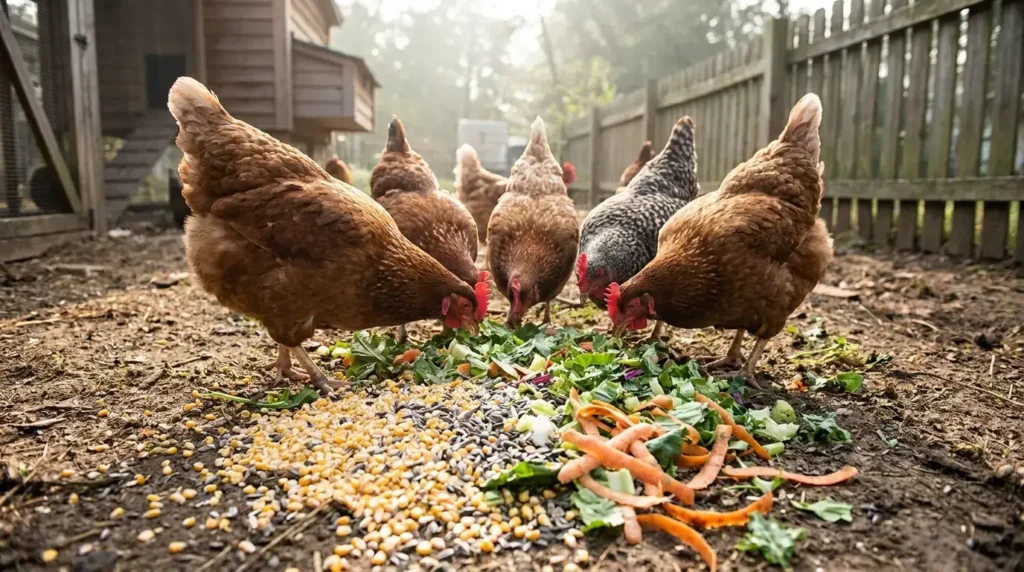
Chickens are enthusiastic omnivores that will happily peck at almost anything — but “will eat” and “should eat” are two different things. A healthy flock runs on a proper complete feed first, with foraging and treats filling in around it. Here’s exactly what to feed your chickens, what to use as treats, and the foods that are genuinely dangerous.
The quick answer
A backyard chicken’s diet should be built on:
- A complete commercial feed (the foundation — about 90% of their diet)
- Foraging — grass, weeds, bugs, and worms
- Treats and kitchen scraps in moderation (no more than 10% of their diet)
- Supplements — grit for digestion, and oyster shell for laying hens
- Constant fresh water
Get the complete feed right and the rest is enrichment. Treats are the fun part, but they should never replace the balanced feed that actually keeps hens healthy and laying.
Complete feed: the foundation of the diet
The single most important thing you feed your flock is a complete poultry feed, formulated to meet all their nutritional needs. Which one depends on age:
- Chicks (day 1 to ~18 weeks): a starter-grower feed, higher in protein for growth.
- Laying hens (18 weeks on): a complete layer feed, with the calcium and nutrients needed for strong shells and steady laying.
A common beginner mistake is treating scratch grains (cracked corn and seeds) as a main feed — it’s not. Scratch is a treat, like candy: tasty but not balanced. Keep complete feed available to your flock at all times; healthy chickens won’t overeat, taking only what they need.
Foraging: what chickens eat naturally
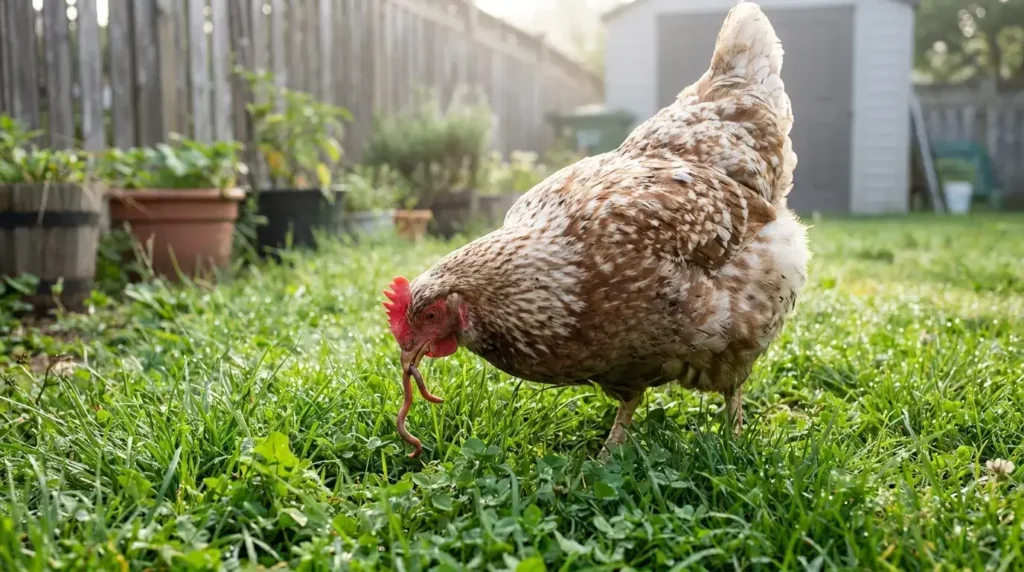
Left to roam, chickens are natural foragers and will spend their day scratching up a remarkably varied diet:
- Insects, worms, grubs, and slugs
- Grass, clover, dandelions, and weeds
- Seeds and the occasional small frog or mouse
This isn’t just food — foraging satisfies a deep instinct and keeps birds active and healthy. Free-ranging flocks eat noticeably less commercial feed, and many keepers find their eggs have deeper, richer yolks. One key point: chickens are not vegetarians. They need animal protein, which is exactly why bugs (and mealworms) are so good for them.Safe treats and kitchen scraps
Treats add variety and turn your flock into excellent food-waste recyclers. The golden rule: treats and scraps should make up no more than 10–15% of the total diet. Don’t treat your chickens as a garbage disposal — variety in moderation, on top of their complete feed.
Safe, healthy options chickens love:
- Vegetables: leafy greens, cabbage, broccoli, cucumber, cooked pumpkin, carrots, peas
- Fruits: berries, apples (no seeds), melon, bananas, grapes
- Grains: cooked rice, oats, plain cooked pasta
- Protein: mealworms, cooked lean meat scraps, scrambled eggs (cooked, never raw)
In summer heat, frozen treats like chopped berries, peas, or watermelon help cool the flock down.
Foods you should never feed chickens
Some foods are genuinely toxic and need to be kept off the menu entirely:
- Avocado pits and skins — contain persin, which is toxic to birds. (The flesh is fine.)
- Green or raw potato and peels — contain solanine, a toxin. Cooked potato is okay.
- Dried, raw, or undercooked beans — contain a compound that’s highly toxic to chickens.
- Chocolate, coffee, and anything with caffeine — toxic to birds.
- Onions in large amounts — can cause anemia.
- Moldy or spoiled food — mold can carry mycotoxins; never feed it.
- Very salty foods and junk food — chickens can’t handle much salt.
- Tomato and potato plant leaves (nightshade family) — the green parts are toxic, though ripe tomatoes are a fine treat.
- Raw eggs — safe nutritionally, but feeding them can teach hens to eat their own eggs.
When in doubt, leave it out. Chickens have some instinct to avoid bad food, but curious birds make mistakes, so don’t rely on it.
Grit and calcium: the two key supplements
Two extras make a real difference:
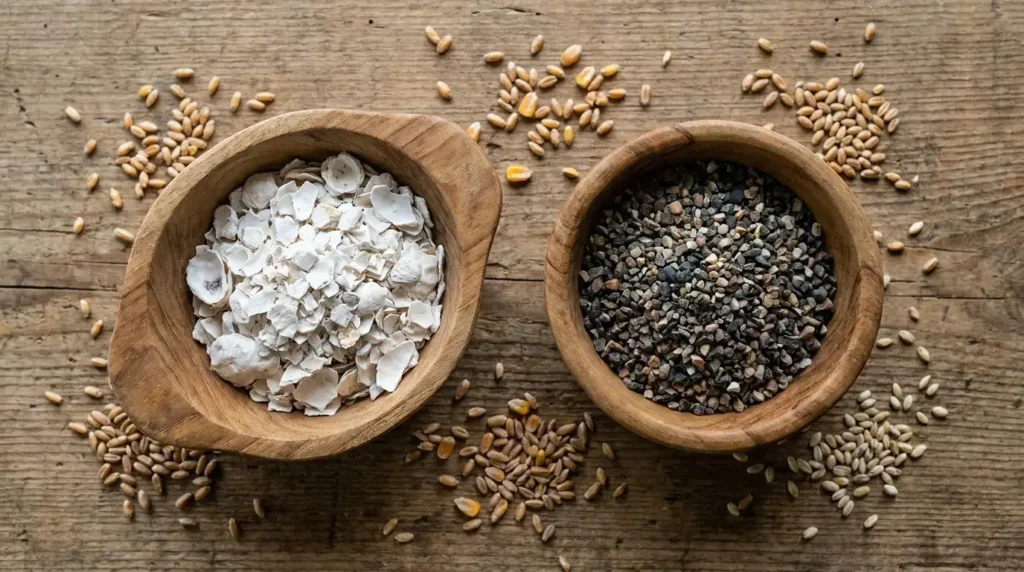
- Grit: chickens have no teeth, so they swallow small stones that sit in the gizzard and grind up food. Birds that free-range usually pick up enough naturally, but confined flocks need free-choice grit to digest properly.
- Oyster shell (calcium): laying hens need extra calcium for strong shells. Offer crushed oyster shell free-choice — separate from feed — so hens take what they need.
Don’t forget water
It’s easy to overlook, but constant access to clean, fresh water is as important as food. Hens drink a surprising amount, and even a short shortage will cut egg production fast. Refresh water daily, and more often in hot weather, keeping it cool and out of the sun.
