
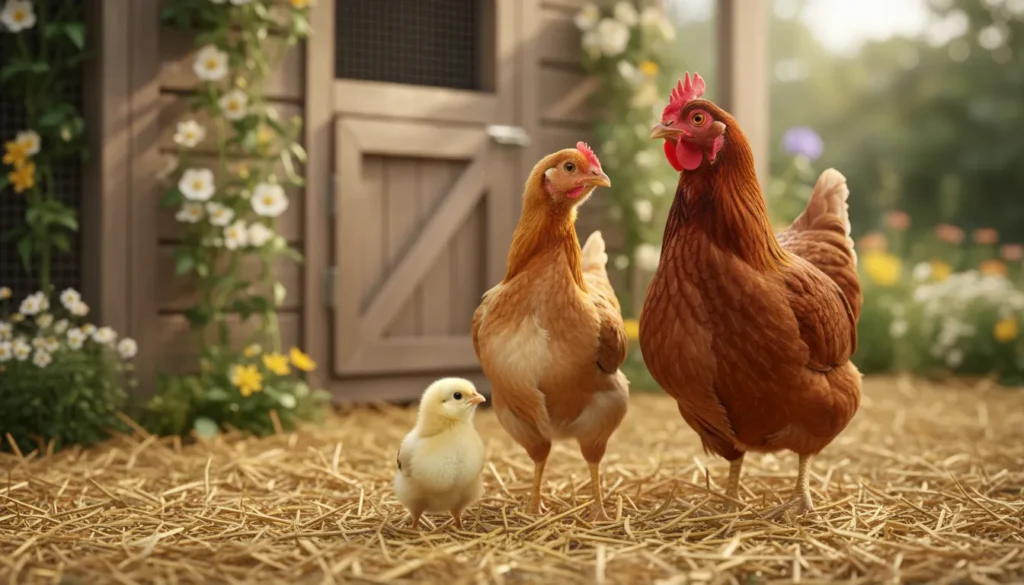
The short answer: a baby chick costs about $3 to $6, a young hen that’s almost ready to lay runs $20 to $45, and an adult laying hen goes for $15 to $40 locally. Rare breeds can cost $13 to $45 per chick.
But the price on the tag is rarely what you actually pay. Shipping, order minimums and the chance of ending up with a rooster all change the math. Below are the real numbers we pulled from hatchery price lists in October 2026, and how to decide which age to buy.
(This page is only about buying the birds. For feed, coop and the monthly running cost, see our full cost to keep chickens breakdown.)
Chicken prices at a glance (2026)
| What you buy | Typical price | Eggs start | Best for |
|---|---|---|---|
| Day-old chick, straight run (unsexed) | $3 – $5 | ~5–6 months | Cheapest start, if a rooster is OK |
| Day-old pullet chick (sexed female) | $4.50 – $6.50 | ~5–6 months | Most beginners |
| Rare / designer breed chick | $10 – $45 | ~5–6 months | Colored eggs, show birds |
| Started pullet (6–16 weeks) | $10 – $25 | 1–4 months | Skipping the brooder |
| Point-of-lay pullet (~18–20 weeks) | $20 – $45 | Weeks | Eggs fast, no chick setup |
| Adult laying hen (1–2 years) | $15 – $40 | Now | Eggs today, known temperament |
| Rooster / cockerel | $0 – $10 | n/a | Often given away free |
How much does a baby chick cost?
Common laying breeds are surprisingly cheap. At Meyer Hatchery, Buff Orpingtons, Barred Rocks, Rhode Island Reds and Black Australorps are all listed at $4.72 per chick right now, and their brown-egg assortment is on sale for about $3.32. Cackle Hatchery prices a Buff Orpington at $4.49 straight run or $5.99 for a sexed pullet when you order 1–4 birds.
The price drops as you order more. At Cackle that same Buff Orpington pullet falls from $5.99 (1–4 birds) to $5.46 (10–14) to $4.77 (25–49). So if a neighbor wants chicks too, place one order together.
Rare breeds are a different story. Marans that lay chocolate-brown eggs run $10 to $13 a chick, and showpiece breeds like Swedish Flower Hens or Jubilee Orpingtons go for $29 to $44 each.
Straight run vs pullets vs cockerels
- Straight run means the chicks haven’t been sexed. Expect roughly half to be roosters. It’s the cheapest option per bird but not per hen.
- Pullets are sexed as female. They cost about $1 to $1.50 more per chick. Sexing is around 90% accurate, so one “pullet” in ten may still start crowing.
- Cockerels are males and the cheapest of all, often under $3.
Here’s the math most people miss: if you want four hens, four straight-run chicks at $4.49 likely give you about two. You’d need eight to be fairly sure of four hens, which costs more than four pullets at $5.99, and you’d still have to rehome the roosters. If your town bans roosters, always buy pullets. Not sure what you’ve got? Here’s how to tell a hen from a rooster.
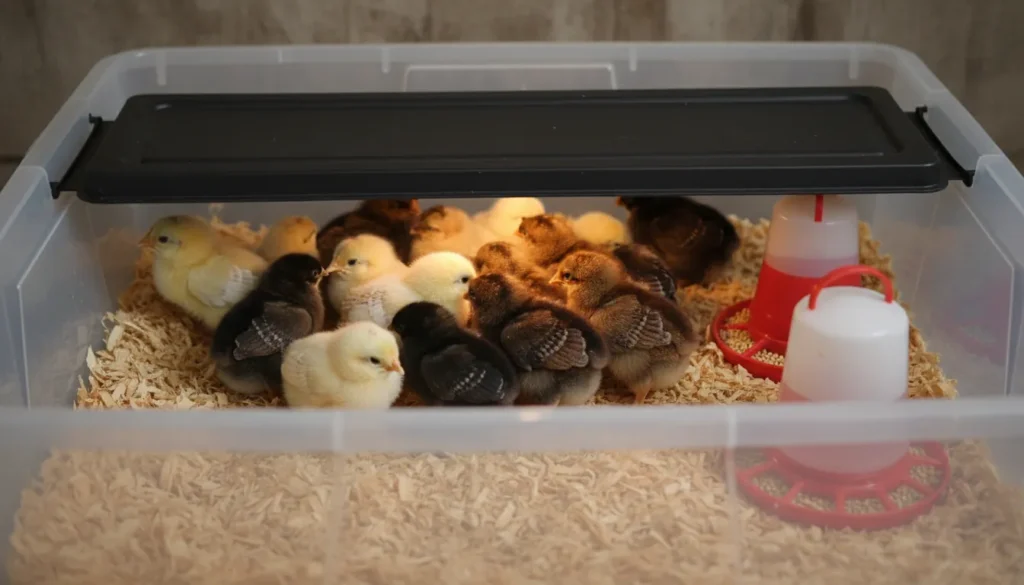
How much is a started pullet or point-of-lay hen?
A started pullet is a young female, usually 6 to 16 weeks old, that’s past the fragile chick stage. A point-of-lay pullet is around 18 to 20 weeks and should lay her first egg within a few weeks.
- Local farms: started pullets often run $10 to $25 each. One Ohio farm lists 17-week pullets at $11.75 each for 10 to 24 birds.
- Online hatcheries: point-of-lay pullets were selling for about $35 to $46 each in mid-2026 before shipping.
It looks expensive next to a $5 chick, but you skip the brooder, the heat plate, chick starter feed and four months of waiting. For a family that wants 4 to 6 hens and eggs this season, started pullets are often the better deal. They’re also certain to be female, since they’re old enough to sex by sight.
How much does an adult laying hen cost?
Adult hens mostly sell locally, through farm stores, breeders, Facebook Marketplace and Craigslist, for $15 to $40. Hens over two years old are sometimes free or a few dollars, since their laying slows down.
The upside is eggs right away and a bird whose temperament you can see before buying. The downside is that you don’t know her history. Before you pay:
- Ask her age. A hen’s best laying years are her first two (see how long chickens live).
- Check for bubbly or wet nostrils, wheezing or swollen eyes, which are signs of a respiratory infection.
- Look under the feathers near the vent for mites or lice.
- Quarantine her for 30 days before she meets your flock. Our guide to introducing new chickens covers how.
Where to buy chickens (and what each costs you)
Online hatcheries
Best breed choice by far, and you can order sexed pullets. Chicks ship by USPS the day they hatch; they live off the yolk for the first couple of days, which is why they survive the trip.
| Hatchery | Common-breed chick | Smallest order | Good to know |
|---|---|---|---|
| Meyer Hatchery (Ohio) | $4.72 – $4.98 | 3 chicks (Apr–Nov), 8 (Dec–Mar) | Ships all year; free GroGel with 3+ chicks |
| Cackle Hatchery (Missouri) | $4.49 straight run / $5.99 pullet | 3 birds | Big heritage-breed list; ships Feb–Oct |
| Murray McMurray (Iowa) | Check the site | 6 (May–Sep), 15 (Apr), 25 (Jan–Mar) | Oldest big name; small orders only in warm months |
Prices are for common breeds in small quantities, checked October 2026. They change with season and sales.
Watch the shipping. On a small order of 3 to 6 chicks, shipping and any small-order fee can cost more than the birds themselves. Always check the total in your cart before you choose a hatchery based on the chick price alone.
Farm stores (Tractor Supply and others)
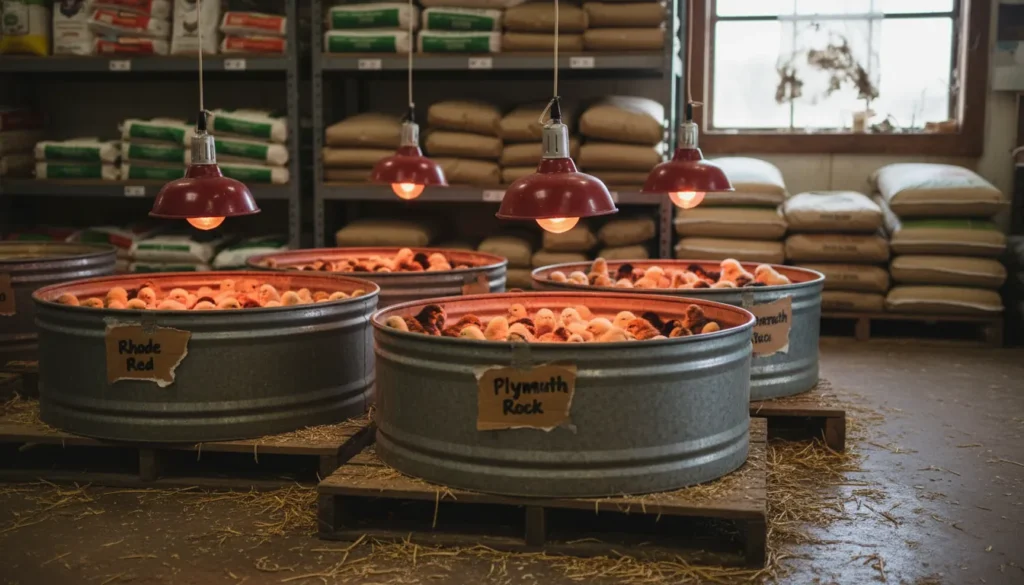
During “Chick Days” (roughly mid-February to late April), Tractor Supply and other farm stores sell chicks in-store, usually around $2 to $4 each with a minimum of about 6. There’s no shipping and you pick your birds by eye. The trade-off is a small breed selection and mostly straight-run bins, so roosters are common. Call your local store for this year’s dates and prices.
Local breeders and farms
The best place for started pullets and adult hens, and often for unusual breeds without shipping stress. Prices vary widely. Ask whether the flock is NPIP-certified (a free USDA program that tests for pullorum and avian flu), which is a good sign the breeder takes health seriously.
Facebook Marketplace and Craigslist
Cheapest for adult hens and free roosters. Also the riskiest. You’re buying an unknown bird from an unknown flock, so the health checks and 30-day quarantine above aren’t optional.
Which age should you buy?
- Want the cheapest start and enjoy raising babies? Buy pullet chicks from a hatchery or farm store. You’ll also need a brooder setup, so read what to feed baby chicks and when chicks can go outside.
- Want eggs this season with less fuss? Buy started or point-of-lay pullets from a local farm.
- Want eggs tomorrow? An adult hen, as long as you quarantine her first.
- Want a specific color of egg or a rare look? Order from a hatchery, and budget $10 to $45 per chick.
Not sure which breed? Our chicken breed finder narrows it down in a minute, and our list of the best chickens for beginners covers the easy-going ones.
Sample budgets: what 5 hens actually cost
| Route | Birds | Extra setup | Rough total |
|---|---|---|---|
| 5 pullet chicks, hatchery | 5 × $5.99 = $30 | Shipping + brooder, heat plate, starter feed (~$60–$120) | $90 – $150+ |
| 6 straight-run chicks, farm store | 6 × $3 = $18 | Brooder setup (~$40–$100); expect ~3 roosters to rehome | $60 – $120 |
| 5 started pullets, local farm | 5 × $15–$25 = $75–$125 | None, straight to the coop | $75 – $125 |
| 5 adult hens, local | 5 × $15–$40 = $75–$200 | Quarantine space | $75 – $200 |
Notice how close the totals are once the brooder is counted. That’s why started pullets are underrated for first-time keepers. Still deciding how many to get? Read how many chickens a beginner should start with, then make sure your coop fits them: here’s the size you need for 6.
Common questions
How much does a chicken cost at Tractor Supply?
Usually around $2 to $4 per chick during spring Chick Days, with a minimum of about 6 chicks. Prices and breeds vary by store, so call ahead.
Is it cheaper to buy chicks or hens?
Chicks are cheaper per bird. Once you add brooder equipment, chick feed, the risk of roosters and four to five months with no eggs, the gap mostly closes. Started pullets are often the best value overall.
Can I buy just one or two chickens?
From a hatchery, usually not, because the minimum is 3 to 6 chicks so they keep each other warm in transit. Locally you can buy any number. But chickens are flock animals, so plan on at least three.
How much is a live chicken for meat?
Broiler chicks like Cornish Cross run about $3 to $4 each from a hatchery. Raising one to butcher weight costs far more in feed than the chick itself.
