
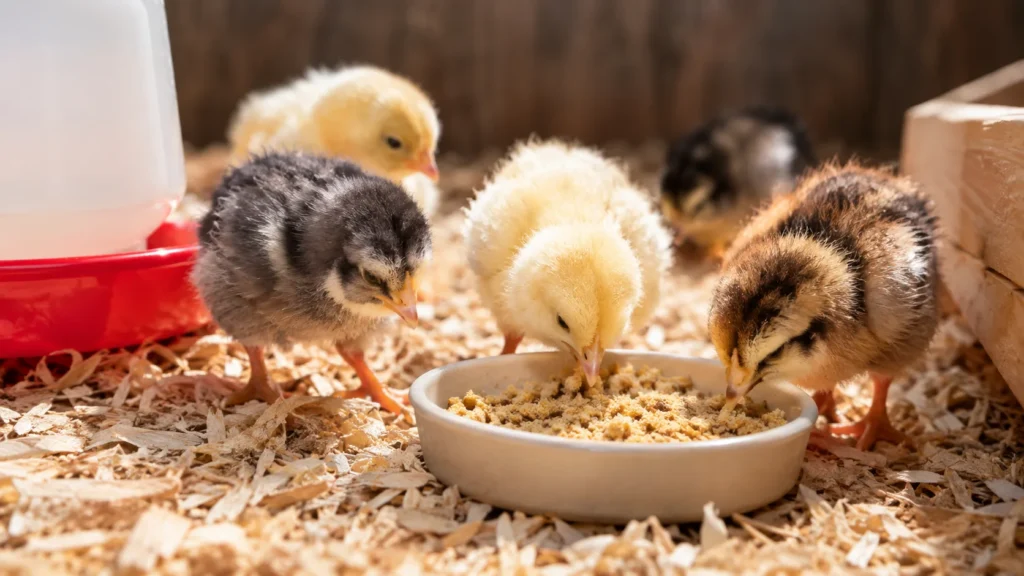
Newborn chickens should eat a complete chick starter feed made for baby poultry, with clean drinking water available at all times. Do not feed newborn chicks layer feed, scratch grains, treats, or kitchen scraps because their growing bodies need a carefully balanced diet with the right protein, vitamins, and minerals.
This guide explains what to feed newborn chickens from hatch day through the first several weeks, how to set up feed and water, and how to spot common feeding problems. It is written for new backyard keepers caring for chicks under a brooder, whether the chicks came from a hatchery, feed store, or home incubator.
Why Does Newborn Chicken Nutrition Matter So Much?
Newborn chicks grow rapidly during their first weeks, developing feathers, bones, muscles, organs, and immune defenses at the same time. A complete chick starter ration supplies concentrated nutrition in a form small chicks can easily eat. It is usually higher in protein than adult chicken feed and is formulated for early growth.
Chicks do not need a varied menu at this stage. Their main food should be chick starter, not a mix of grains or homemade ingredients. Even healthy foods for adult chickens can dilute the balanced nutrition chicks need when they make up more than a tiny portion of the diet.
One useful expert tip is to check the feed label for the intended age range and medication status before opening the bag. If chicks were vaccinated against coccidiosis, ask the hatchery or seller whether medicated feed is appropriate, because some medicated products can interfere with specific vaccination programs.
What to Feed Newborn Chickens: The Essential Setup
| Item | Amount or specification | Why it matters |
|---|---|---|
| Chick starter feed | Complete crumble formulated for chicks, available free-choice | Provides balanced protein, energy, vitamins, and minerals for early growth. |
| Fresh water | Clean, room-temperature water in a shallow chick drinker; refresh at least daily | Supports digestion, circulation, and temperature regulation while reducing contamination risk. |
| Chick feeder | Low, stable feeder that several chicks can use without climbing inside | Keeps feed accessible and reduces spilled or soiled food. |
| Brooder temperature | Warm, draft-free brooder with space to move away from the heat source | Chicks cannot regulate body temperature well and may stop eating when chilled. |
| Grit | Usually unnecessary when chicks eat only commercial starter; offer chick-sized grit if treats are introduced | Helps grind foods that are not already soft and digestible, but it does not replace balanced feed. |
| Clean bedding | Dry, nonslip bedding changed or refreshed when wet or heavily soiled | Reduces dirty feed and water while helping prevent foot and respiratory problems. |
Place the feeder and drinker where chicks can find them easily, but not directly beneath the heat source. Keep them on a stable surface, and use a drinker designed for chicks rather than a deep bowl in which a chick could become wet or trapped.
Starter crumble is generally easier for newborn chicks to handle than pellets. Follow the product label rather than guessing at a daily ration, because chicks normally need continuous access to feed during this fast-growing stage.
How to Feed Newborn Chickens Step by Step
Prepare the brooder first: Set up the brooder, bedding, heat source, feeder, and drinker before the chicks arrive. The space should be warm, dry, protected from drafts, and large enough for chicks to move between the warm area and a cooler area. A chick that cannot escape the heat cannot regulate its comfort.
Choose the right starter: Buy a fresh, complete chick starter made for the type of chicks you are raising. Check the label for feeding instructions, protein information, expiration or freshness details, and whether it is medicated. The Merck Veterinary Manual’s poultry nutrition guidance explains why poultry diets must be matched to the bird’s age and production stage.
Show them the water: When chicks arrive, gently dip the tip of each beak into the water once, then let the chick lift its head and swallow. Do not force water into the beak, which can cause aspiration. Keep the drinker filled with clean water and check it several times during the first day.
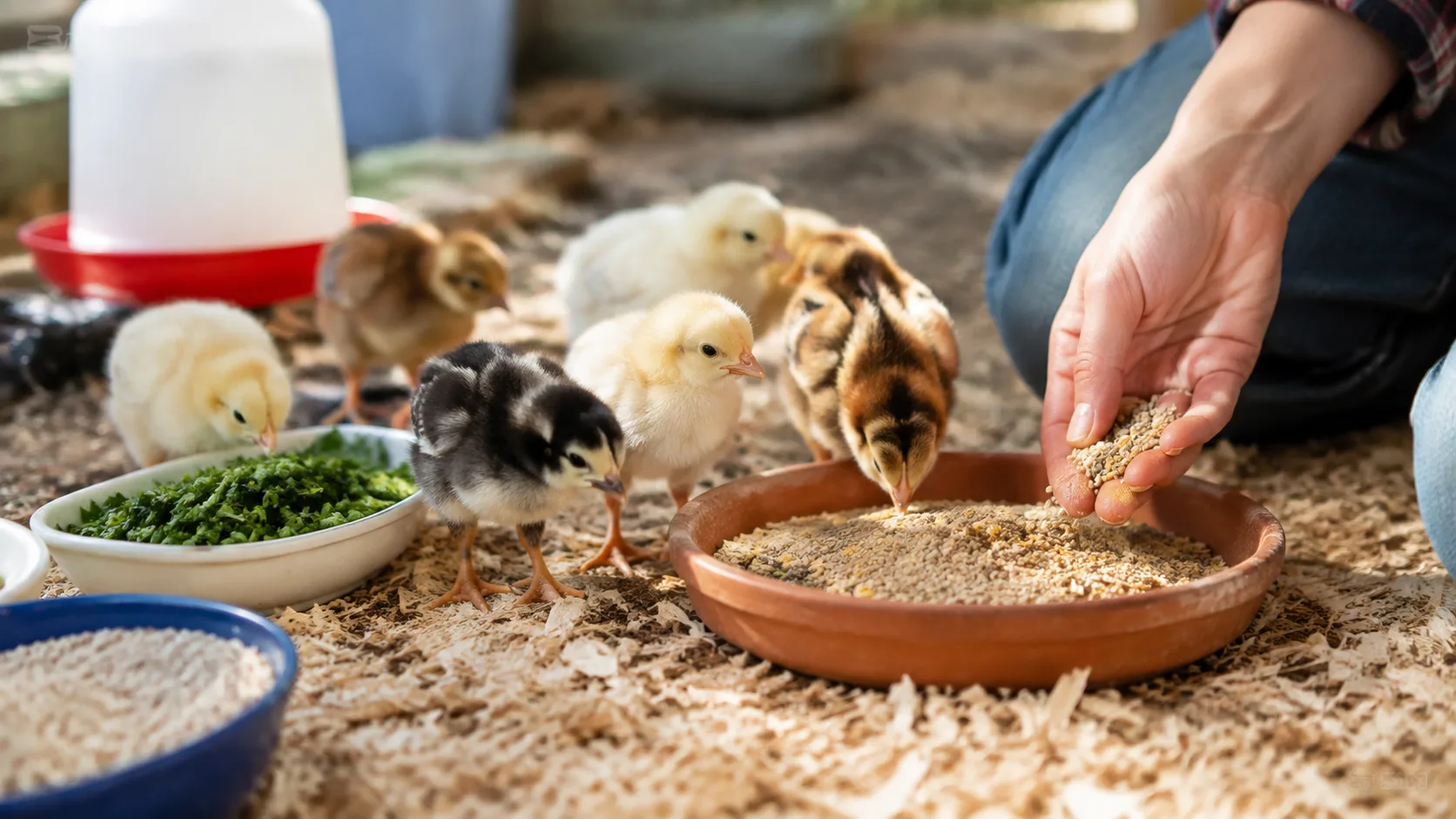
Make the feed easy to find: Put starter crumble in a shallow feeder or a clean lid designed for poultry use. You can tap the feed lightly with one finger to attract attention, but avoid scattering large amounts into bedding. Once chicks are eating confidently, keep feed available rather than limiting meals.
Keep feed dry and clean: Replace starter that becomes wet, moldy, or heavily contaminated with droppings. Store the unopened bag in a cool, dry place and close the container after each use. Never mix fresh feed into a container holding old, damp feed without cleaning it first.
Watch chick behavior: Healthy, comfortable chicks periodically eat, drink, walk, rest, and explore. Constant loud peeping and tight huddling can indicate cold, while chicks avoiding the heat, panting, or spreading their wings may be too warm. Adjust the brooder environment before assuming a food problem.
Introduce extras slowly: During the earliest days, skip treats altogether. If you later offer a small amount of an appropriate food, keep chick starter as the main diet and provide chick-sized grit when needed. The University of Minnesota Extension’s small-scale poultry guidance is a useful reference for managing chicks and young poultry.
People Also Ask: Can Newborn Chickens Eat Anything Besides Starter Feed?
Newborn chickens can survive and grow well on complete chick starter and clean water without any additional food. For the first several weeks, there is no nutritional need to add fruit, vegetables, bread, rice, mealworms, or scratch grains. Extra foods can fill small crops while reducing intake of the balanced feed they need.
| Option | Best for | What to expect |
|---|---|---|
| Complete chick starter | All newborn chicks | Should provide the primary diet and normally be available free-choice. |
| Chick-sized grit | Chicks that receive occasional treats or forage | Supports grinding of coarse foods; it is not a substitute for minerals or starter feed. |
| Soft cooked egg | Rare supplemental food for a weak or recovering chick, with professional guidance when illness is suspected | Offers an easily eaten food, but should never displace starter or delay veterinary care. |
| Greens, fruit, grains, or scraps | Older chicks only, in small amounts | May be offered later as enrichment, but can cause nutritional imbalance when introduced too early. |
How to Customize the Feeding Plan for Different Chicks
For hatchery chicks: Assume they need a complete starter immediately unless the seller gives different written instructions. Keep shipping stress in mind during the first day by making water easy to find and minimizing handling. Check each chick individually for alertness, a clean vent, and access to warmth.
For chicks hatched at home: Leave a newly hatched chick in the incubator until it is dry and fluffy before moving it to the prepared brooder. The chick can usually eat and drink after settling in because it has absorbed nutrients from the yolk before hatch. Avoid opening the brooder repeatedly just to offer food by hand.
For broiler chicks: Use feed labeled for the bird’s purpose and follow the manufacturer’s schedule. Meat-type birds grow faster than laying breeds, so choosing a feed designed for their growth stage is especially important. Do not increase portions with treats because rapid, uneven growth can create health challenges.
For layer-breed pullets: Use chick starter during the early growing period, then change to an appropriate grower or developer feed according to the label. Do not switch to layer feed simply because the chicks are female; excess calcium intended for laying hens is not appropriate for young birds.
For a chick that seems weak: First correct access to warmth and water, then confirm that the crop area is receiving feed. Separate a struggling chick only if it is being trampled or bullied, and keep the separate space warm and easy to clean. Weakness, breathing difficulty, persistent diarrhea, or inability to stand calls for prompt advice from a poultry veterinarian.
Related Chick Care for a Strong Start
Nutrition works best when the environment is equally well planned. Before chicks become pullets, review this practical starter plan for how many chickens a beginner should start with so you can match flock size to available space, time, and budget.
As the birds grow, their housing needs change quickly. Use this guide to choosing the right coop size for six chickens to plan adequate room, ventilation, roosting space, and protection before the young birds move outdoors.
Keep the transition gradual. Chicks should not move outside merely because they have feathers; they also need suitable weather, secure housing, and enough body size to remain warm and safe.
Common Newborn Chicken Feeding Problems and How to Fix Them
| Problem | Likely cause | Easy fix |
|---|---|---|
| Chicks are not eating | They cannot find the feeder, are chilled, or are stressed after transport | Improve warmth, place feed at chick level, gently demonstrate the crumble, and monitor each chick. |
| Chicks are drinking very little | Waterer is too high, dirty, cold, or difficult to access | Use a shallow chick drinker, refresh the water, and dip each beak gently without forcing liquid. |
| Feed is scattered everywhere | Feeder is too full, too light, or easy for chicks to climb into | Use a stable feeder, fill it less deeply, and keep it at the appropriate height. |
| Wet bedding around the drinker | Leaking drinker, spilled water, or a drinker placed directly on bedding | Raise it slightly on a stable platform, replace leaks, and remove damp bedding promptly. |
| Chicks have pasty material around the vent | Stress, temperature problems, dehydration, or digestive upset | Check brooder conditions, soften and clean the material gently, and seek veterinary advice if it persists. |
| Chicks have diarrhea or appear depressed | Illness, contaminated feed or water, stress, or unsuitable treats | Remove questionable food, provide clean starter and water, isolate if necessary, and contact a poultry veterinarian. |
| One chick is pushed away from feed | Overcrowding, weak condition, or bullying | Add feeder space, check brooder size, and give the chick safe access to warmth, water, and feed. |
Do not diagnose a serious illness from appetite alone. Young chicks can deteriorate quickly, so a chick that is weak, cold, unable to drink, struggling to breathe, or repeatedly separated from the group needs prompt assessment rather than a parade of home remedies.
How to Store Chick Feed and Maintain a Clean Feeding Area
Keep chick starter in its original labeled bag or a clean, food-safe container with a tight lid. Store it off the floor in a cool, dry location away from rodents, insects, moisture, and household chemicals. Buy quantities your flock can use while the feed is still fresh rather than keeping a large bag for many months.
Wash and dry drinkers regularly, and clean feeders whenever they become wet or visibly dirty. Water contamination is easy to miss because bedding, dust, and droppings can enter a low container. The USDA Food Safety and Inspection Service poultry safety information reinforces the importance of cleanliness and preventing contamination around poultry and poultry products.
As chicks grow, check whether the feeder is still comfortable to use and whether the brooder has become crowded. A clean feeding area, fresh feed, and reliable water supply often prevent more problems than adding supplements.
Frequently Asked Questions
What is the best food for newborn chickens?
The best food is a complete chick starter crumble formulated for the chicks’ species and age. It should be the main food available throughout the day, with clean water beside it. Avoid relying on grains, scraps, or homemade diets.
Do newborn chickens need food immediately after hatching?
Newly hatched chicks can usually go a short time without eating because they absorb nutrients from the yolk before hatch. Once they are dry and placed in the brooder, provide starter and water promptly. Chicks shipped or separated from the hen should have easy access as soon as they arrive.
Can newborn chicks eat layer feed?
No. Layer feed is formulated for mature hens producing eggs and generally contains more calcium than growing chicks need. Feed newborn chickens chick starter, then use the appropriate grower feed before switching to layer feed near the start of laying according to the product label.
Should newborn chickens have grit?
Chicks eating only commercial starter usually do not need supplemental grit because the feed is already processed for digestion. Offer chick-sized grit if you begin giving coarse treats or allow access to natural ground. Never use large grit intended for adult chickens.
Can newborn chickens eat mealworms or vegetables?
They do not need treats, mealworms, vegetables, fruit, bread, or grains during the newborn stage. These foods can be introduced sparingly when chicks are older, but starter should remain the nutritional foundation. Always provide appropriate grit when offering foods that require grinding.
How long should chicks eat starter feed?
Most chicks remain on starter for several weeks, followed by a grower or developer ration until they approach laying age or market weight. The exact timing depends on breed, purpose, and the feed manufacturer’s directions. Check the label and make changes gradually rather than switching repeatedly.
Give Your Chicks the Simple Start They Need
The answer to what to feed newborn chickens is reassuringly straightforward: complete chick starter, clean water, a clean feeding setup, and a properly managed brooder. Resisting early treats and supplements protects the balanced nutrition that supports steady growth.
Watch behavior, keep supplies fresh, and respond quickly when a chick cannot eat or drink normally. For more practical, researched guidance as your flock grows, visit Cedar & Cluck and build your chicken-keeping routine one confident step at a time.
