
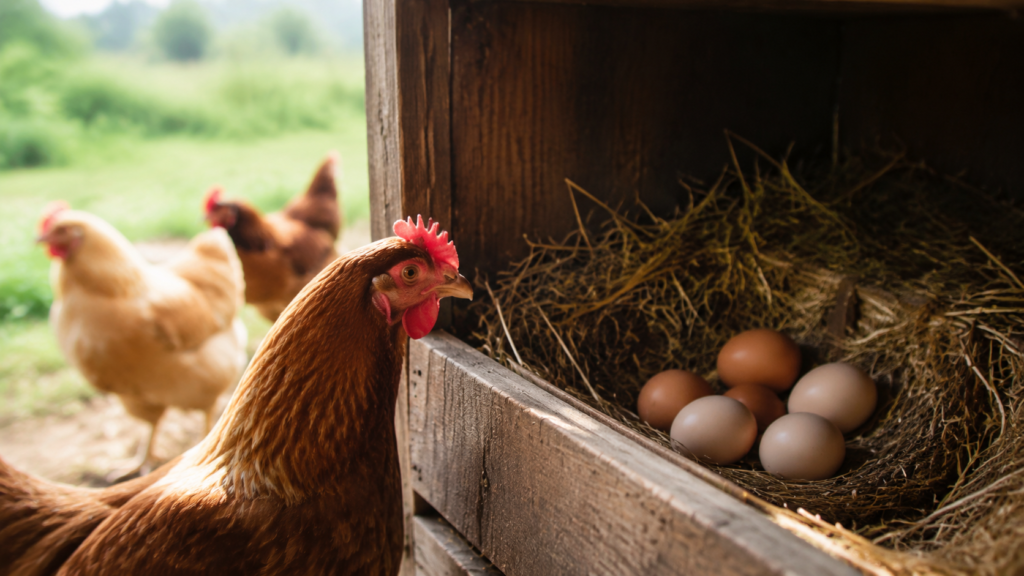
Most chickens start laying eggs between 18 and 24 weeks old, but the exact timing depends on breed, season, nutrition, daylight, and overall health. Some early maturing pullets may lay at 16 weeks, while slower-developing breeds may not begin until 28 weeks or later.
This guide explains when chickens start laying eggs, what signs to watch for, and how to support a healthy first lay. It is written for new backyard chicken keepers who want a realistic timeline and practical next steps instead of guesswork.
What Makes Chickens Start Laying Eggs?
Egg laying begins when a pullet reaches sexual maturity, which is a mix of age, body development, and environmental cues. Age matters, but a bird also needs enough body weight, a functioning reproductive system, and usually more daylight to trigger regular laying.
Breed plays a big role. Light breeds such as Leghorns often mature sooner, while heavier dual-purpose breeds may take longer to get started and may lay a little less frequently at first.
Nutrition and stress matter just as much as genetics. A hen that is underfed, overcrowded, or constantly disturbed can delay her first egg even if she is old enough.
One expert tip that surprises many new keepers: a pullet can look fully grown weeks before her reproductive system is ready, so comb size and body shape are often better clues than age alone.
When Do Chickens Start Laying Eggs: The Core Timeline
If you want the short answer, use this rule of thumb: expect first eggs around 18 to 24 weeks, then watch for gradual consistency over the next month or two. Early eggs are often small, oddly shaped, or laid irregularly at first.
The table below shows the most useful markers to track rather than relying on age alone.
| Marker | Typical Range or Spec | Why it matters |
|---|---|---|
| Age | 18 to 24 weeks for many breeds | Gives you the most basic estimate for the first egg window |
| Breed type | Light breeds often earlier; heavy breeds often later | Genetics strongly influence maturity speed and early production |
| Comb and wattles | Redder, fuller, and warmer-looking | Signals hormonal change and readiness to lay |
| Pelvic spacing | Wider spacing between pubic bones | Shows the body is preparing for egg passage |
| Vent area | Moist, larger, and more elastic | Another practical sign that laying may be close |
| Daylight exposure | About 14 hours or more is often supportive | Light helps trigger regular laying once the bird is mature |
| Feed quality | Complete grower or layer ration with balanced protein and calcium | Supports healthy development and later shell formation |
For background on reproductive development in poultry, the Merck Veterinary Manual’s poultry reproduction overview is a useful reference. It reinforces the idea that laying begins when the bird is mature enough and conditions are favorable, not just because she has reached a certain birthday.
How to Tell a Pullet Is Close to Laying
Watch the comb: A pullet near lay usually develops a brighter red comb and wattles. The change is gradual, and it often happens before the first egg appears.
Check her body shape: The abdomen becomes fuller and softer, and the space between the pelvic bones widens. This is one of the most reliable hands-on clues for beginners.
Observe behavior: Birds close to laying may spend more time exploring nest boxes, squatting when approached, or acting restless in the late afternoon. They may also start singing a louder “pre-lay” voice.
Review the diet: Keep a complete ration available and avoid too many snacks or scratch grains. The first eggs are easier on a bird that has had steady nutrition during growth.
Keep the coop calm: Stress from predators, overcrowding, or frequent handling can slow the process. Clean housing and predictable routines help pullets settle into laying more quickly.
Be patient with the first few eggs: Early eggs are often tiny, soft-shelled, or irregular. That does not automatically mean something is wrong; it usually means the hen is still finding her rhythm.
Use daylight wisely: Natural light helps signal the reproductive system, but avoid trying to force a young pullet into production too early. Let her mature at a healthy pace.
Do All Chickens Start Laying Eggs at the Same Age?
No, even birds raised together can begin laying at noticeably different times. Breed, hatch date, body condition, and season all influence when each pullet reaches maturity.
A hatch in early spring may reach laying age during longer daylight, while a late-summer hatch may wait through shorter days before starting. The result is that two healthy pullets of the same age can be weeks apart in their first eggs.
| Option | Best for | What to expect |
|---|---|---|
| Early-maturing light breeds | Keepers who want sooner eggs | Earlier first lay, often with smaller birds and lighter eggs |
| Dual-purpose breeds | Mixed backyard flocks | Moderate start time and steady, practical production |
| Heavy breeds | Keepers focused on hardiness and size | Later first eggs, but often calm temperaments and robust bodies |
| Late-season pullets | Flocks raised into autumn | First eggs may be delayed by shorter days and cooler weather |
How to Adapt the Timeline for Different Birds
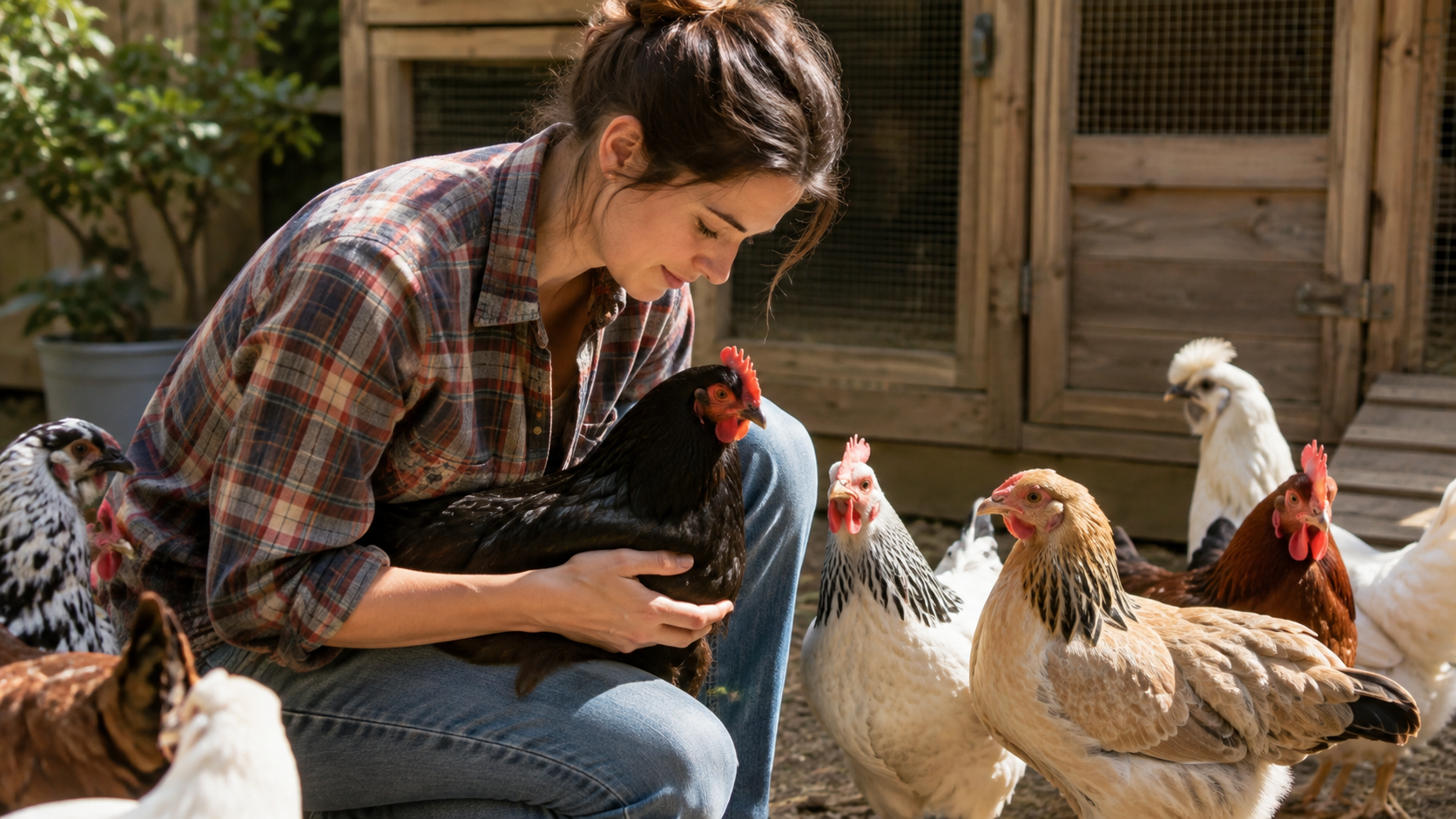
For a small backyard flock: Keep track of each hen individually instead of treating the flock as one unit. One bird may start laying while her flockmates wait several more weeks, and that is normal.
For heavier heritage breeds: Expect patience to pay off. These birds often mature more slowly, but they usually become dependable once they settle in.
For spring chicks: A spring hatch often reaches maturity during strong daylight, which can support a smoother start. Make sure the pullets are well grown before giving them layer feed.
For autumn pullets: First eggs may arrive more slowly because shortening days can delay steady production. In that case, focus on good body condition and wait for nature to do the rest.
For first-time keepers: Choose birds known for early, reliable laying if you want a simpler experience. The best chickens for beginners and the best egg laying chickens guides can help you match breed choice to your goals.
What to Pair With First-Egg Prep
First eggs go more smoothly when the coop, nest boxes, and feeding setup are ready before the pullets mature. Nest boxes should be available before laying starts, but they do not need to be fancy; they just need to be quiet, clean, and easy to access. If you are still setting up, the guide to chicken nesting boxes explains practical sizes and placement.
It also helps to know the long-term costs and care involved, because first eggs are only one part of a healthy flock. If you are budgeting for feed, bedding, and routine supplies, see how much it costs to keep chickens for a realistic breakdown.
Common When Do Chickens Start Laying Eggs Problems and How to Fix Them
| Problem | Likely cause | Easy fix |
|---|---|---|
| No eggs by 24 weeks | Breed maturity, short daylight, or delayed body development | Wait a few more weeks, confirm nutrition, and watch for physical laying signs |
| Small or odd-shaped eggs | New layer adjusting her reproductive cycle | Monitor only; early irregular eggs are often temporary |
| Soft-shelled eggs | Low calcium, stress, or immature shell gland | Use a balanced ration and provide oyster shell once birds are laying |
| Eggs laid on the floor | Boxes unavailable, hidden, or unattractive | Improve nesting boxes and keep them dark, dry, and inviting |
| Pullet acts ready but no eggs | Close to maturity but not quite there | Give her another one to three weeks and keep stress low |
| One bird lays, others do not | Normal variation among flockmates | Track each hen separately and avoid assuming a problem |
When in doubt, start with the basics: feed, water, daylight, space, and calm housing. Most first-lay delays are management or maturity issues, not emergencies.
How to Support Healthy First Lays Over Time
Once laying begins, consistency matters more than speed. Keep feed fresh, water clean, and the coop dry so pullets can settle into a regular pattern without avoidable stress. The USDA APHIS backyard poultry guidance on biosecurity emphasizes basic cleanliness and limiting exposure to outside disease risks, which helps protect overall flock health.
Use the first month of laying to observe rather than intervene too much. If a young hen is eating well, acting alert, and laying occasional eggs, she is usually developing normally. If production stops abruptly or you see signs of illness, investigate promptly instead of assuming it is just age or weather.
As the flock matures, routine maintenance keeps the egg cycle smoother. Regular coop cleaning, enough nesting space, and a balanced diet all support dependable laying through the year.
Frequently Asked Questions
At what age do chickens start laying eggs?
Most chickens start laying between 18 and 24 weeks old. Some breeds begin earlier, and some heavier breeds need a few extra weeks.
What are the first signs that a chicken is about to lay?
Look for a redder comb, a fuller body, squatting behavior, and interest in nest boxes. These changes often show up before the first egg.
Do chickens need a rooster to lay eggs?
No, hens lay eggs without a rooster. A rooster is only needed if you want fertilized eggs for hatching.
Why is my chicken old enough but still not laying?
Common reasons include breed differences, short daylight, stress, poor nutrition, or simple immaturity. Check those factors before assuming something is wrong.
Are the first eggs usually small?
Yes, early eggs are often smaller and sometimes misshapen. Egg size usually increases as the hen settles into a regular cycle.
Should I switch to layer feed before the first egg?
Usually no, not until your pullets are actively nearing lay or have started laying. Younger birds generally do better on a grower or flock feed until they are ready for the extra calcium in layer ration.
A Calm Start to the First Eggs
When do chickens start laying eggs? For most backyard hens, the answer is 18 to 24 weeks, with breed, season, and care shaping the exact timing. If you watch for the physical signs and keep the flock well fed and low-stress, the first eggs usually arrive without drama.
For practical help at every stage, keep learning with Cedar & Cluck and explore more beginner-friendly chicken guides at https://cedarandcluck.com/.
