
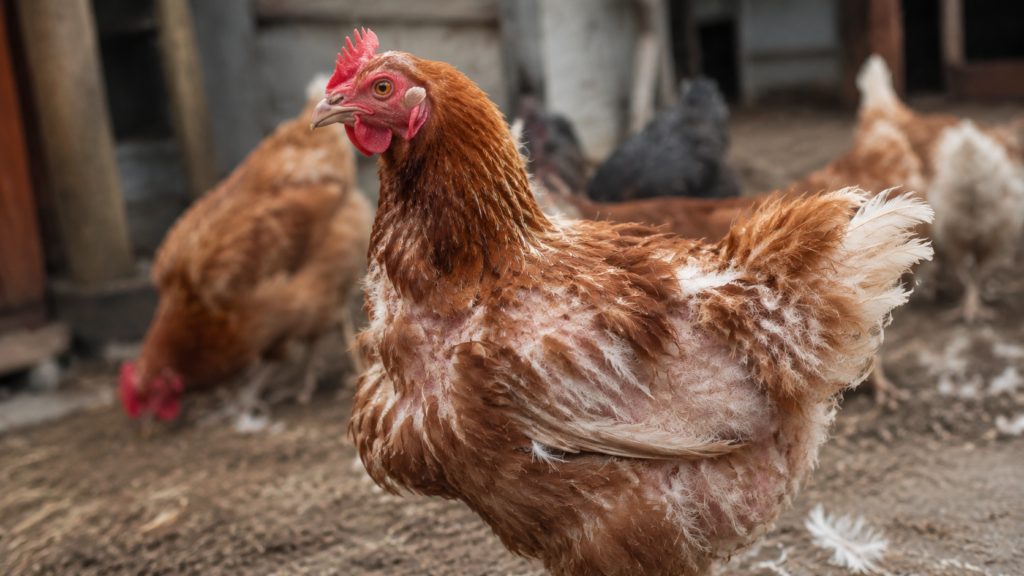
You can tell if a chicken is molting when she loses old feathers and grows new pin feathers, often with a sudden drop or stop in egg laying. Normal molt usually starts around the head and neck, then moves down the body, and the bird may look patchy, ragged, or temporarily half-plucked while still acting alert and eating.
This guide explains how to tell if a chicken is molting versus sick, bullied, broody, or parasite-infested. It is written for backyard chicken keepers who want a practical way to identify molt, support feather regrowth, and know when feather loss needs closer attention.
Why Does a Chicken Molt?
Molting is a natural feather-renewal cycle. Feathers wear out from sun, dust bathing, preening, roosting, mating, and weather, so chickens periodically shed older feathers and replace them with stronger new ones.
Most adult hens molt once a year, often in late summer or fall as daylight shortens. Egg production commonly slows because both eggs and feathers require protein, minerals, and energy, and a hen’s body prioritizes feather replacement during molt.
A useful expert tip: judge molt by the combination of feather loss pattern, pin feathers, and laying changes rather than feather loss alone. A hen with bare skin but no pin feathers, scabs, or broken feather shafts may have a different problem.
How to Tell If a Chicken Is Molting: The Practical Checklist
The easiest way to identify molt is to look for several signs at the same time. A single missing patch of feathers may be pecking, rooster damage, or mites, but a molting hen usually shows a whole-body pattern of feather replacement and a clear change in egg production.
| Sign to check | What you should see | Why it matters |
|---|---|---|
| Feather loss pattern | Starts around head and neck, then shoulders, back, wings, and tail | Normal molt usually follows a sequence instead of one random bald patch |
| Pin feathers | Short, waxy, quill-like new feathers emerging through the skin | Pin feathers confirm replacement growth, not just feather damage |
| Egg production | Fewer eggs or a complete pause for several weeks | Molting hens often redirect nutrients from laying to feather growth |
| Behavior | More quiet, less social, but still alert, eating, and drinking | Mild withdrawal is normal, but true lethargy can signal illness |
| Skin condition | Pink or pale skin without wounds, crusts, or heavy irritation | Healthy skin points toward molt; scabs or redness suggest pecking or parasites |
| Season and age | Adult bird, often over 16-18 months old, especially in fall | Age and daylight changes make molt more likely |
| Flock pattern | Several adult hens may molt within the same season, not always together | A seasonal flock-wide slowdown supports a molt diagnosis |
A hard molt can look dramatic, with a hen dropping many feathers quickly and looking thin or ragged within days. A soft molt is subtler, with gradual feather replacement that you may notice only from extra feathers in the coop and fewer eggs in the nest boxes.
How to Tell If a Chicken Is Molting Step by Step
Check the calendar: Start with season and age. Molt is most common in mature hens during late summer and fall, especially when days get shorter. Pullets in their first laying season may shed some juvenile feathers, but a full adult molt is more typical after they have laid for several months or a year.
Look at the feather pattern: Pick up the bird gently or watch her while she dust bathes. Molt often begins at the head and neck, then moves toward the back, wings, and tail. Random bare patches on the lower back, vent, or shoulders can happen during molt, but they can also point to rooster wear, mites, or pecking.
Find pin feathers: Part the feathers with your fingers and look for short, stiff, tube-like new feathers. They may look like little white or gray quills and can be tender, so avoid squeezing or rough handling. Pin feathers are one of the strongest signs that feather loss is part of a normal replacement cycle.
Compare egg records: If you track eggs, look for a drop that lines up with feather loss. A hen that normally lays five eggs a week may slow to one or none during a serious molt. If egg laying stops without feather loss, the cause could be daylight, age, stress, broodiness, illness, or nutrition.
Watch eating and energy: A molting hen may act a little moody, avoid being handled, or spend more time resting, but she should still eat, drink, and move normally. The University of Georgia Extension notes that molt is strongly tied to lighting and reproductive rest, which is why laying changes are expected. A chicken that is hunched, refusing feed, breathing hard, or isolating completely deserves closer evaluation.
Inspect for parasites: Check the vent area, under wings, and around the neck for crawling mites or lice, egg clusters at feather bases, scabs, or dark specks. Parasites can mimic molt by causing feather loss and irritation. If you see bugs, treat the birds and coop rather than assuming it is just seasonal shedding.
Check flock dynamics: Watch from a distance for feather pecking, bullying at feeders, or a rooster repeatedly treading one hen. Pecking often leaves broken feathers, red skin, and one targeted location. Molt tends to produce dropped whole feathers and new growth across several areas.
Recheck weekly: Take a quick note or photo every seven days. In a normal molt, you should see gradual new feather growth even if the hen still looks scruffy. Lack of regrowth, worsening wounds, weight loss, or severe listlessness means it is time to investigate beyond molt.
What does a molting chicken look like?
A molting chicken can look anything from slightly untidy to shockingly bare. Some hens lose only a few feathers at a time and keep a smooth outline, while others drop tail feathers, neck feathers, and wing feathers quickly enough to look sick even when they are going through a normal molt.
| Option | Best for | What to expect |
|---|---|---|
| Soft molt | Hens with gradual feather turnover | Extra feathers in the coop, dull plumage, mild laying slowdown |
| Hard molt | Older hens or strong seasonal molts | Sudden ragged look, tail loss, obvious bare spots, egg pause |
| Partial molt | Birds responding to stress or minor daylight shifts | Localized shedding and patchy replacement without a complete body reset |
| Abnormal feather loss | Parasites, pecking, rooster damage, illness, poor diet | Broken shafts, wounds, irritated skin, no clear pin feather regrowth |
During the ugliest stage, pin feathers may make the bird look spiky or porcupine-like. That stage is uncomfortable for the hen, so handle her gently and avoid stroking against the direction of feather growth.
How to Adapt Molt Care for Different Chickens
For a hard-molting hen: Give her a little extra space and minimize handling while pin feathers are growing. A hard molt can be tender, and rough handling may break blood-filled developing feathers. Keep feed consistent and make sure she is not being pushed away from the feeder.
For a soft-molting hen: Do not assume she needs a major management change just because she looks a little rough. Check that she is eating well, that new feathers are coming in, and that her skin looks calm. Soft molts are easy to miss, especially in fluffy breeds.
For older hens: Expect molts to be longer and egg recovery to be slower. Older birds may need more time to rebuild feathers and return to laying, and some will lay fewer eggs afterward than they did before. Support them with steady nutrition rather than trying to force production.
For mixed-age flocks: Remember that not every bird will molt at the same time. Pullets may keep laying while older hens stop, which can make the flock look inconsistent. Track individual birds when possible so one hen’s normal molt is not confused with a flock-wide health issue.
For cold-weather molts: Pay extra attention to drafts and roosting comfort. Chickens can tolerate cold well when dry and sheltered, but a bird missing many feathers has less insulation. Do not heat the coop aggressively; instead, block drafts, keep bedding dry, and reduce stress.
Feeding, Coop Setup, and Daily Care During Molt
Feather regrowth is protein-heavy, so this is a good time to review the flock’s main ration. A complete layer feed is often still appropriate, but some keepers temporarily switch adult non-laying hens to a slightly higher-protein flock raiser while offering oyster shell separately for birds that are still laying. For a practical feeding refresher, see Cedar & Cluck’s guide to what to feed chickens.
Avoid overloading the flock with scratch grains, corn, bread, or low-protein treats during molt. Treats dilute the protein, vitamins, and minerals birds need to build strong feathers. If you offer extras, keep them small and choose nutrient-dense options such as mealworms in moderation, black soldier fly larvae, or small amounts of cooked egg.
Coop comfort matters because molting birds are more sensitive to stress and weather. Make sure roosts are smooth, bedding is dry, ventilation is good, and there is enough space for lower-ranking hens to avoid bullies. If you are questioning whether crowding is contributing to feather damage, review this guide on how big a chicken coop should be.
Common Molting Problems and How to Fix Them
| Problem | Likely cause | Easy fix |
|---|---|---|
| No egg laying for weeks | Normal molt and shorter daylight | Keep feed consistent, reduce stress, and wait for feather regrowth |
| Bare red patches with peck marks | Flock bullying or overcrowding | Add space, extra feeders, visual barriers, and separate injured birds if needed |
| Feather loss around vent | Lice, mites, or feather picking | Inspect after dark, treat parasites if found, and clean bedding |
| Broken feathers on back | Rooster wear or repeated mating | Use a hen saddle, reduce rooster pressure, or separate temporarily |
| Pin feathers bleeding | Broken blood feather | Apply gentle pressure, isolate if others peck, and seek veterinary help for heavy bleeding |
| Molting hen losing weight | Not eating enough, illness, or bullying | Observe feeding access, weigh weekly, and evaluate for disease if appetite is poor |
| No new feather growth | Poor nutrition, parasites, stress, or incorrect diagnosis | Improve diet, check skin closely, and reassess after one to two weeks |
When in doubt, separate observation from panic. A ragged but bright-eyed hen with pin feathers and a good appetite is usually molting; a dull, thin, wounded, or parasite-covered bird needs more than routine molt support.
Long-Term Molt Maintenance
Most molts last 6 to 12 weeks, though the range can be shorter or longer depending on age, breed, daylight, nutrition, and overall health. Keep notes on when each hen starts losing feathers, when pin feathers appear, and when egg laying resumes. These records help you recognize each bird’s normal pattern next year.
The Merck Veterinary Manual describes molt as part of the normal avian feather replacement process, with feather growth affected by nutrition, health, and environment. That is why long-term maintenance is less about quick fixes and more about steady feed quality, clean housing, parasite prevention, and low-stress flock management.
After the molt, expect feathers to look cleaner, smoother, and brighter. Egg production may return gradually, especially as daylight increases, but older hens may not come back to their previous peak. That does not mean molt harmed them; it often means the bird is aging normally.
Frequently Asked Questions
How long does chicken molting last?
Most backyard hens molt for about 6 to 12 weeks. A soft molt may pass quickly and almost unnoticed, while a hard molt can take longer and cause a complete pause in egg laying.
Do chickens stop laying eggs when they molt?
Many hens stop laying during molt because feather growth requires a lot of protein and energy. Some hens only slow down, especially during a mild molt, but a full egg pause is common and usually temporary.
Is molting painful for chickens?
Shedding old feathers is not usually painful, but growing pin feathers can be tender. Avoid unnecessary handling, do not pull loose-looking feathers, and keep other birds from pecking at new feather growth.
Can chickens molt in spring or summer?
Yes, chickens can molt outside the typical fall season, especially after stress, illness, a change in lighting, broodiness, or a disruption in feed. However, heavy spring or summer feather loss should be checked carefully for parasites, bullying, or rooster damage.
What should I feed a molting chicken?
Feed a balanced complete ration and avoid filling the diet with low-protein treats. Some keepers use a higher-protein flock feed during molt and provide oyster shell separately for any hens still laying.
When should I worry about feather loss?
Worry if the chicken is lethargic, losing weight, has wounds, shows irritated skin, has visible mites or lice, or has no pin feather regrowth. Feather loss with normal appetite, alert behavior, and new feathers coming in is more likely to be molt.
Helping Your Hen Through the Scruffy Season
The key to how to tell if a chicken is molting is to look for the full pattern: seasonal feather loss, pin feathers, a laying slowdown, and a hen that still eats and acts reasonably alert. Molt can look messy, but it is usually a healthy reset rather than an emergency.
Give your birds good feed, dry housing, gentle handling, and a little patience while they grow their new coat. For more practical backyard chicken guidance, visit Cedar & Cluck and keep building confidence one flock habit at a time.
