
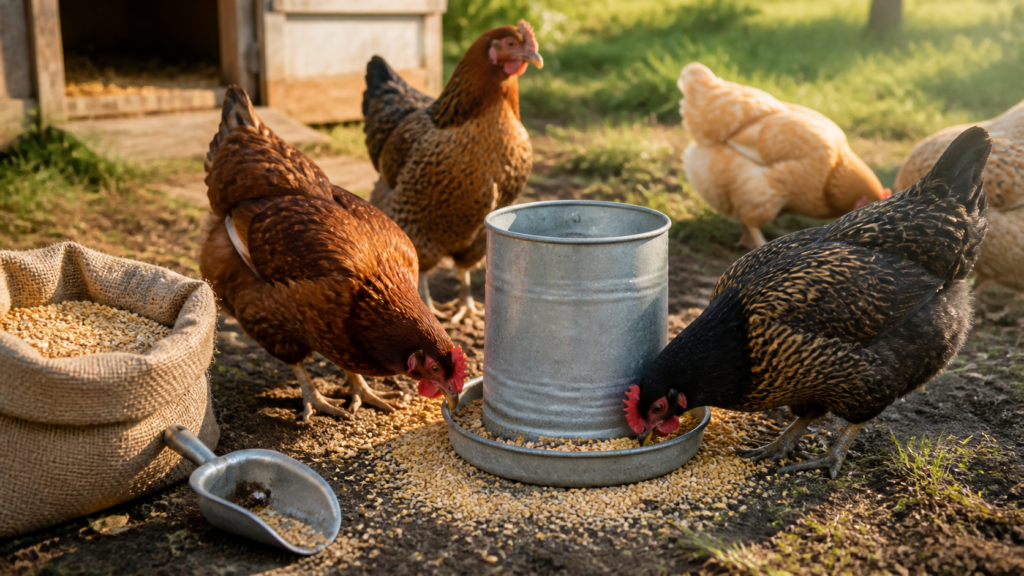
How much feed does a chicken eat per day? Most adult laying hens eat about 1/4 pound of complete feed daily, or roughly 1.5 to 2 ounces, though larger breeds, cold weather, and birds with higher egg production may need a little more. Roosters, young pullets, and heavy dual-purpose breeds can differ, so the best answer is to watch body condition and egg output, not just the feeder level.
This guide explains exactly how to estimate daily feed intake, how to adjust amounts for age and season, and how to tell whether your flock is getting too much or too little. It is written for beginner and intermediate chicken keepers who want practical feeding numbers they can use right away.
What Makes How Much Feed Does a Chicken Eat Per Day Vary?
A chicken is not a fixed-size machine, so daily feed intake changes with breed, age, temperature, activity, and whether the bird is laying eggs. A small Leghorn usually eats less than a large Orpington, and a hen in peak lay often eats more than a bird that is molting or slowing down in winter.
Feed type matters too. A balanced layer feed is dense in nutrients, so chickens usually eat until their nutrient needs are met, not until they feel “full” in a human sense. If the feed is diluted with scratch grains, kitchen scraps, or treats, they may eat more total volume while getting less nutrition.
The smartest approach is to use average intake as a starting point, then adjust based on the flock’s body condition, egg production, and leftover feed. One non-obvious tip: if feed use suddenly rises, check for spillage and hidden pests before assuming your chickens are just hungrier.
How Much Feed Does a Chicken Eat Per Day: The Core Plan
For most backyard laying hens, plan on about 1/4 pound of complete layer feed per bird per day. That equals about 1.75 pounds per week per hen, or about 50 pounds per month for a flock of eight hens. Younger birds, large breeds, and birds in colder climates may run above that range.
| Chicken type | Daily feed amount | Why it matters |
|---|---|---|
| Small laying hen | 1.5 to 2 oz | Helps prevent overfeeding while still covering egg production needs |
| Average laying hen | 2 to 2.5 oz | Good planning number for most backyard flocks |
| Large breed hen | 2.5 to 3 oz | Big birds burn more energy and need more total nutrients |
| Rooster | 2 to 2.5 oz | Less than a laying hen in many cases because he is not producing eggs |
| Growing pullet | Varies by age and feed stage | Young birds need the right grower feed, not just a smaller adult portion |
If you are buying feed in bulk, a good rule is to estimate based on the number of adult birds and then add a small buffer for weather and waste. For example, 6 hens at 2.25 ounces each need about 13.5 ounces per day, or just under 60 pounds per month.
Step-by-Step: How to Measure Feed for Your Flock
Step 1: Count your birds accurately: Start with the number of birds actually eating from the feeder. Chicks, growers, laying hens, roosters, and older hens may need different feed amounts, so do not use one number for every chicken in the coop.
Step 2: Match the feed to the age group: Use starter feed for chicks, grower feed for juveniles, and layer feed for hens that are actively laying. Penn State Extension notes that chickens should be fed according to life stage because nutrient needs change as they grow and begin producing eggs.
Step 3: Measure a known daily amount: Put out a measured quantity for 2 to 3 days instead of filling the feeder to the top. This lets you see how much is actually eaten versus spilled, scratched out, or spoiled.
Step 4: Check body condition: Feel along the breast and keel area. A healthy bird should feel firm and well covered, not sharp-boned or overly padded, and feed amount should be adjusted if birds are losing weight or becoming round and inactive.
Step 5: Observe egg production: If hens are laying well and staying in good condition, your feed amount is probably close. If production drops and the birds look thin, increase access to complete feed before blaming the coop or nesting boxes.
Step 6: Account for weather and activity: Chickens usually eat more in cold weather because they burn energy to stay warm. In hot weather, they may eat a bit less, so make sure feed is fresh and water stays available at all times.
Step 7: Reduce waste at the feeder: Use a feeder height that keeps birds from scratching feed onto the ground. Clean feeder edges, keep feed dry, and avoid overfilling, because waste can make it look like your flock is eating far more than it really is.
How Much Feed Does a Chicken Eat per Day When You Compare Feeding Options?
The right answer depends on whether you are feeding a flock for eggs, growth, or simple maintenance. Complete feed should always be the base, while treats and extras should stay limited so they do not replace key nutrients.
| Option | Best for | What to expect |
|---|---|---|
| Measured free-choice layer feed | Most adult laying hens | Simple, stable intake and easier egg production tracking |
| Portioned daily feed | Small flocks or new keepers | Helps you learn true intake and spot waste early |
| Feed plus heavy treats | Occasional enrichment only | More risk of nutrient imbalance and lower egg consistency |
| Mixed grains and scraps | Supplemental use only | Useful as extras, but not a substitute for complete feed |
For most backyard flocks, free-choice complete feed with controlled treats is the most reliable setup. It gives birds room to meet their needs without forcing you to guess their intake every hour of the day.
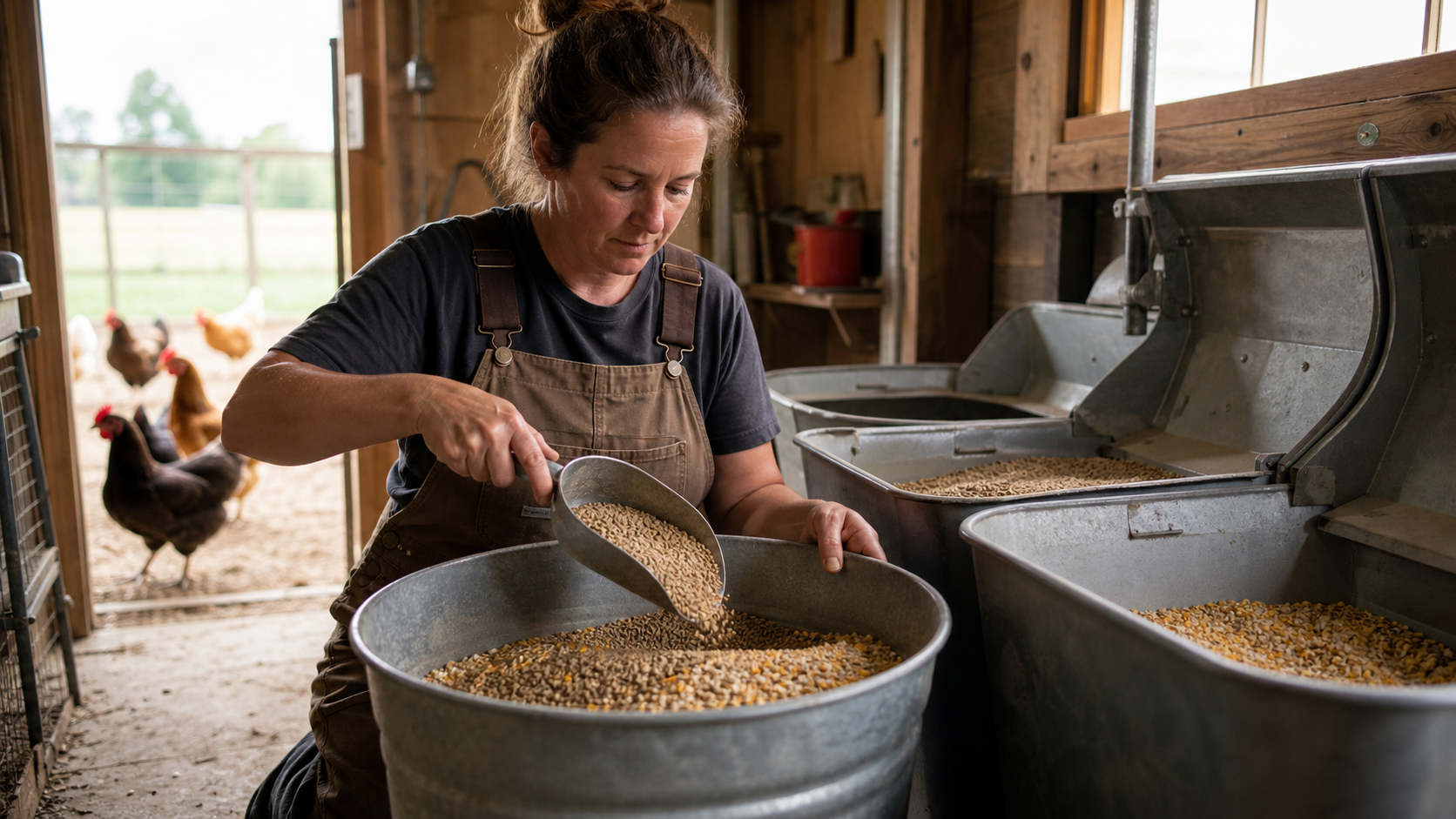
Customization: Adjusting Feed for Real-World Flocks
For a small flock: If you keep just 3 to 5 hens, measuring feed daily is the easiest way to spot trends. Small flocks can waste less food if you use a feeder sized to the group instead of a large container that stays half-full for days.
For large or heavy breeds: Birds like Plymouth Rocks, Orpingtons, and Brahmas often eat more than lean, lighter breeds. Give them a little extra room in the feeding plan and watch whether they finish cleanly without gaining too much fat.
For winter feeding: Expect feed use to rise when temperatures fall. You can support the flock with slightly more complete feed and enough protein, but do not overload them with scratch grains just to “help them stay warm.”
For hot climates: Chickens may eat less during the hottest part of the day. Offer fresh feed in the cooler morning hours and keep water shaded and clean so lower appetite does not turn into dehydration or reduced laying.
For backyard layers with treats: Treats should stay small, because they can distort your feeding math fast. Keep extras to no more than about 10% of the diet so you are still measuring the true amount of complete feed the birds consume.
Related Feeding and Coop Advice to Pair With This Plan
Daily feed numbers make more sense when you also know what belongs in the diet and what should stay out of it. If you want a complete basics guide, start with what to feed chickens so you can match the right feed type to your birds’ age and purpose.
Feed management also connects to the coop. Birds that are overcrowded or stressed often waste feed, peck more aggressively, and convert nutrients less efficiently, so it helps to review how big a chicken coop should be when you are planning the rest of the setup.
Common Feed Problems and How to Fix Them
| Problem | Likely cause | Easy fix |
|---|---|---|
| Feed disappears too fast | Spillage, wild birds, or extra birds eating it | Raise the feeder, reduce overflow, and block access by pests |
| Hens stop laying and seem hungry | Nutrient imbalance or too many treats | Return to complete layer feed and cut back extras |
| Birds leave feed behind | Feed is stale, too dusty, or birds are getting too much | Refresh the feed and measure smaller amounts |
| Thin birds despite eating | Parasites, illness, or competition at the feeder | Check health, add feeding space, and isolate weaker birds if needed |
| Fat hens with poor laying | Too much grain or too many calorie-dense treats | Reduce extras and keep the diet centered on complete feed |
| Feed gets wet or moldy | Open feeder placement or poor storage | Move feed to a dry area and store it in sealed containers |
The big picture is simple: if feed use looks off, do not assume the birds are all eating normally. Check the feeder, the feed quality, the flock’s health, and the amount of waste before changing the ration.
Storage and Maintenance Tips for Chicken Feed
Feed stays useful only if it stays fresh. Store it in a dry, rodent-resistant container with a tight lid, and keep bags off the floor so moisture does not wick upward into the feed. If feed smells musty, looks clumped, or has visible mold, discard it rather than trying to salvage it.
The USDA advises keeping animal feed protected from contamination and moisture, and that is especially important for backyard poultry where one spoiled bag can affect the whole flock. Rotate feed so older bags are used first, and buy only what you can reasonably use before the expiration date.
Clean feeders regularly, especially around the lip and corners where dust and broken pellets collect. A small amount of routine maintenance prevents waste, discourages pests, and helps you trust your daily feed measurements.
Frequently Asked Questions
How much feed does a chicken eat per day in ounces?
Most adult laying hens eat about 1.5 to 2.5 ounces per day. Larger breeds may need closer to 3 ounces, while small breeds may eat a little less. Use that number as a starting point and adjust based on condition and production.
Do chickens need feed available all day?
Most backyard hens do best with steady access to complete feed. That said, many keepers still measure daily amounts so they can track intake and reduce waste. The key is not whether the feeder is always full, but whether the birds are getting a balanced diet.
Will chickens stop eating when they are full?
Chickens tend to regulate intake fairly well when they are eating a complete ration. They will also graze, scratch, and nibble through the day. If they seem to be overeating, the issue is often feed type or treats rather than raw hunger.
How much feed does a chicken eat per day in winter?
Many chickens eat a bit more in winter because they use extra energy to stay warm. The exact increase depends on temperature, breed, and housing. Watch body condition and egg production instead of making a big change all at once.
Can I feed chickens less if they free-range?
Free-ranging birds often eat some insects, greens, and seeds, but they still need complete feed to cover their nutrient needs. You may be able to reduce feed slightly, but do not cut it so far that egg production or body condition suffers. Free-range forage is a supplement, not a replacement.
How do I know if I am overfeeding chickens?
Signs include excess leftover feed, fat hens, reduced laying, and birds that seem inactive. If you also see a lot of spilled feed around the coop, you may be wasting more than the birds are eating. Measure for a week and compare consumption before making a bigger change.
The Feed Number That Keeps a Flock Steady
For most backyard chickens, the practical answer is about 1/4 pound of complete feed per bird per day, with adjustments for breed, age, season, and activity. Once you know that baseline, you can manage your flock more confidently and avoid guessing every time you refill the feeder.
If you want more beginner-friendly chicken keeping guides like this one, explore Cedar & Cluck at https://cedarandcluck.com/ for tested advice on feeding, coops, breeds, and daily care.
