
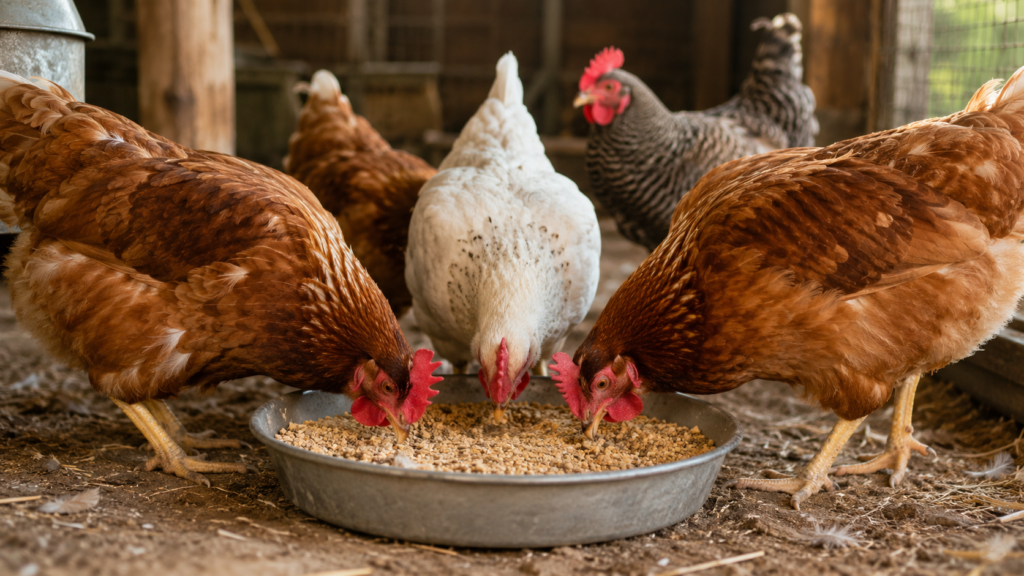
A standard adult laying hen eats about 1/4 pound of chicken feed per day, or roughly 1/2 cup of pellets or crumbles. That means most backyard chickens eat 1.5 to 2 pounds of feed per week, though large breeds, cold weather, heavy laying, and limited foraging can increase that amount.
This guide explains how much feed to budget for chicks, pullets, laying hens, roosters, and mixed backyard flocks. It is written for practical chicken keepers who want clear numbers, less waste, and healthier birds without guessing at the feeder.
Why Does How Much Feed Does a Chicken Eat Per Day Vary So Much?
Feed intake changes because chickens are not eating by the clock; they are eating to meet energy, protein, calcium, and maintenance needs. A small bantam may be satisfied with a few ounces, while a big dual-purpose hen in winter may need noticeably more than the average 1/4 pound.
Laying also changes the math. A hen producing eggs regularly needs more protein, calories, minerals, and calcium than a bird that is molting, broody, aging, or resting through winter.
The non-obvious expert tip is to watch body condition more than the feed scoop. If the keel bone feels sharp and the bird is light, increase access to complete feed; if hens are getting fat while leaving powdery fines behind, reduce treats and manage waste rather than simply topping up more feed.
How Much Feed Does a Chicken Eat Per Day? The Core Feeding Chart
The simplest planning number is 1/4 pound of complete feed per adult standard hen per day. For a flock of six laying hens, that equals about 1.5 pounds per day, 10.5 pounds per week, or roughly one 50-pound bag every four to five weeks if waste is controlled.
Use the chart below as a working baseline, then adjust for breed size, season, egg production, and how much the flock truly forages. These amounts refer to a complete commercial ration, not scratch grain or kitchen scraps.
| Chicken type | Daily feed amount | Why it matters |
|---|---|---|
| New chicks, 0 to 6 weeks | About 1 to 2 ounces per chick, increasing with age | Fast growth requires constant access to starter feed and clean water. |
| Growing pullets, 7 to 18 weeks | About 2 to 3 ounces per bird | Grower feed supports frame development without excess calcium. |
| Adult standard laying hen | About 4 ounces, or 1/4 pound | This is the main planning number for most backyard egg flocks. |
| Large dual-purpose hen | About 4.5 to 5.5 ounces | Bigger bodies need more maintenance energy, especially in cold weather. |
| Bantam hen | About 1.5 to 2.5 ounces | Small birds need less feed but still require a complete ration. |
| Rooster | About 3.5 to 5 ounces | Roosters need maintenance nutrition but not high calcium layer feed as their only ration. |
| Winter flock | Often 10% to 20% more than usual | Birds burn more energy staying warm and may have less forage. |
How to Calculate Daily Feed for Your Flock
Start with the 1/4-pound rule: Count your adult standard hens and multiply by 0.25 pounds per day. Four hens usually need about 1 pound daily, eight hens need about 2 pounds, and twelve hens need about 3 pounds before waste or seasonal adjustments.
Separate birds by life stage: Chicks, pullets, layers, and meat birds should not all be calculated from the same number. Chicks need starter, growers need grower, and active layers need layer feed or a complete ration with separate oyster shell available.
Use complete feed first: Base the diet on a formulated poultry feed, not scratch grains, corn, or leftovers. The University of Georgia Extension notes that poultry rations are balanced for energy, protein, vitamins, and minerals, which is exactly why complete feed should do most of the nutritional work.
Measure for one week: Weigh or scoop a known amount of feed into the feeder each day, then check what is left at the same time the next morning. If feed is disappearing too fast, look for waste, rodents, wild birds, or bullying before assuming the chickens are underfed.
Adjust for weather: Expect more feed use during cold, wet, windy spells and less during hot weather. In summer, hens often eat less during the hottest part of the day, so offer feed early and late when they are more comfortable.
Limit treats to protect nutrition: Keep scratch, mealworms, fruit, vegetables, and kitchen scraps to about 10% of the diet. Too many extras dilute protein and minerals, which can reduce laying and cause soft shells or poor feather condition.
Watch the flock, not just the feeder: Healthy chickens should have steady energy, good feather quality, normal droppings, and appropriate body condition. If several hens are thin, dull, or laying poorly, review feed access, feed type, parasites, stress, and coop conditions.
How many cups of feed does a chicken eat per day?
Most adult laying hens eat about 1/2 cup of pellets or crumbles per day, but cup measurements are less accurate than weight. A cup of pellets, crumbles, or mash can weigh differently depending on brand, grind, and density, so weighing feed once gives you a better conversion for your own bag.
As a practical shortcut, plan on 1/2 cup per standard hen daily, then confirm by weighing your scoop. If your hens are large, laying heavily, or living through cold weather, they may eat closer to 2/3 cup each.
| Option | Best for | What to expect |
|---|---|---|
| Pellets | Adult hens and low-waste feeding | Less powder and less billing out of the feeder. |
| Crumbles | Chicks, pullets, bantams, and picky birds | Easy to eat but often slightly messier than pellets. |
| Mash | Fermented feed or wet mash routines | Can reduce waste if managed carefully, but spoils faster when wet. |
| Scratch grains | Occasional enrichment only | Not complete feed and should not replace the daily ration. |
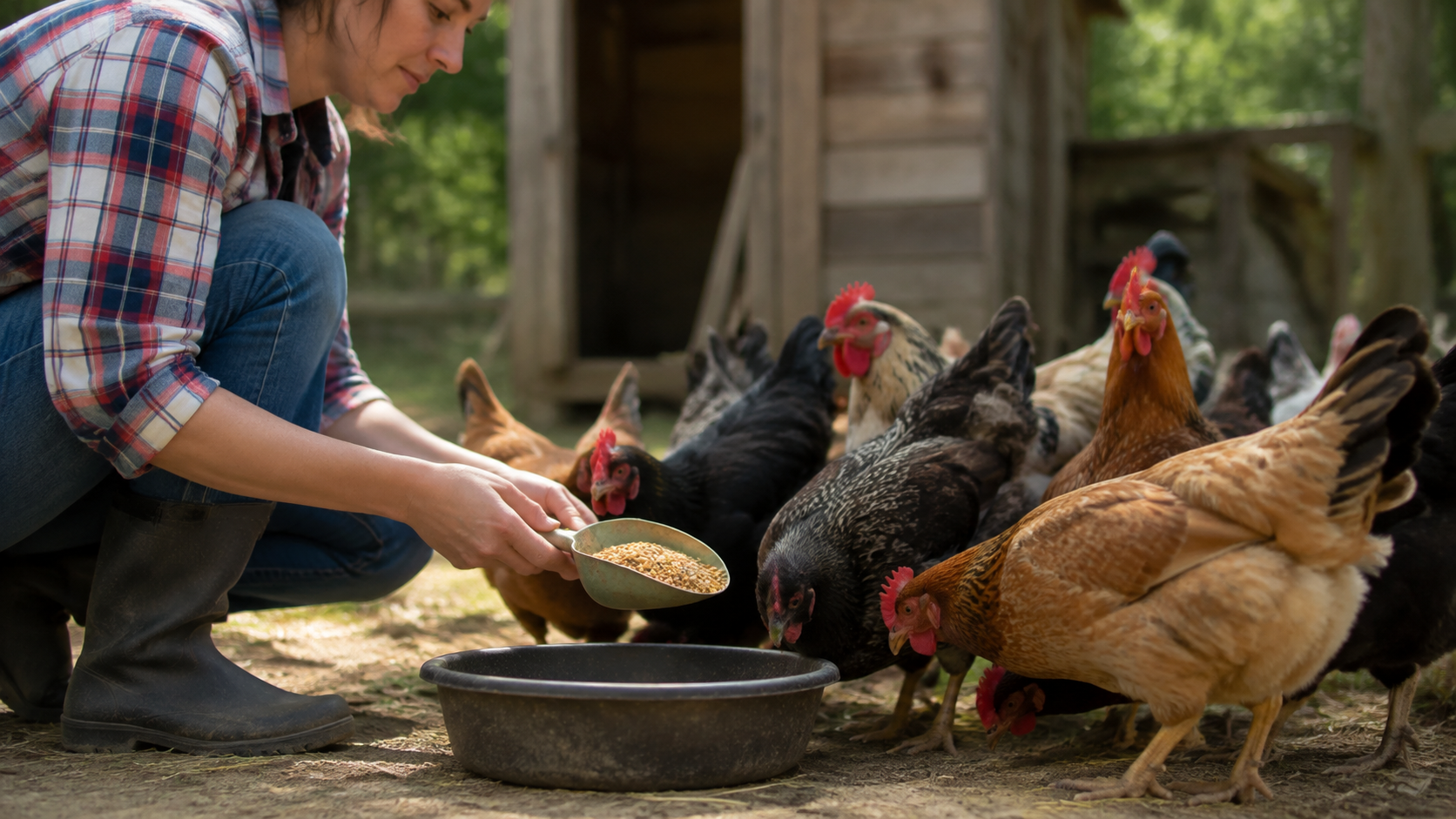
How to Customize Feed Amounts for Your Flock
For a small backyard flock: Measure feed daily for the first two weeks so you learn what your birds actually consume. Small flocks make waste harder to notice because a spilled cup or two can look insignificant but adds up quickly over a month.
For a mixed-age flock: Feed a grower or all-flock ration when young birds and adults live together, then provide oyster shell separately for laying hens. This avoids giving high-calcium layer feed to birds that are not yet laying.
For heavy egg layers: Expect efficient laying breeds to eat consistently because egg production is nutritionally demanding. If production drops while feed intake looks normal, investigate daylight, molt, stress, parasites, and calcium access rather than simply adding scratch.
For free-range chickens: Free-ranging may reduce feed use in spring and summer, but it rarely eliminates the need for complete feed. Bugs, greens, and seeds vary by season, and hens still need balanced nutrition to lay well.
For winter feeding: Keep feed available during daylight hours and expect higher intake when temperatures drop. A small evening handful of scratch can encourage natural foraging behavior, but the main ration should still be complete feed.
Companion Tips for Better Feeding Results
Feed intake is closely tied to coop space, feeder placement, and flock stress. Crowded birds may guard the feeder, scatter feed, or prevent timid hens from eating enough, so review how big a chicken coop should be if your flock seems tense or uneven in body condition.
It also helps to know what belongs in the daily ration and what should stay occasional. Cedar & Cluck’s guide to what to feed chickens pairs well with this feeding chart because it explains complete feed, treats, calcium, grit, and safe extras in more detail.
For the best results, use enough feeder space for multiple hens to eat at once. A long trough, several hanging feeders, or two feeding stations can reduce bullying and help you see whether the whole flock is eating normally.
Common Chicken Feed Problems and How to Fix Them
| Problem | Likely cause | Easy fix |
|---|---|---|
| Feed disappears too fast | Spillage, rodents, wild birds, or an open feeder design | Switch to a treadle or no-waste feeder and store feed securely. |
| Hens are thin despite full feeders | Bullying, parasites, wrong feed, or illness | Add another feeder and check body condition, droppings, and parasite signs. |
| Soft or thin eggshells | Low calcium, too many treats, or inconsistent layer feed | Offer oyster shell free-choice and reduce diet dilution from scraps. |
| Birds leave powdery feed behind | Fines collecting at the bottom of the feeder | Use pellets or mix fines into a small wet mash that is eaten promptly. |
| Chickens waste feed by scratching | Feeder is too low or too open | Raise the feeder to back height and use a lip or anti-scratch design. |
| Egg production drops suddenly | Molt, stress, daylight change, illness, or feed imbalance | Review season, protein level, water access, and flock stressors. |
| Feed smells sour or moldy | Moisture exposure or old feed | Discard questionable feed and clean the bin before refilling. |
If a feeding problem continues after simple fixes, look at the whole management picture: water, housing, parasites, weather, pecking order, and feed freshness. Chickens usually show several clues at once, and those clues are more reliable than one day of unusual feed use.
Chicken Feed Storage and Freshness
Store chicken feed in a clean, dry, rodent-resistant container with a tight lid. Metal bins are popular because they are harder for rodents to chew through, but any container must stay dry and should be cleaned between bags if crumbs, dust, or moisture build up.
Buy only what your flock can eat while the feed is fresh. The North Carolina State Extension recommends protecting feed from moisture, insects, rodents, and contamination because spoiled or moldy feed can harm poultry and reduce performance.
As a practical rule, many backyard keepers try to use a bag within four to six weeks after opening, sooner in humid weather. Keep the original feed tag or label until the bag is finished so you can confirm protein level, feed type, manufacturing details, and suitability for your birds.
Frequently Asked Questions
Can chickens overeat if feed is available all day?
Most laying hens self-regulate well when they have constant access to a complete ration. Problems are more likely when they eat too many treats, scratch grains, or high-calorie extras instead of balanced feed.
Should I feed chickens once or twice a day?
Many keepers leave complete feed available during daylight hours, which works well for laying hens. If you feed meals, offer enough in the morning and late afternoon so timid birds get a fair chance to eat.
How much feed do 10 chickens need per month?
Ten standard laying hens usually eat about 2.5 pounds per day. That equals roughly 75 pounds per month, so plan on about one and a half 50-pound bags, plus a little extra if it is cold or feed waste is high.
Does free-ranging reduce how much feed chickens eat?
Free-ranging can reduce feed intake when forage is abundant, especially in spring and early summer. Still, chickens should have access to complete feed because forage alone is rarely balanced enough for reliable egg production.
Do chickens eat less when they stop laying?
Often, yes, hens may eat slightly less when they are not laying, especially during heat or seasonal pauses. During molt, however, they still need good protein to regrow feathers, so do not cut back nutrition too aggressively.
Is scratch grain counted as daily chicken feed?
Scratch grain should be counted as a treat, not as complete daily feed. It is useful for enrichment, but it lacks the balanced protein, vitamins, minerals, and calcium that laying hens need.
Feed With Confidence, Not Guesswork
The key number is simple: most adult laying hens eat about 1/4 pound, or around 1/2 cup, of complete feed per day. From there, adjust for age, breed size, weather, laying status, and waste.
Once you know your flock’s real baseline, feeding becomes easier, cleaner, and more affordable. For more practical backyard chicken guidance, visit Cedar & Cluck and keep building a flock routine that works in real life.
