
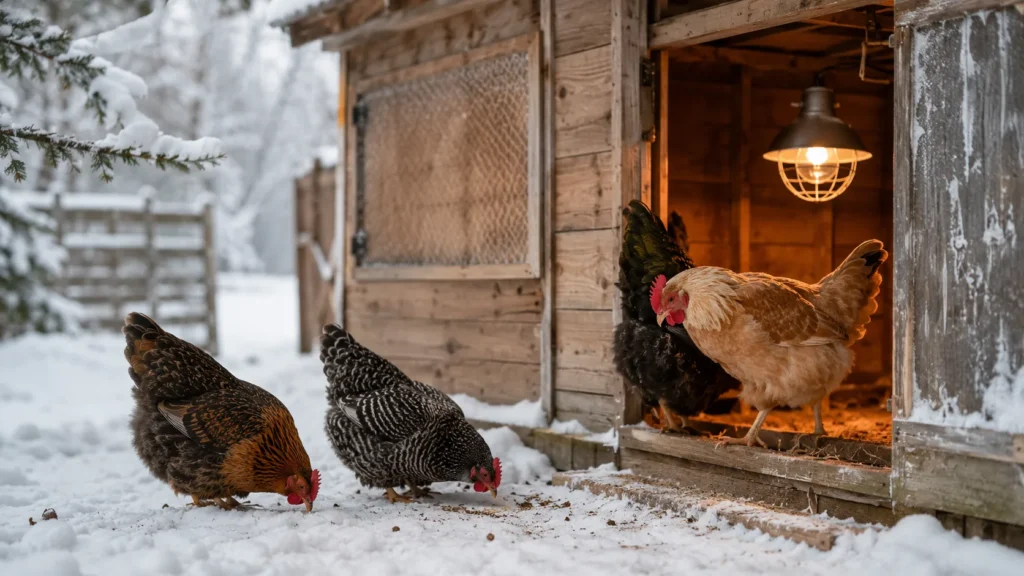
Do chickens need heat in winter? In most cases, no. Healthy chickens with a dry, draft-free, well-ventilated coop usually do better without added heat, because sudden temperature swings and heater failures can create more danger than the cold itself.
This guide explains when heat is unnecessary, when it may be justified, and how to keep a backyard flock safe through cold weather. It is written for beginners and everyday keepers who want practical, tested winter advice without guesswork.
What Makes Winter Heat Risky for Chickens?
Chickens are naturally cold-hardy birds. Their feathers trap air, and a healthy flock will generate enough body heat to stay comfortable in a properly built coop, even when outdoor temperatures drop well below freezing.
The main problem with heat is not just wasted electricity. Heat can dry the air, increase fire risk, and make birds less acclimated to the real winter weather outside the coop, which can be harmful during power outages or sudden equipment failure.
A warmer coop also does not solve the issues that matter most in winter: damp bedding, poor ventilation, frozen water, and insufficient roost space. If those are handled well, most flocks do not need a heater.
The non-obvious expert tip: if you feel tempted to add heat, first fix moisture control. A dry coop often helps more than a warm coop.
Do Chickens Need Heat in Winter? The Core Answer
| Item | Amount/Spec | Why it matters |
|---|---|---|
| Coop temperature | Usually unheated | Healthy chickens tolerate cold better than heat loss from poor coop design. |
| Ventilation | High, indirect airflow | Removes moisture and ammonia without creating a chilling draft. |
| Bedding depth | Dry, fluffy layer | Insulates feet and helps manage dampness and odor. |
| Roost space | Enough for all birds to perch comfortably | Prevents crowding and allows birds to conserve body heat naturally. |
| Water access | Unfrozen, clean, available daily | Dehydration raises cold stress and reduces egg production. |
| Heat source | Only for rare, specific cases | Limits fire risk and avoids creating a false sense of security. |
The safest answer is usually to skip heat and build winter protection around shelter, dryness, and good airflow. If your flock is young, sick, feather-poor, or a breed with low cold tolerance, use caution and consider temporary heat only under close supervision.
For most backyard flocks, the better winter plan is a coop that stays dry, blocks wind at bird level, and lets moisture escape above the roosts. That combination protects combs, feet, and respiratory health far better than a hot coop.
How to Decide Whether Your Coop Needs Heat in Winter
Check the flock: Healthy adult birds with full feathering usually do fine without heat. Very young chicks, newly molted hens, and birds recovering from illness may need extra protection in some climates.
Assess the coop: If the coop is dry, roomy, and ventilated high up, it is probably winter-ready. If it is damp, drafty, or too small, heat is not the first fix.
Watch the weather pattern: Gradual cold is easier for chickens to handle than sudden freeze-thaw cycles with damp air. Wind chill, wet bedding, and condensation matter more than the number on the thermometer alone.
Know the risk of heaters: The U.S. Consumer Product Safety Commission warns that space heaters are a major fire hazard if used improperly, which is why many poultry keepers avoid them entirely. If you do use heat, treat it as a temporary emergency tool, not a routine winter strategy.
Use cold acclimation wisely: Birds that experience a normal seasonal drop in temperature usually adapt better than birds kept artificially warm. That is why gentle preparation in fall works better than sudden heat in January.
Do Chickens Need Heat in Winter? A Safe Decision Plan
Step 1: Start with the breed. Heavy, fluffy breeds tend to handle winter better than lean or lightly feathered birds. If your flock includes small or Mediterranean breeds, they may need more attention but still not necessarily a heater.
Step 2: Inspect the coop for drafts. Stand inside the coop on a windy day and feel for direct airflow at roost height. Good winter coops block wind at bird level while still allowing air exchange higher up.
Step 3: Fix moisture before temperature. Replace wet bedding immediately and remove any leaks or condensation points. Wet air and damp litter cause more cold stress than dry cold.
Step 4: Protect the water supply. Frozen water is one of the fastest ways to make winter harder on a flock. Use a safe heated base or waterer designed for poultry rather than improvising with unsafe electric setups.
Step 5: Add insulation only where it helps. Insulation can be useful in walls or roof areas, but do not seal the coop so tightly that moisture builds up. Ventilation should remain open above the birds, even in very cold weather.
Step 6: Monitor combs, feet, and behavior. Watch for puffing, huddling, pale comb tips, or signs of frostbite. The CDC’s frostbite guidance is a useful reminder that cold injury starts with exposed tissue and wet conditions, which is why dry coop management matters so much.
Step 7: Add heat only for a specific problem. If a veterinarian or experienced poultry professional recommends temporary warmth for a weak bird, use the safest low-risk option possible. Avoid open coils, improvised bulbs, and anything that can tip, break, or ignite bedding.
People also ask: Do chickens need heat in winter if they have a coop?
Usually, no. A well-built coop should provide enough shelter from wind and wet weather that chickens can stay warm on their own.
| Option | Best for | What to expect |
|---|---|---|
| No added heat | Most healthy adult flocks | Safer, simpler winter management with less fire risk. |
| Temporary spot heat | Weak, injured, or very young birds | Short-term support if supervised closely and used cautiously. |
| Full coop heating | Rare special cases only | Higher risk and usually unnecessary for backyard chickens. |
| No coop heat but better insulation | Cold climates with dry conditions | Often the best balance of comfort, safety, and simplicity. |
If your coop is dry, ventilated, and sized correctly, the birds usually do not need help staying warm. In fact, improving shelter often does more good than adding a heater.
Customization for Different Winter Setups
For a small flock: Focus on a tight, dry coop and enough roost space for every bird to perch without crowding. Smaller flocks are easier to monitor, so you can catch frozen water, damp bedding, or frostbite early.
For large breeds: Heavy breeds usually tolerate cold well but need extra floor space and strong roosts. Because they are larger, make sure perches are sturdy and bedding stays deep enough to cushion their feet.
For bantams: Smaller birds lose heat faster than big breeds, so draft control matters more. Even so, start with coop design and dry bedding before reaching for a heater.
For very cold climates: Add wind protection, thicker bedding, and better water management first. If temperatures are extreme for long stretches, consider a short-term supplemental heat plan only for a sick or vulnerable bird, not the whole flock.
For mixed-age flocks: Separate chicks or pullets from fully grown adults if possible, because age differences change cold tolerance. A mixed flock can look fine during the day and struggle overnight if the weakest birds cannot keep up.
Related Winter Care That Makes a Bigger Difference
Heat is only one part of winter management. Good nesting areas, proper coop size, and stable egg-production expectations usually matter more than a warmer air temperature.
If you are planning winter improvements, pair this guide with how big a chicken coop should be so your birds have enough space to roost comfortably, and review how to clean a chicken coop to keep damp litter from building up during cold, wet months.
Common Do Chickens Need Heat in Winter Problems and How to Fix Them
| Problem | Likely cause | Easy fix |
|---|---|---|
| Chickens huddling constantly | Drafts, wet bedding, or lack of roost space | Block direct wind, refresh bedding, and add roost room. |
| Wet coop smell | Poor ventilation and manure buildup | Improve high vents and clean out damp litter more often. |
| Frozen water every morning | Unheated water source or exposed placement | Use a poultry-safe heated base and move water out of wind. |
| Comb tips turning pale or dark | Possible frostbite | Increase dryness, reduce moisture, and protect exposed tissue. |
| Condensation on walls | Too little ventilation for the number of birds | Add upper vents while keeping roosts out of direct airflow. |
| Birds not settling at night | Coop too small or roosts poorly placed | Rearrange perches and confirm enough space for each chicken. |
The simplest fix for most winter problems is not heat. It is better airflow, drier bedding, safer water access, and a coop that fits the flock properly.
Storage, Maintenance, and Longevity for Winter Coop Comfort
Think long term when you prepare a coop for winter. Store bedding, spare waterers, and any approved electrical equipment in a dry place so you are not scrambling during the first hard freeze.
Inspect cords, plugs, and heaters before every cold season. The U.S. Consumer Product Safety Commission’s space heater guidance is worth reviewing if you plan to use any electrical warming equipment, because keeping heat sources away from bedding and combustible materials is essential.
Over time, the most durable winter setup is one that does not depend on a heater at all. Dry lumber, solid roofing, good ventilation, and manageable flock size are what make a coop easy to maintain year after year.
Frequently Asked Questions
Can chickens survive freezing temperatures without heat?
Yes, many chickens can survive freezing temperatures without heat if they are healthy, dry, and protected from wind. Their feathers provide effective insulation when the coop is managed well.
What temperature is too cold for chickens?
There is no single cutoff number for every flock. The real concern is whether the birds are wet, draft-exposed, underfeathered, or too young to handle the conditions.
Do baby chickens need heat in winter?
Yes, chicks need a heat source because they cannot regulate body temperature well. This is different from mature chickens, which usually do not need coop heat in winter.
Should I close the coop completely in winter?
No, do not seal it shut. Chickens still need ventilation to release moisture and ammonia, or the coop can become damp and unhealthy.
Is a heated chicken coop dangerous?
It can be. Electrical heaters, heat lamps, and improvised warming setups increase fire risk, especially around bedding and dust.
What is the best way to keep chickens warm in winter?
Keep them dry, out of the wind, and properly housed with enough roost space. Good winter management usually matters more than adding heat.
A Safer Winter Starts with Better Coop Basics
If you remember one thing, make it this: most chickens do not need heat in winter, but they do need dryness, ventilation, and a coop that fits their flock. Heat can help in rare situations, yet it should never replace the basics.
For more practical backyard chicken guidance, visit Cedar & Cluck for researched, beginner-friendly advice that helps you keep your flock healthy all year.
