
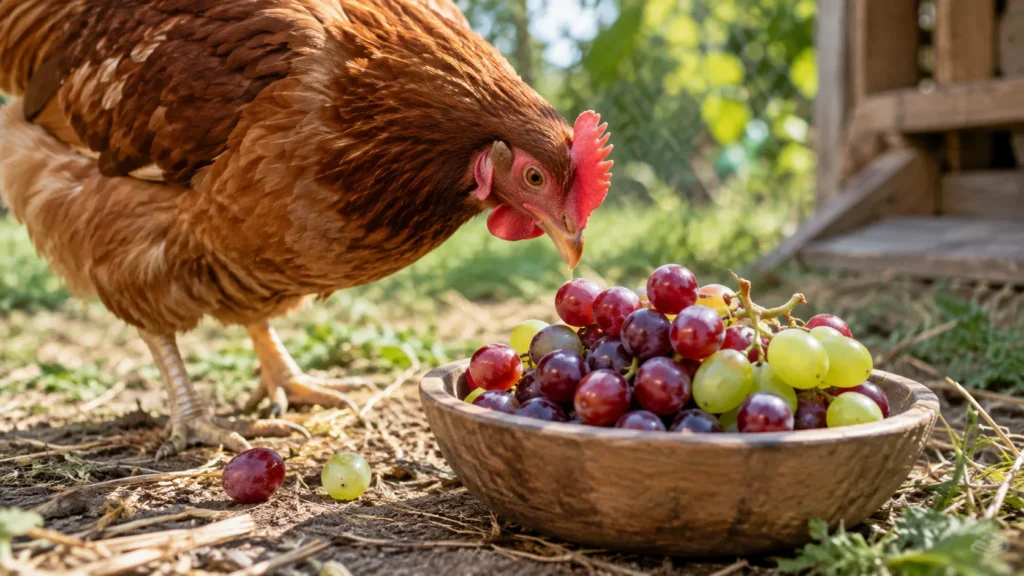
Yes, chickens can eat grapes as an occasional treat. Seedless or seeded grapes are generally safe when washed, cut into smaller pieces, and offered in moderation, but grapes should never replace a complete chicken feed.
This guide explains how many grapes to serve, how to prepare them safely, which grape products to avoid, and what to do if a chicken eats too many. It is written for backyard keepers who want a practical answer rather than a long list of untested treat rules.
Why Can Chickens Eat Grapes Safely?
Grapes are soft fruit containing water, natural sugars, fiber, and small amounts of vitamins and minerals. Chickens can peck and swallow grape flesh, making grapes similar to other fruit treats that can be included in a varied backyard diet.
The main concern is not that grapes are inherently poisonous to chickens. The more realistic risks are choking, digestive upset, excess sugar, pesticide residue, and the possibility that treats displace the balanced nutrients found in layer, grower, or all-flock feed.
An expert tip is to cut large grapes lengthwise even when adult chickens seem able to swallow them whole. A grape that is easy for one hen to manage can still lodge in the throat of a smaller bird, young pullet, or hurried flock member.
How to Feed Grapes to Chickens Safely
| Item | Amount or specification | Why it matters |
|---|---|---|
| Fresh grapes | About 1 to 2 grapes per adult chicken at one time | Keeps sugar and treats from crowding out complete feed. |
| Preparation | Wash thoroughly and cut lengthwise; remove spoiled fruit | Reduces choking risk and limits dirt, residue, and mold exposure. |
| Frequency | Occasionally, such as once or twice weekly | Supports variety without turning fruit into a dietary staple. |
| Serving method | Scatter small pieces on clean ground or place them in a treat dish | Encourages natural foraging and makes leftovers easier to notice. |
| Regular diet | Complete poultry feed and constant access to clean water | Provides the protein, energy, vitamins, and minerals grapes cannot supply. |
For most adult chickens, a few grape pieces per bird are enough. If you are feeding a mixed flock, use the smallest or youngest bird as the safety benchmark and cut every grape into manageable pieces.
How to Give Grapes to Chickens Step by Step
Check the flock: Offer grapes only to alert, normally eating birds. A chicken with a crop problem, diarrhea, respiratory distress, or unexplained lethargy needs assessment rather than a new treat.
Select sound fruit: Choose fresh grapes without visible mold, fermentation, leaking juice, or a sour smell. Do not assume that trimming a moldy section makes the rest safe, because contamination may extend beyond what you can see.
Wash the grapes: Rinse them under running water and rub the skins gently. The U.S. Food and Drug Administration’s produce-safety guidance recommends washing produce under running water, while noting that washing does not remove every contaminant.
Cut before serving: Slice grapes lengthwise into halves or quarters, especially for bantams, pullets, chicks, or birds that gulp treats. Never give whole grapes to newly hatched chicks, whose diet should be chick starter rather than fruit.
Start with a little: Give each adult chicken one small grape or a few pieces the first time. Watch the flock for normal appetite, droppings, and behavior over the next day before offering grapes again.
Serve after feed: Treats work best after chickens have eaten their normal ration. This keeps hunger from encouraging frantic swallowing and helps ensure that grapes remain an addition rather than the main meal.
Remove leftovers: Pick up uneaten grapes after a short period, particularly in warm weather. Fruit left on the ground can attract flies, rodents, wild birds, and other pests, and damaged fruit spoils quickly.
Observe the flock: Contact a poultry veterinarian if a chicken has persistent vomiting-like movements, trouble breathing, severe diarrhea, weakness, or a swollen crop after eating. A single soft dropping is not automatically an emergency, but ongoing signs deserve attention.
Can Chickens Eat Grapes With Seeds and Skin?
Yes, chickens can usually eat grapes with their skin and small seeds, provided the fruit is fresh and prepared into appropriately sized pieces. Seedless grapes are convenient, but you do not need to remove every small seed from ordinary table grapes.
| Option | Best for | What to expect |
|---|---|---|
| Seedless grapes | Quick, simple treats | Easy to prepare and usually well accepted. |
| Seeded grapes | Using ordinary table grapes | Generally suitable when washed and cut; chickens may ignore or swallow small seeds. |
| Frozen grape pieces | Hot-weather enrichment for adult birds | Can provide a cool treat, but pieces should not be hard or excessively large. |
| Raisins | Rare, limited use only | More concentrated in sugar and sticky; fresh grapes are the better choice. |
How to Customize Grapes for Different Chickens
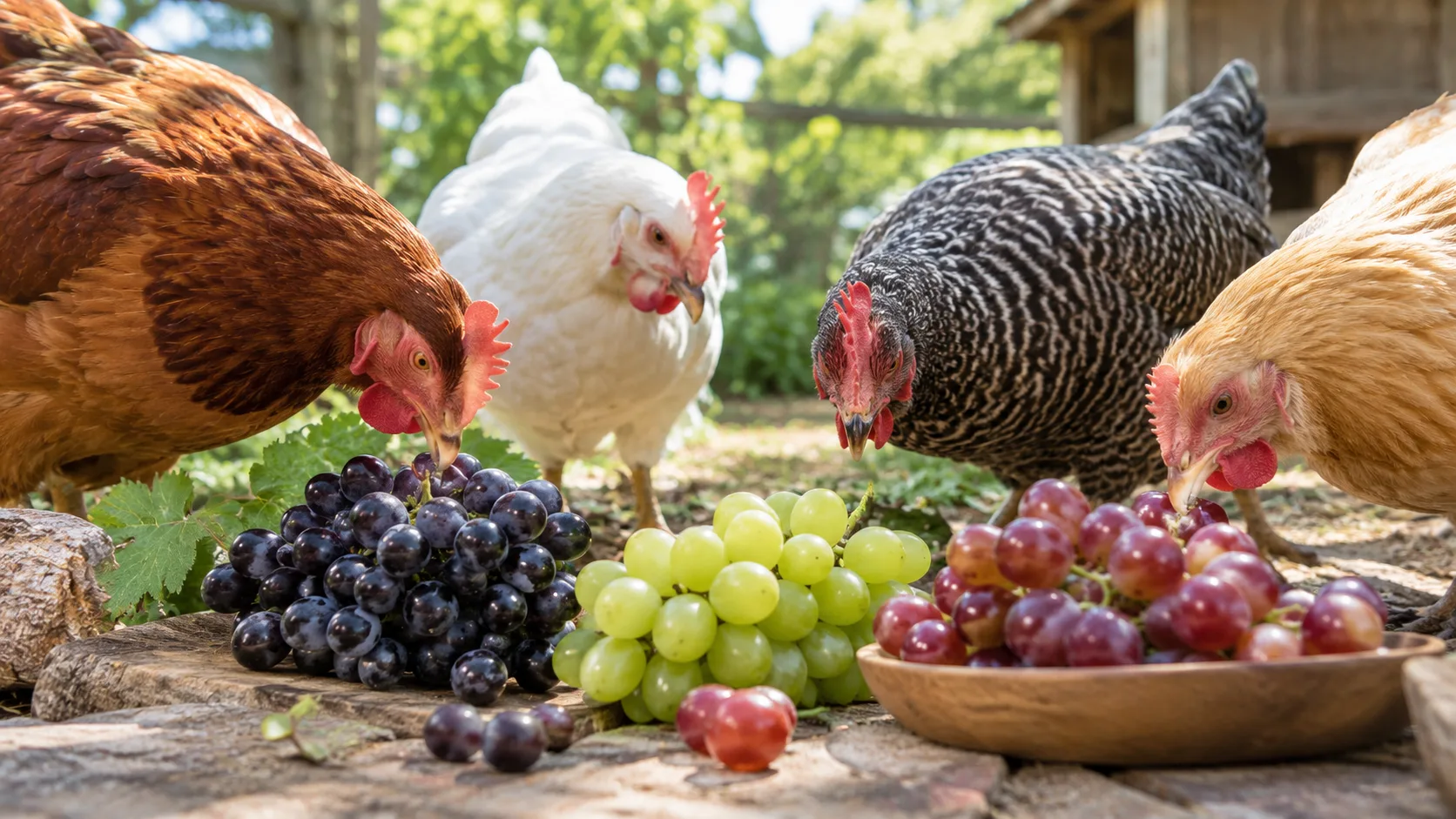
For a flock of standard-size adults: Use one to two grapes per bird, cut lengthwise, and scatter the pieces widely. This gives lower-ranking hens a chance to eat without competing at one dish.
For bantams or small breeds: Quarter the grapes and begin with a smaller portion. Small birds need less food overall, and their smaller mouths make size control especially important.
For chicks and young pullets: Skip grapes for newly hatched chicks and prioritize the appropriate chick starter. Once older pullets are eating confidently and have access to suitable grit, tiny pieces can be introduced sparingly, but treats should remain minimal.
For an overweight flock: Use grapes as occasional enrichment rather than a daily reward. Offer a few pieces after the normal ration and emphasize foraging, leafy greens, and appropriate activity instead of sugary treats.
For a chicken with digestive sensitivity: Avoid introducing grapes during active diarrhea or another digestive problem. Once the bird is stable, ask a poultry veterinarian whether fruit is appropriate and reintroduce any treat in a very small amount.
Related Feeding and Flock-Care Advice
Grapes are only one small part of a balanced feeding plan. For a broader list of safe foods and common mistakes, read What Can Chickens Eat? A Practical Backyard Guide to Safe Foods and Mistakes to Avoid.
If you are comparing grapes with other fruit treats, our guide to whether chickens can eat bananas explains how another sweet food can fit into occasional treat feeding. In every case, complete feed, clean water, and good flock observation matter more than any single snack.
Common Grapes-for-Chickens Problems and How to Fix Them
| Problem | Likely cause | Easy fix |
|---|---|---|
| Chicken gulps a whole grape | Fruit was too large or the bird was competing | Cut grapes lengthwise or into quarters and scatter them widely. |
| Loose droppings after grapes | Too much fruit, sudden introduction, or individual sensitivity | Stop treats, provide normal feed and water, and monitor; seek veterinary advice if it continues. |
| Flock ignores regular feed | Too many treats or grapes offered before meals | Serve complete feed first and reduce fruit to occasional portions. |
| Fruit attracts pests | Leftovers remain in the run | Offer only what birds can finish promptly and remove scraps. |
| Chicken eats spoiled grapes | Moldy or fermenting fruit was not noticed | Discard questionable grapes and watch for illness; contact a veterinarian if symptoms develop. |
| One hen dominates the treat | Grapes were placed in one crowded dish | Use several small serving spots or scatter pieces over a clean area. |
When in doubt, reduce the portion rather than trying to compensate with another food. Chickens do not need grapes for health, so there is no benefit to pushing a treat that causes repeated digestive or flock-management problems.
How to Store Grapes for Chicken Treats
Keep unused grapes refrigerated in a clean container and inspect them before each serving. Discard fruit that becomes moldy, slimy, fermented, or strongly sour; do not feed questionable grapes simply because chickens are less selective than people.
Wash only the amount you plan to use when possible, because wet fruit can deteriorate faster in storage. The USDA Food Safety and Inspection Service food-safety guidance supports prompt refrigeration and careful handling of perishable foods, principles that also help keep poultry treats cleaner.
Do not store cut grapes in the coop or run. Prepare them shortly before feeding, keep the serving area clean, and make treat time part of your normal flock-check routine.
Frequently Asked Questions
Can chickens eat grapes every day?
They can usually tolerate grapes, but daily feeding is not recommended for most flocks. Grapes are sugary and nutritionally incomplete, so frequent servings can displace balanced feed. Offer small portions occasionally instead.
Can chickens eat green and red grapes?
Yes. Both green and red table grapes can be offered when fresh, washed, and cut into safe pieces. Color does not remove the need for portion control or careful preparation.
Do I need to remove grape seeds?
No, you generally do not need to remove every small seed from ordinary grapes. Seedless fruit is simpler, but the more important safety step is cutting the grape to reduce choking risk.
Can chickens eat raisins?
Raisins are not the best chicken treat because drying concentrates the fruit’s sugar and makes pieces sticky. If offered at all, use only a tiny amount occasionally, and choose fresh grapes instead.
Can baby chicks eat grapes?
Newly hatched chicks should receive chick starter and clean water, not grapes. Older pullets may eventually have tiny pieces as an occasional treat, but their main nutrition must remain an age-appropriate complete feed.
What should I do if a chicken eats too many grapes?
Remove the remaining fruit and provide the bird’s normal feed and clean water. Monitor appetite, droppings, crop behavior, and energy. Contact a poultry veterinarian for persistent diarrhea, weakness, breathing trouble, or other concerning signs.
A Simple Treat That Stays in Its Place
So, can chickens eat grapes? Yes, when grapes are fresh, washed, cut into manageable pieces, and served as a small occasional treat. The safest routine is to feed the flock’s complete ration first, offer only a few pieces, and remove anything left behind.
Good chicken keeping is built from small, consistent decisions like these. Visit Cedar & Cluck for more practical, researched guidance on feeding, coops, breeds, egg laying, and everyday backyard chicken care.
