
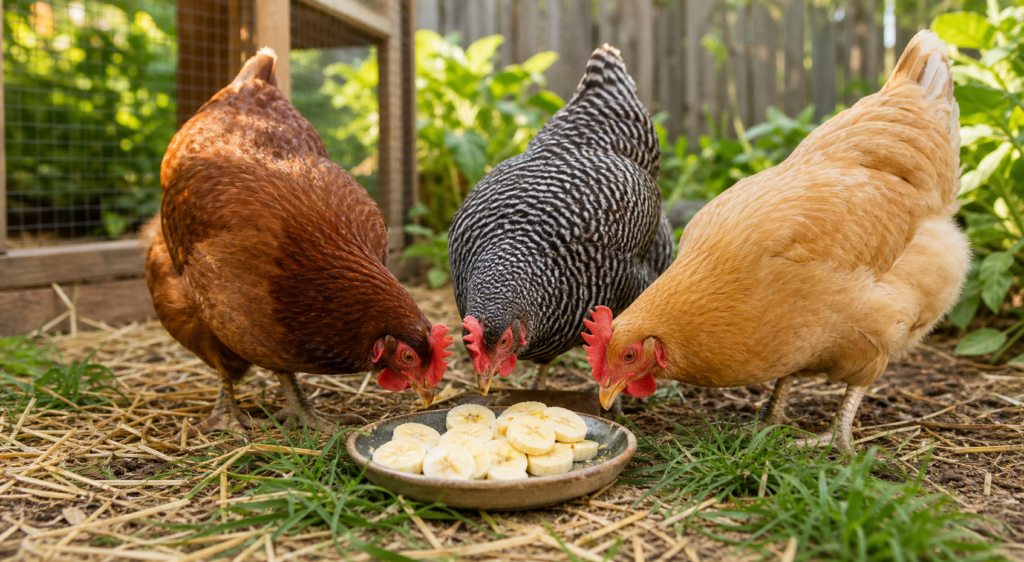
If you keep backyard chickens, you have probably looked at a spotted banana on the counter and wondered whether it can go to the flock. The short answer is yes: chickens can eat bananas. The better answer is that bananas should be a small treat, not a daily food or a replacement for balanced chicken feed.
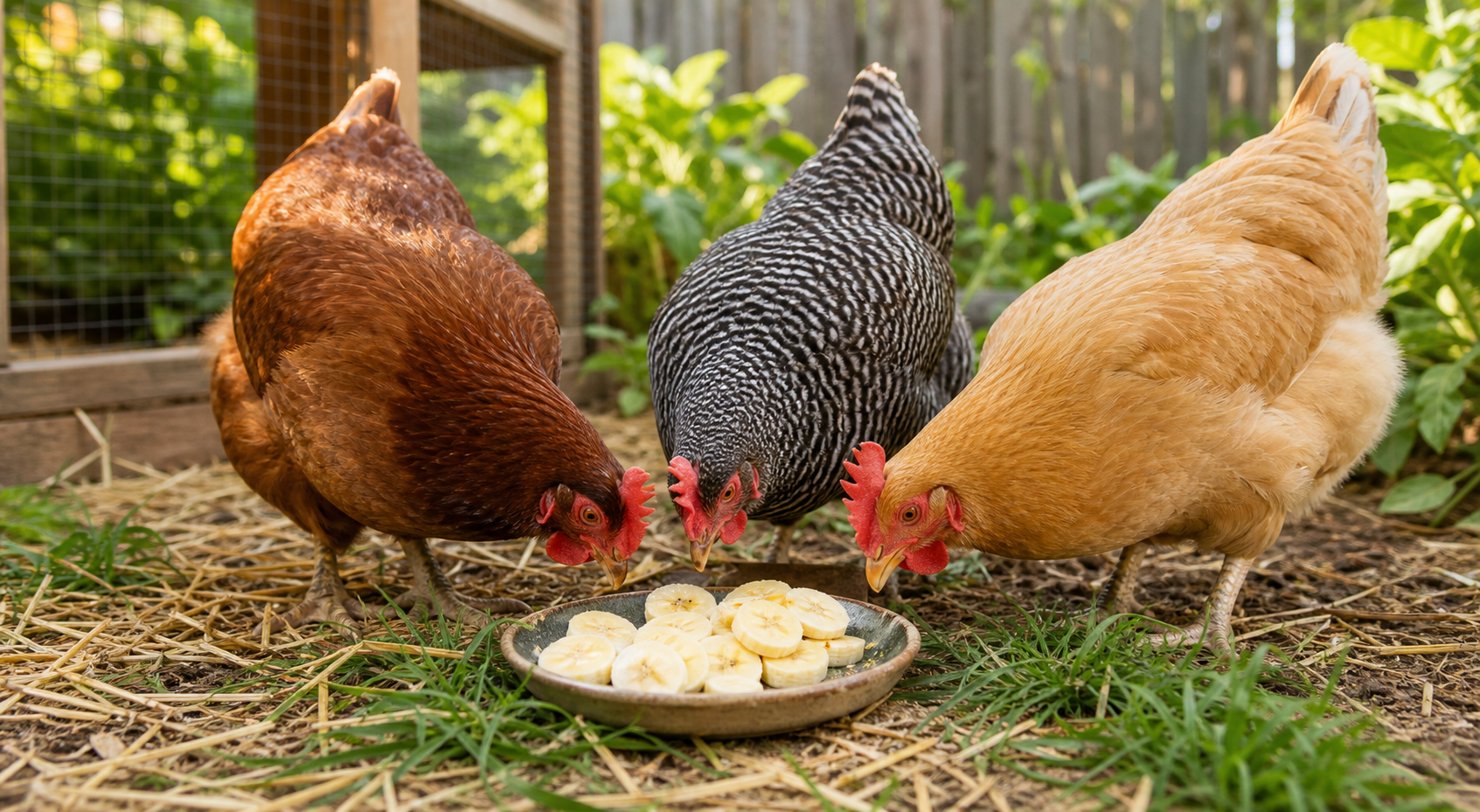
Quick Answer: Are Bananas Safe for Chickens?
Bananas are safe for chickens when they are ripe, fresh, and served in small amounts. Most hens enjoy the soft texture, and a few pieces can be a useful enrichment treat. The key is portion control. A banana should not replace What to Feed Chickens basics like complete feed, clean water, grit when needed, and calcium support for laying hens.
The safest serving is simple: peel or slice a ripe banana, cut it into bite-size pieces, put it in a dish, and remove the leftovers before they turn sticky. If a banana smells sour, looks moldy, or has started to ferment, do not feed it.
What Makes Bananas Useful for Chickens?
Bananas are useful because they are soft, easy to peck, and quick to serve. They can help you add variety to the flock’s routine without a complicated recipe. On a hot day, a few chilled pieces can also give birds something cool to peck while they rest in the shade.
The mistake is thinking that because a food is safe, it should become a regular feed item. Bananas are not balanced for poultry. They are not a strong protein source, they do not provide enough calcium for shells, and they can add too much sugar if offered too often.
For laying hens, balanced nutrition matters because egg production uses a lot of energy and minerals. If you are learning about timing and pullet development, read When Do Hens Start Laying Eggs? so you can match feed choices to the bird’s stage.
How Much Banana Can Chickens Eat?
For one hen, one or two bite-size pieces is enough. For a small flock of 4 to 6 hens, start with about half a banana split into small pieces. If the flock leaves a mess or droppings become loose, reduce treats for a few days and return to normal feed only.
Once or twice a week is a better rhythm than daily feeding. Treats should be small enough that chickens still eat their main ration. If your flock already gets scratch, mealworms, garden scraps, and fruit, banana should be only a tiny part of that total treat amount.
How to Feed Bananas to Chickens Safely
Feeding bananas safely is mostly about freshness, portion size, and cleanup. You do not need a special recipe. Plain banana is enough.
Step 1: Choose a Fresh Ripe Banana
Choose a banana that is ripe but not spoiled. Brown spots on the peel are fine. A sour smell, mold, leaking liquid, or a fermented smell means the banana belongs in the trash. Unsafe scraps are not worth the risk. If you are building a safe kitchen-scrap routine, use this with What Can Chickens Not Eat.
Step 2: Cut It Into Small Pieces
Slice the banana into small coins or mash a small amount on a plate. Chickens can tear soft foods, but small pieces stop one bold hen from grabbing the whole treat and running away with it.
Small pieces also make it easier for shy birds to get a taste. If you have a mixed flock, use two small dishes instead of one crowded pile.
Step 3: Serve It in a Dish
Banana turns sticky fast. A shallow dish, saucer, or flat stone keeps it out of the bedding. This makes cleanup easier and helps prevent flies, ants, and wet patches in the run.
If your chickens are nervous around new food, place the dish near the usual feeding area. Once they learn it is a treat, they usually understand quickly.
Step 4: Remove Leftovers
Pick up leftover banana after 20 to 30 minutes. This matters most in warm weather. Wet fruit left in bedding can sour, attract pests, and make the coop smell bad.
A clean run is part of good feeding. Treats should make flock care more enjoyable, not create another mess to solve.
Can Chickens Eat Banana Peels?
Chickens can eat banana peels, but peels are not the best part of the banana. They are tougher than the fruit, and many hens ignore them. If you want to offer peel, wash it well, remove any sticker, and chop it into very small strips.
Do not toss a whole peel into the run and expect chickens to handle it. Whole peels often sit around, collect dirt, and become waste. If your flock does not eat the peel quickly, remove it and use the ripe fruit only next time.
Can Baby Chicks Eat Bananas?
Baby chicks should focus on starter feed and clean water. Starter feed is designed for growth, and chicks can miss important nutrients if too many treats are introduced early.
It is better to wait until chicks are older, eating starter feed well, and have chick grit available. If you do test banana later, offer only a tiny smear or a very small piece. The goal is curiosity, not a full snack.
If you are still choosing birds or planning your first flock, the Chicken Breed Finder can help you match breeds to your backyard setup before treat habits even become part of the routine.
Can Chickens Eat Overripe Bananas?
Chickens can eat overripe bananas if the fruit is still fresh. A soft banana with brown spots is fine. A banana that smells sour, looks fuzzy, leaks oddly, or seems fermented is not safe.
Overripe banana is also messier than firm banana. If it is very soft, mash a tiny amount in a dish instead of throwing it into bedding. That makes cleanup simple and keeps sticky fruit from spreading through the coop floor.
Banana Feeding Problems and Fixes
Storage, Safety, and Mistakes to Avoid
Store bananas in the kitchen until you are ready to feed them. Do not leave cut banana in the coop for later. Warm, wet fruit spoils quickly, and spoiled scraps attract pests.
The biggest mistake is letting treats crowd out complete feed. A healthy chicken diet starts with the right feed for the bird’s age and purpose. Banana can add variety, but it cannot supply everything chickens need.
Food safety matters for people too. Backyard poultry can carry germs even when they look healthy, so wash hands after handling chickens, feeders, waterers, eggs, or coop tools.
Related Chicken Feeding Guides
For the main feeding foundation, start with What to Feed Chickens. For unsafe foods, use What Can Chickens Not Eat. If you want another treat guide, read Can Chickens Eat Tomatoes?.
FAQ About Chickens and Bananas
Can chickens eat bananas every day? +
Can baby chicks eat bananas? +
Can chickens eat banana peels? +
Are bananas good for laying hens? +
Can chickens eat overripe bananas? +
How much banana can I give chickens? +
Trusted Sources
- CDC backyard poultry safety guidance
- University of Minnesota Extension chicken-care and feeding guidance
In my own coop routine, I treat bananas as a quick cleanup snack, not a regular feed item. If the banana is soft enough to smear everywhere, I use a dish instead of throwing it into the bedding. That one small habit keeps the run cleaner and makes it easier to see whether the flock actually ate the treat or just spread it around.
Final Thoughts
Chickens can eat bananas, but the best version is simple: ripe fruit, tiny pieces, short feeding time, and quick cleanup. Use bananas as an occasional treat and let balanced feed do the real work.
If your flock enjoys banana, keep it in the treat rotation once or twice a week. If they ignore it, that is fine too. A healthy chicken routine does not need to be complicated.
