
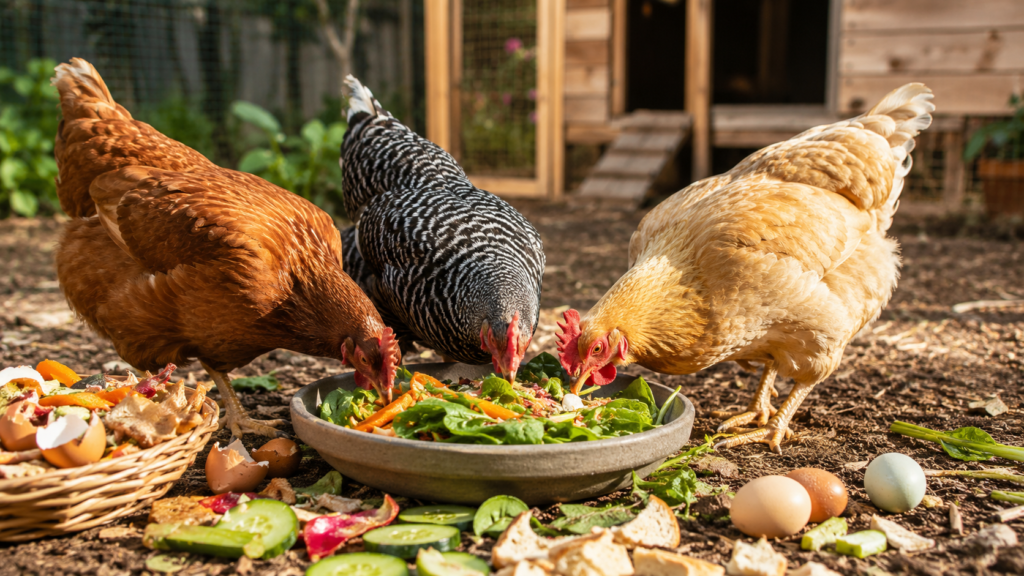
Chickens can eat a wide range of foods, but the safest answer to what can chickens eat is this: make complete chicken feed the main diet, then add small amounts of safe fruits, vegetables, grains, and protein-rich treats. Fresh water, grit, and restraint with scraps matter just as much as the food itself.
This guide explains what to feed chickens daily, which kitchen and garden foods are safe, how to serve treats without throwing off nutrition, and how to avoid common feeding mistakes. It is written for backyard keepers who want practical, tested advice rather than vague lists.
What Makes a Chicken Diet Safe?
Chickens are omnivores, which means they can digest both plant and animal foods. That does not mean they should eat everything people eat. A safe chicken diet is built around balanced feed, with treats used to support health, not replace nutrition.
The biggest principle is proportion. If treats crowd out layer feed or grower feed, birds may miss key nutrients such as protein, calcium, and vitamins. Texture also matters, because chickens need appropriate-sized pieces and access to grit when they eat foods that are not already finely ground.
For backyard flocks, the best foods are simple, recognizable, and unseasoned. A good rule is that treats should stay a small part of the diet, while feed stays the foundation. One expert tip: if you would not serve it plain and fresh to a child, do not assume it is automatically safe for chickens.
What Can Chickens Eat Every Day?
The daily answer is straightforward: a complete commercial chicken feed matched to age and laying stage, plus clean water. Treats are optional and should be secondary. If you want to supplement, choose foods that are easy to digest and low in salt, sugar, and seasoning.
| Item | Amount/Spec | Why it matters |
|---|---|---|
| Complete feed | Layer, starter, grower, or all-flock feed as appropriate | Provides balanced protein, energy, vitamins, and minerals |
| Fresh water | Available all day, changed regularly | Supports digestion, egg production, and temperature control |
| Leafy greens | Small handfuls of chopped lettuce, kale, or similar greens | Adds variety without overloading calories |
| Vegetables | Chopped cucumber, zucchini, peas, carrots, squash | Easy treat foods with useful moisture and fiber |
| Fruit | Small portions of berries, melon, apple slices without seeds | Good occasional reward, but higher in sugar |
| Cooked grains | Plain oats, rice, or pasta in modest amounts | Helpful as a treat, especially in cold weather |
| Protein treats | Mealworms, scrambled egg, plain cooked beans | Useful during molt, growth, or intense laying |
| Grit | Offered separately if birds lack access to natural grit | Helps chickens grind fibrous foods in the gizzard |
When you are deciding what can chickens eat from the kitchen, think “plain and simple.” Safe leftovers can include cooked vegetables, unsalted grains, and small amounts of fruit. For food safety with leftovers, the USDA Food Safety and Inspection Service advises keeping perishable foods out of the danger zone and refrigerating leftovers promptly.
How to Feed Chickens Safely, Step by Step
Start with the right base: Choose feed that matches your birds’ age and purpose. Chicks need starter feed, growing birds need grower feed, and laying hens do best on layer feed or an appropriate all-flock feed with calcium on the side. If you want better egg production, this foundation matters more than any treat list.
Offer treats after feed: Give commercial feed first, then treat foods in small amounts. This helps birds fill up on nutrients before they get excited about scraps. A flock that expects treats first may pick through feed and miss key minerals.
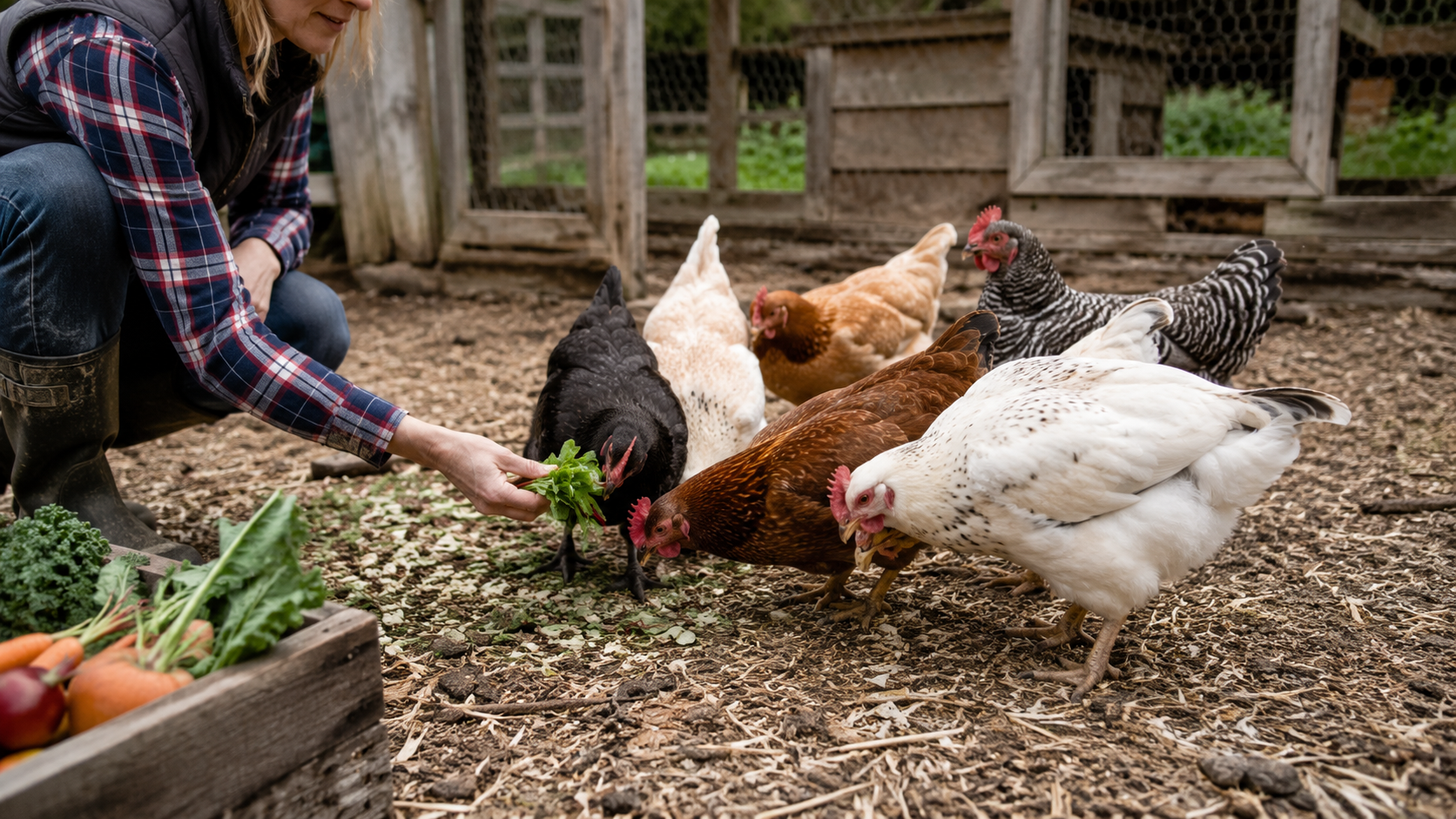
Keep portions small: Treats should stay a minor share of the total diet. For a small backyard flock, a handful of chopped produce is enough for a group of birds. Overfeeding even healthy foods can dilute nutrition and increase waste in the coop.
Use clean, plain foods only: Serve vegetables, fruits, grains, and cooked foods without salt, sugar, butter, sauces, or seasoning blends. Avoid moldy, spoiled, or slimy items. The University of Minnesota Extension emphasizes that consistency and balance are more important than offering lots of different extras.
Provide grit when needed: Chickens do not chew like mammals, so grit helps them break down tougher foods. If your birds free-range on soil and small stones, they may find enough naturally. If they live mostly on a run or eat a lot of fruit and kitchen scraps, a separate grit source is smart.
Watch the flock’s response: Healthy chickens should stay active, maintain good body condition, and keep producing normal droppings for their age. If eggs get smaller or shells get weak, revisit the feed balance before blaming the treats. Pay attention to whether one bird is guarding the treat pile and keeping others from eating.
Handle leftovers safely: Refrigerate or discard human food promptly, and do not leave wet scraps sitting out. The CDC’s backyard poultry guidance also stresses handwashing and basic hygiene after handling birds or their feed. That matters because the feeding area can carry germs even when the food itself looks fine.
People also ask: What can chickens eat from the kitchen?
Chickens can eat many kitchen foods if they are plain, fresh, and given in moderation. The easiest options are raw or cooked vegetables, fruits without pits or seeds, plain grains, and a few protein-rich leftovers. The key is not the category alone, but whether the food is safe, unseasoned, and appropriate for a chicken’s diet.
| Option | Best for | What to expect |
|---|---|---|
| Vegetable scraps | Daily treat rotation | Low-risk, low-calorie variety |
| Fruit pieces | Occasional rewards | Very palatable, but higher in sugar |
| Cooked grains | Cold weather or training treats | Comforting and filling if kept plain |
| Cooked eggs | Protein boost | Useful during molt or growth, but should stay occasional |
Customization: What Can Chickens Eat for Different Flocks?
For chicks: Keep the diet very simple and age-appropriate. Chicks need starter feed and clean water, not kitchen scraps, because their digestive systems are still developing. If you want to introduce anything new later, wait until they are older and able to process it safely.
For laying hens: Focus on layer feed and calcium support, then use treats only as extras. Birds that lay regularly need reliable nutrition for shell quality and body condition. If you use kitchen scraps often, keep them small enough that the hens still finish their feed.
For winter feeding: In cold weather, chickens often appreciate slightly more energy-dense treats such as plain oats or a little cooked grain. These foods can help on freezing mornings, but they should not replace feed. Water access matters just as much in winter as food choices.
For free-ranging flocks: Birds that forage outside may already get bugs, greens, and seeds from the yard. That means you can usually keep treats even smaller. Still, do not assume foraging makes them nutritionally complete, especially if the yard is sparse or frozen.
For picky flocks: Introduce new foods in tiny amounts and repeat the same safe options before moving on. Chickens often need several exposures before they accept a food. Mixing a small amount of chopped greens into their feed can work better than offering a large pile of unfamiliar scraps.
Related Feeding Guides for a Healthier Flock
If you want a broader feeding plan, start with what to feed chickens for daily rations and age-based basics. That guide helps you build the foundation before adding treats.
For a stricter safety checklist, read what chickens cannot eat so you can avoid toxic foods, spoiled leftovers, and other common mistakes. Used together, the two guides make it much easier to decide what belongs in the coop and what does not.
Common What Can Chickens Eat Problems and How to Fix Them
| Problem | Likely cause | Easy fix |
|---|---|---|
| Birds ignore their feed | Too many treats are being offered first | Serve feed before any extras and reduce treat frequency |
| Loose droppings after scraps | Too much fruit, watery produce, or sudden diet change | Cut back to smaller portions and reintroduce foods slowly |
| Poor shell quality | Layer feed is being diluted with too many treats | Restore the feed ratio and offer oyster shell separately if needed |
| Uneaten food attracts pests | Scraps are left out too long | Feed only what birds finish quickly and clean up leftovers |
| One bird hogs the treats | Uneven flock access or bullying | Scatter food in several spots or feed in a larger area |
| Chickens seem bored with feed | Diet is too repetitive or birds want enrichment | Offer safe variety through chopped vegetables or foraging toys |
If your flock develops a problem after a new food is introduced, step back to plain feed and water for a day or two. Then reintroduce only one safe item at a time so you can see what actually agrees with the birds.
Storage and Freshness: Keeping Chicken Food Safe
Feed storage affects what chickens can eat safely just as much as the ingredient list. Keep bagged feed in a cool, dry place, sealed against moisture and rodents, and use older feed first. Moldy feed should be discarded immediately, since spoiled grain can make birds sick even in small amounts.
For kitchen scraps, treat them like leftovers for people. The USDA recommends refrigerating perishables promptly and not leaving them out for hours, which is a good standard for chicken scraps too. Dry foods such as oats or plain grains last longer, but they still need protection from bugs, dampness, and contamination.
Freshness also affects egg quality and flock health over time. If a treat smells off, feels slimy, or has visible mold, it is not worth the risk. Clean feeders and waterers regularly so old residue does not sour fresh food.
Frequently Asked Questions
Can chickens eat bread?
Yes, but only in small amounts and not as a regular food. Bread offers calories without much nutrition, so it should never replace balanced feed. Stale or moldy bread should be avoided completely.
Can chickens eat bananas?
Yes, chickens can eat bananas, and they usually enjoy them. Offer small pieces because bananas are soft and sugary. The peel is also generally safe in small amounts, though many flocks prefer the inside fruit.
Can chickens eat rice?
Plain cooked rice is fine as an occasional treat. Keep it unseasoned and serve only small portions so it does not crowd out feed. Raw rice is not a problem in the way folklore suggests, but cooked rice is easier for birds to eat.
Can chickens eat tomatoes?
Ripe tomatoes are safe in moderation, but only the ripe fruit should be fed. Avoid green parts of the plant and unripe fruit, which are not appropriate for chickens. As with any treat, keep portions small.
Can chickens eat eggs?
Yes, chickens can eat cooked eggs, including scrambled or hard-boiled eggs. They provide useful protein, especially during molting or growth. Serve them plain and in limited amounts.
How often should chickens get treats?
A few times a week is plenty for most backyard flocks. Some keepers offer tiny daily amounts, but the safest habit is to keep treats small and predictable. If egg production or body condition slips, cut back first.
A Simple Way to Feed Confidently
If you remember only one thing about what can chickens eat, make it this: balanced feed first, safe treats second, and freshness always. That approach keeps birds healthier, easier to manage, and less likely to run into diet-related problems.
For more practical chicken-keeping advice, visit Cedar & Cluck and keep building a flock routine that works in the real world.
