
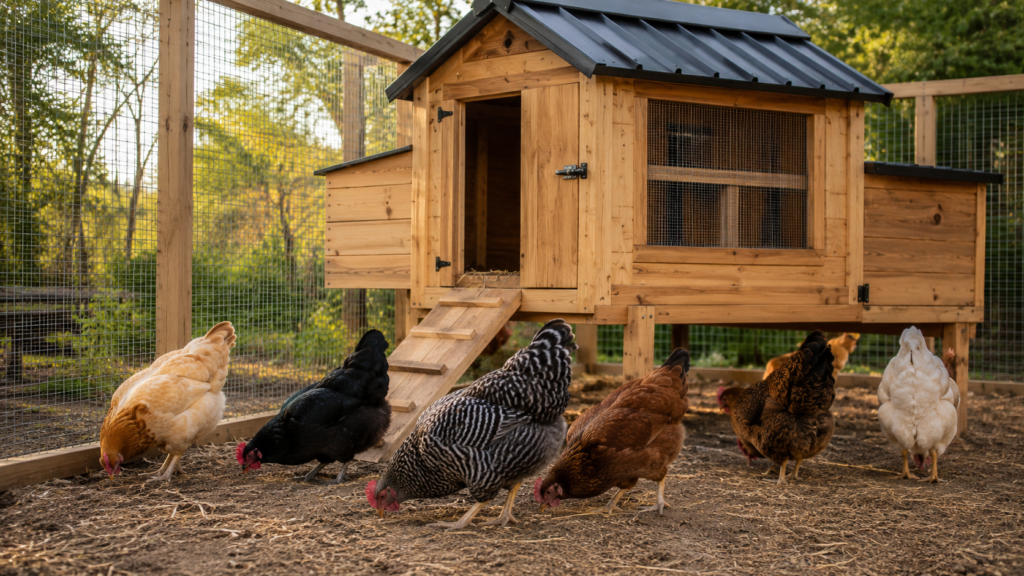
If you are asking, “what size coop do i need for 6 chickens,” the practical answer is at least 24 square feet of indoor coop space plus 60 square feet of secure outdoor run space. That means a 4-by-6-foot coop and a 6-by-10-foot run is a solid minimum for six standard-size hens, with more room strongly recommended if they will spend much of the day confined.
This guide explains how to size a coop for six chickens, plan the run, place roosts and nesting boxes, and avoid the most common beginner mistakes. It is written for backyard keepers who want a flock that is easy to manage, healthy, and comfortable through daily care, winter weather, and busy weeks when free-ranging is not an option.
Why Does Coop Size Matter So Much for 6 Chickens?
Coop size is not just about whether six chickens physically fit inside. Chickens need enough space to roost, move past each other, escape minor bullying, stay dry, and keep bedding from becoming wet and ammonia-heavy too quickly.
A cramped coop creates stress that can show up as feather picking, dirty eggs, respiratory irritation, reduced laying, and more frequent cleaning. Six hens can look small in the yard, but once you add roost bars, feeders, waterers, nest boxes, and winter confinement, the usable space shrinks fast.
The non-obvious expert tip is to size for the worst week of the year, not the prettiest spring afternoon. If your birds may be locked in during storms, snow, predator pressure, travel, or muddy conditions, extra run space and covered outdoor space matter just as much as the coop footprint.
What Size Coop Do I Need for 6 Chickens? The Core Plan
For six standard hens, plan on a minimum of 4 square feet per bird inside the coop and 10 square feet per bird in the outdoor run. That gives you 24 square feet indoors and 60 square feet outdoors, but a roomier setup is easier to keep clean and much more forgiving.
If you are building from scratch, a 4-by-6-foot coop with a 6-by-10-foot run is a workable baseline. A 6-by-6-foot coop or 4-by-8-foot coop with a 6-by-12-foot or 8-by-10-foot run gives your flock more breathing room without becoming difficult to manage.
| Item | Amount/Spec | Why it matters |
|---|---|---|
| Indoor coop floor space | Minimum 24 sq ft; 30 to 36 sq ft preferred | Gives six hens enough room to move, avoid crowding, and stay calmer during bad weather. |
| Outdoor run space | Minimum 60 sq ft; 72 to 100 sq ft preferred | Reduces mud, boredom, pecking, odor, and pressure on the ground. |
| Roost space | 8 to 10 inches per bird; 5 to 6 feet total | Lets all hens sleep comfortably without piling, pushing, or sleeping in nest boxes. |
| Nesting boxes | 2 boxes for 6 hens | One nest per 3 to 4 hens is usually enough and prevents wasted coop space. |
| Ventilation | High vents above roost level, protected from drafts | Removes moisture and ammonia while keeping cold air from blowing directly on birds. |
| Pop door | About 10 by 12 inches for standard hens | Allows easy movement between coop and run while helping control drafts and predators. |
| Cleanout access | Full-size human door or large cleanout panel | Makes bedding changes, inspections, and pest control much easier. |
How to Plan a Coop for 6 Chickens Step by Step
Start with the flock type: Decide whether you are keeping standard hens, bantams, large breeds, or a mixed flock. Six standard hens need more space than six bantams, while big breeds such as Brahmas, Orpingtons, and Wyandottes benefit from extra floor and roost space. If you may add birds later, build bigger now.
Choose the coop footprint: For the indoor area, choose a footprint that gives at least 24 square feet. A 4-by-6-foot coop is the classic minimum, while a 4-by-8-foot or 6-by-6-foot coop gives you better layout options. Avoid counting nest boxes that hang outside the wall as floor space unless the birds can actually stand and move there.
Size the run generously: A 6-by-10-foot run meets the minimum for six hens, but a larger or partially covered run will stay cleaner. The University of Georgia Extension notes that good poultry housing should provide protection from weather, predators, and overcrowding, and outdoor space is part of that practical management. If your hens will rarely free-range, aim closer to 12 to 15 square feet per bird in the run.
Place roosts before accessories: Install roost bars before deciding exactly where feeders, waterers, and nest boxes will go. Put roosts higher than nest boxes so hens naturally sleep on the perch instead of in the nests. Use a flat or gently rounded 2-by-4-style perch with the wide side up in cold climates so feet can rest comfortably.
Add two nesting boxes: Six hens do not need six nests. Two well-placed nesting boxes, each about 12 by 12 by 12 inches for standard breeds, are usually enough. Put them in a darker, quieter part of the coop and keep them lower than the roosts.
Plan ventilation without drafts: Add vents near the roofline so warm, moist air can escape above the birds. Do not place strong openings directly at roost height where winter wind will hit sleeping hens. Covered gable vents, soffit-style vents, and hardware-cloth-protected openings work well.
Design for cleaning: Make sure you can reach every corner of the coop without crawling through bedding. A human-size door, removable roost board, and accessible nest boxes save time and keep you more consistent. The easier a coop is to clean, the healthier it usually stays.
Predator-proof the final design: Use hardware cloth instead of chicken wire for openings and run walls. Bury an apron of hardware cloth around the run or extend it outward along the ground to discourage digging predators. Latches should require more than a simple nudge, because raccoons are very good at opening basic hooks.
Is a 4×6 Coop Big Enough for 6 Chickens?
Yes, a 4×6 coop can be big enough for 6 standard chickens if they also have daily access to a secure outdoor run of at least 60 square feet. It is a minimum-size setup, not a luxury setup, so it works best when ventilation, roost placement, and run design are done well.
A 4×6 coop becomes less ideal if your chickens are large breeds, if they are confined for long stretches, or if the layout is cluttered. If you have the budget and space, moving up to a 4×8, 6×6, or 6×8 coop is usually worth it.
| Option | Best for | What to expect |
|---|---|---|
| 4×6 coop | Minimum setup for 6 standard hens with a good run | Functional, but layout must be efficient and cleaning must stay consistent. |
| 4×8 coop | Most beginner backyard flocks | More room for roosts, feeder placement, and occasional bad-weather confinement. |
| 6×6 coop | Keepers who want easier access and flexibility | Comfortable square layout with better movement around accessories. |
| 6×8 coop | Large breeds or future flock expansion | Very forgiving, easier to manage, and suitable if more birds may be added later. |
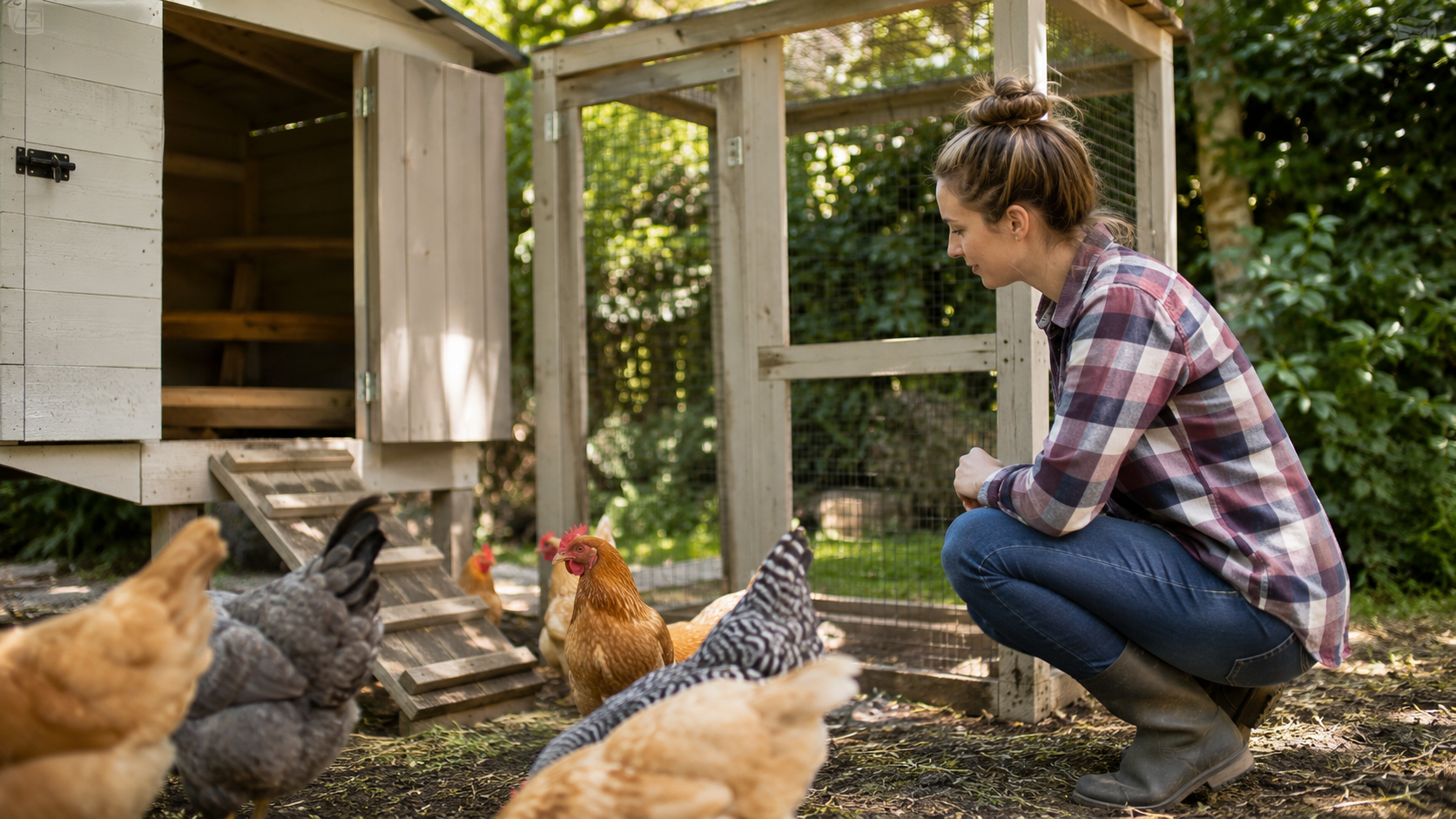
How to Customize Coop Size for Your Flock and Yard
For a mostly confined flock: If your six chickens spend most of their time in the coop and run, increase the run before you spend extra money on decorative coop features. A covered 8-by-12-foot run is far more useful than a small pretty run that turns to mud. Add perches, dust bath space, and hanging greens to reduce boredom.
For a free-ranging flock: You can often use the standard 24-square-foot indoor coop and 60-square-foot run if the birds roam safely most days. Still, do not skip the run, because predators, storms, garden protection, or travel may require confinement. Think of the run as your safe backup plan.
For large chicken breeds: Increase indoor space to 5 or 6 square feet per bird if you keep big-bodied hens. These birds also need lower, sturdier roosts and wider pathways around feeders and nest boxes. A 4-by-8-foot coop is a better minimum for six large hens than a 4-by-6-foot coop.
For cold or snowy climates: Build extra run space with a roof or partial roof so birds can go outside even during wet or snowy weather. Chickens tolerate cold better than damp, stale air, so do not close up every vent in winter. A dry, draft-free, well-ventilated coop is better than a sealed one.
For hot climates: Prioritize shade, airflow, and a run that does not trap heat. Six hens in a tight coop can overheat quickly if ventilation is poor. Use wide roof overhangs, shaded walls, high vents, and open-air hardware-cloth panels where predators allow.
Companion Setup Tips for a 6-Chicken Coop
A good coop plan includes more than square footage. Nest box placement, bedding depth, feeder location, shade, drainage, and daily access all affect how comfortable the flock will be. Before you build, it helps to think through how you will collect eggs, refill water, and clean droppings on an ordinary busy morning.
For nest planning, Cedar & Cluck’s guide to chicken nesting boxes explains how many boxes hens actually need and where to place them. For a broader look at flock housing, the guide on how big a chicken coop should be can help you compare different flock sizes and layouts.
Pair your 6-chicken coop with a practical daily routine. Open the pop door early, check feed and water, collect eggs, remove obvious wet bedding, and close the coop securely at dusk. Small habits keep the space healthier than occasional major cleanups.
Common 6-Chicken Coop Problems and How to Fix Them
| Problem | Likely cause | Easy fix |
|---|---|---|
| Strong ammonia smell | Too much moisture, poor ventilation, or overcrowding | Add high vents, remove wet bedding, and increase dry litter depth or cleaning frequency. |
| Dirty eggs | Hens sleeping in nest boxes or tracking mud inside | Raise roosts above nests, refresh nest bedding, and improve run drainage. |
| Feather picking | Crowding, boredom, low protein, or stress | Expand run space, add enrichment, check feed quality, and provide multiple feeding points. |
| Muddy run | Poor drainage or too small an outdoor area | Add coarse wood chips, roof part of the run, divert runoff, or expand the run. |
| Hens fighting at roost time | Not enough roost length or awkward roost placement | Provide 5 to 6 feet of roost space and leave room for birds to hop up and down safely. |
| Predators digging at the run | No buried barrier or apron | Install a hardware-cloth apron around the run perimeter and secure all gaps. |
| Condensation inside the coop | Moisture trapped by poor ventilation | Open protected upper vents and keep waterers out of the coop when practical. |
When a coop problem appears, look first at space, moisture, ventilation, and predator security. Most backyard coop issues trace back to one of those four areas, and fixing them early is much easier than correcting a stressed flock later.
Coop Maintenance for a Healthy 6-Chicken Flock
A 6-hen coop stays healthiest when cleaning is predictable. Remove wet bedding as soon as you see it, scrape droppings boards regularly if you use them, and refresh nest bedding whenever it becomes flattened or dirty. A smaller minimum-size coop needs more frequent attention than a larger coop because moisture and manure build up faster.
Check ventilation and structural safety every season. The USDA Animal and Plant Health Inspection Service emphasizes biosecurity basics such as keeping poultry areas clean, limiting disease exposure, and protecting birds from wild animals. Good coop maintenance supports those same goals by reducing pests, dampness, and contact with outside birds.
Plan deeper maintenance at least a few times a year. Empty old bedding, inspect for mites, tighten hardware cloth, repair latches, and look for water damage. A coop that is easy to inspect will last longer and protect the flock better.
Frequently Asked Questions
Can 6 chickens live in a 4×4 coop?
A 4×4 coop gives only 16 square feet, which is too small for six standard-size hens as a regular setup. It may work only for bantams or for temporary housing with excellent outdoor access. For standard hens, choose at least 24 square feet inside.
How many nesting boxes do I need for 6 chickens?
Two nesting boxes are usually enough for six hens. Most hens prefer to use the same favorite box anyway, so adding too many boxes often wastes space. Keep the boxes clean, dim, and lower than the roosts.
How much roost space do 6 chickens need?
Plan on 8 to 10 inches of roost space per bird, or about 5 to 6 feet total for six standard hens. More space is helpful for large breeds or mixed flocks with pecking-order tension. Keep roosts wide enough for comfortable footing.
Do chickens need a run if the coop is big?
Yes, chickens still need outdoor space unless they are in a very large poultry house designed for confinement. A run gives them fresh air, light, scratching space, and room to dust bathe. For six hens, start with at least 60 square feet of secure run space.
Is it better to build bigger than the minimum coop size?
Yes, if your budget and yard allow it. Bigger coops are easier to ventilate, easier to clean, and more forgiving during bad weather. Extra space also helps if you later add hens, which many backyard keepers eventually do.
Should food and water go inside the coop or outside?
Many keepers place feed inside a dry, predator-safe area and water in the run to reduce moisture inside the coop. In freezing climates, water placement may depend on where you can safely prevent ice. The key is keeping feed dry and making water available whenever the flock is awake.
A Comfortable Coop Starts With the Right Fit
For six chickens, the best starting point is at least 24 square feet of indoor coop space and 60 square feet of run space. A 4-by-6-foot coop can work, but a larger coop and run will be easier to keep clean, calmer for the birds, and more flexible over time.
Build for your real conditions: weather, predators, breed size, and how often the flock will be confined. For more practical chicken-keeping guidance, visit Cedar & Cluck and keep planning a setup that works for both you and your hens.
