
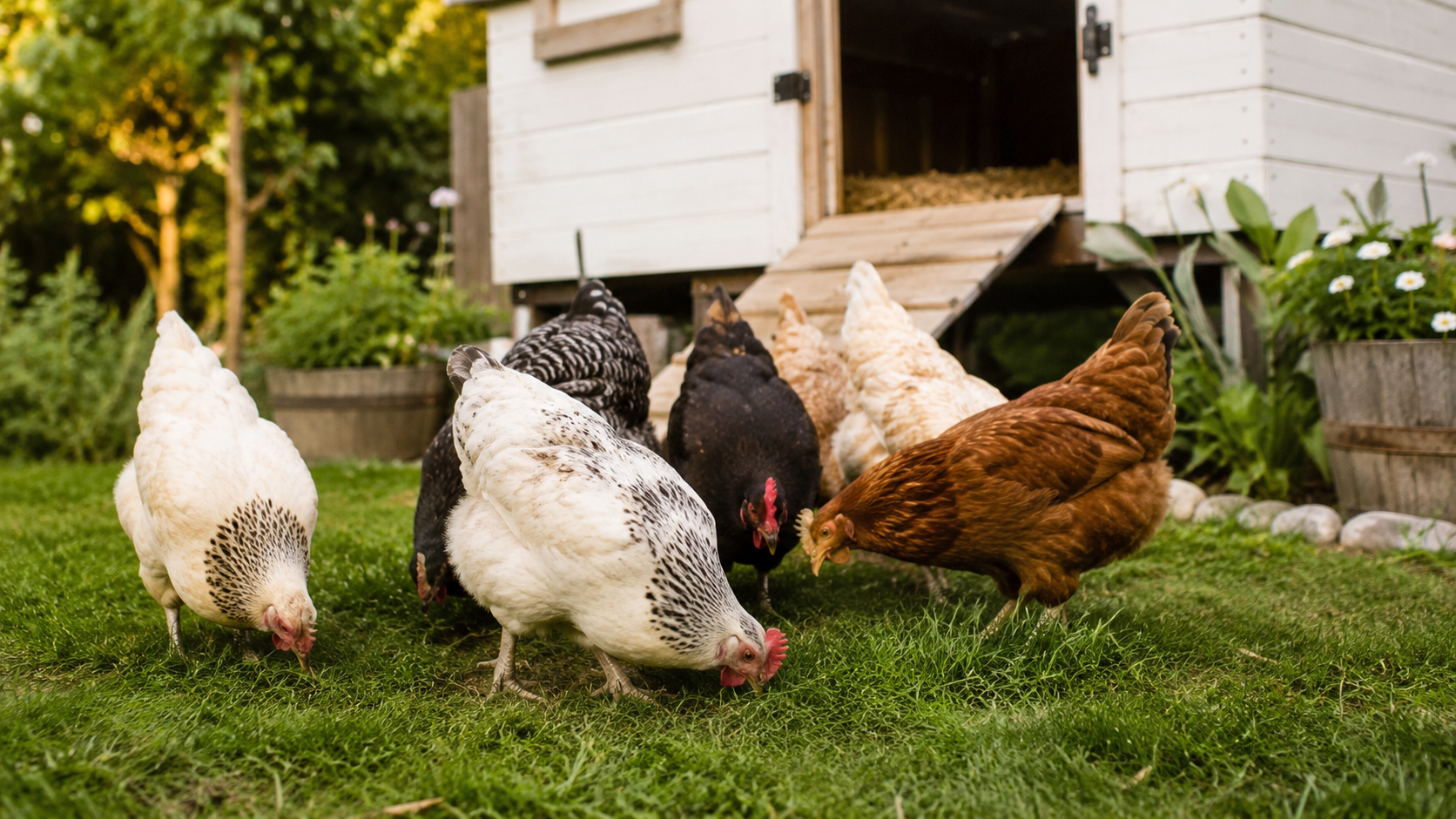
If you are wondering how many chickens should a beginner start with, the best answer for most new keepers is 3 to 6 hens. Three gives you enough eggs to learn the basics without being overwhelmed, while 4 to 6 is often the sweet spot for steady egg production and healthier flock dynamics.
This guide explains how to choose the right starter flock size, what changes that number, and how to avoid the most common beginner mistakes. It is for first-time chicken keepers who want a realistic, low-stress way to get started and do it right.
What Makes the Right Beginner Flock Size?
The right flock size is a balance between your time, space, budget, and goals. Chickens are social birds, so one or two hens is usually not ideal, but a flock that is too large can quickly turn daily chores into a burden.
Most beginners do best with a small group because it is easier to learn feeding, cleaning, egg collection, and basic health checks when you are not managing too many birds at once. A smaller flock also makes it easier to notice when one hen is off her feed or acting differently.
Your coop and run matter just as much as your confidence level. If the setup is too tight, even a small flock can become noisy, dirty, and prone to pecking problems. A good starter flock should fit your housing, your schedule, and your long-term budget.
The best expert tip is to start with the number of hens you can comfortably care for during your busiest week, not your best week.
The Best Answer to How Many Chickens Should a Beginner Start With
For most beginners, 4 hens is the most practical starting point. That number is large enough to keep the flock socially balanced and produce a useful number of eggs, but small enough to keep feed costs, bedding, and cleaning manageable.
If you want the safest, simplest entry point, start with 3 hens. If you already have a larger coop, enough time, and a clear egg goal, 5 or 6 hens can still be a good beginner flock. Avoid starting with just one bird or jumping straight to a large flock unless you already have poultry experience.
| Item | Amount / Spec | Why it matters |
|---|---|---|
| Starter flock size | 3-6 hens | Small enough to manage, large enough for healthy flock behavior and reliable eggs |
| Most balanced choice | 4 hens | Usually the easiest mix of egg output, cost, and daily workload |
| Minimum practical flock | 3 hens | Helps avoid loneliness and social stress without overwhelming a new keeper |
| Coop space | Enough for the full adult flock | Prevents crowding, pecking, and messy conditions |
| Run space | More space is better | Gives birds room to move, scratch, and stay calmer |
| Egg goal | Match flock size to household use | Keeps expectations realistic so you do not overbuy birds |
Step-by-Step Plan for Choosing Your First Flock
Set your egg goal: Decide how many eggs your household actually uses in a week. If you eat eggs occasionally, 3 hens may be enough. If you want a regular kitchen supply, 4 to 6 hens usually makes more sense.
Measure your space: Check your coop and run before buying birds, not after. Chickens need enough room to move, roost, and avoid each other, and overcrowding causes stress fast. If space is tight, choose fewer hens rather than hoping they will “make do.”
Match the flock to your schedule: Chickens need daily feeding, water checks, egg collection, and regular cleaning. A smaller flock is easier for families, first-time owners, or anyone balancing pets, work, and travel. Keep your weakest week in mind, not your ideal routine.
Start with pullets when possible: Young female chickens, called pullets, are usually the easiest route for beginners who want eggs without having to brood chicks. They are past the fragile newborn stage and closer to laying age, which lowers early-care complexity. If you want to know more about timing, see when hens start laying eggs.
Buy the right breed mix: Some breeds are calmer, hardier, or more forgiving for new keepers than others. A beginner-friendly breed can make a small flock much easier to manage, especially if you are still learning flock behavior. Choose birds that fit your climate and temperament goals instead of chasing novelty.
Plan for the full flock lifecycle: Chickens may live many years, but egg laying changes with age and season. Thinking ahead helps you avoid impulse buying and makes it easier to budget for feed, bedding, and future flock additions. The long game matters as much as the first season.
Check local rules: Some neighborhoods limit flock size, roosters, or coop placement. Make sure your starter number fits local ordinances so you do not have to rehome birds later. Rules can shape your flock more than any advice online.
Review welfare basics: The USDA emphasizes proper handling, sanitation, and healthy living conditions for poultry. That means your flock size should stay within what you can house and manage cleanly. Good chicken keeping starts with realistic numbers, not ambitious ones.
How Many Chickens Should a Beginner Start With for Eggs?
If your main goal is eggs, 4 to 6 hens is usually the best beginner range. That size gives you enough production to notice the benefits of backyard chickens without flooding your kitchen with more eggs than you can use.
A smaller flock of 3 hens works well for light egg use, while 6 hens is better if you bake often or feed a larger household. More than that can still be manageable, but only if your coop, run, and daily routine are ready for it.
| Option | Best for | What to expect |
|---|---|---|
| 3 hens | Very small households | Simple care and modest egg output |
| 4 hens | Most beginners | Balanced egg supply and easy management |
| 5-6 hens | Families that use many eggs | More eggs, more feed, more cleaning |
| 7+ hens | Experienced keepers | Higher output, but a bigger learning curve |
For a tiny backyard:
If your space is limited, start with 3 hens and build from there only if your setup proves comfortable. A cramped coop is one of the fastest ways to create avoidable stress, so it is better to keep fewer birds than squeeze in more.
For a family that eats lots of eggs: Start with 5 or 6 hens if your coop size, feed budget, and daily care routine can support them. That gives you a cushion for seasonal slowdowns and still keeps the flock small enough for a beginner to learn on.
For a very busy household: Keep the flock to 3 or 4 hens so chores stay predictable. When life gets hectic, a smaller flock is easier to clean, feed, and monitor consistently, which matters more than having extra birds.
For a kid-friendly setup: Choose 4 calm hens instead of a bigger mixed flock. Fewer birds are easier for children to observe and help care for, and you will have an easier time teaching routines like collecting eggs and refilling water.
For a future expansion plan: Start with 4 hens, then add more only after you have lived with your coop for a full season. That gives you time to learn where messes build up, how much feed you actually use, and whether your backyard routine can handle more birds.
Pairing Your Starter Flock With the Right Setup
The best flock size only works if the coop and routine support it. Before bringing birds home, review how big should a chicken coop be so you can match bird count to actual usable space.
You should also think about laying comfort and egg collection. A small flock often does best with properly placed nest boxes, so it helps to read about chicken nesting boxes before you buy supplies.
Common Beginner Flock Size Problems and How to Fix Them
| Problem | Likely cause | Easy fix |
|---|---|---|
| Too few eggs | Flock is smaller than your household needs | Add hens later, or adjust expectations for seasonal laying |
| Overcrowded coop | Too many birds for the available space | Reduce flock size or expand coop and run space |
| Constant pecking | Social stress from crowding or poor flock balance | Give more space, more enrichment, or fewer birds |
| High feed bills | Flock is larger than your budget planned for | Recalculate monthly costs before adding birds |
| Messy coop | Too many hens for the cleaning schedule | Start smaller and clean more often |
| New keeper burnout | Starting with too many responsibilities at once | Scale back and learn with a manageable flock first |
If you are unsure, smaller is usually safer. It is easier to add chickens later than to fix a flock that is already too large for your setup, budget, or experience level.
Keeping Your Starter Flock Working Long Term
A beginner flock is easier to maintain when you think beyond the first month. Feed, bedding, waterers, and routine cleaning all scale with bird count, so even one or two extra hens can change your workload more than you expect.
University extension guidance consistently emphasizes clean housing, steady feed, and good ventilation for poultry health. That is why many new keepers do best by choosing a flock size they can support through wet weather, summer heat, and winter chores, not just mild days.
Long-term success also means planning for replacement hens. Egg laying changes with age, and not every bird will keep producing at the same level forever, so a small but stable starter flock gives you room to learn before you decide whether to expand.
Frequently Asked Questions
Can I start with just 2 chickens?
You can, but 2 is usually not ideal. Chickens are flock animals, and a pair can be more vulnerable to stress if one bird becomes sick or dominant. Three is generally a better minimum.
Is 4 chickens enough for a beginner?
Yes, 4 is often the best starting point. It is a manageable size for learning daily care while still giving you a useful egg supply. For many first-time keepers, it is the safest middle ground.
How many chickens do I need for a family of 4?
Many families of 4 are happy with 4 to 6 hens, depending on how many eggs they eat. If eggs are a regular part of your meals, 5 or 6 birds is often more comfortable. If you use eggs less often, 4 may be enough.
Should beginners start with chicks or pullets?
Pullets are usually easier for beginners because they are closer to laying age and need less early-stage care. Chicks can be rewarding, but they require brooding heat, closer supervision, and more time.
Do more chickens mean more problems?
Often, yes. More birds mean more feed, more manure, more cleaning, and more chances for flock stress if space is limited. That is why a small starter flock is usually the wiser choice.
Can I add more chickens later?
Yes, and that is usually the best way to grow. Start with a small flock, learn your routine, and add birds only after you know your coop and schedule can handle the increase. Slow growth is easier to manage than correcting an oversized first flock.
A Smart Start for a Better Flock
If you are asking how many chickens should a beginner start with, the most practical answer is usually 3 to 6 hens, with 4 as the best all-around choice. That range keeps the learning curve manageable while giving you enough eggs and a healthy flock structure.
Start small, match the flock to your space, and build good habits from day one. For more tested beginner chicken advice, visit Cedar & Cluck.
