
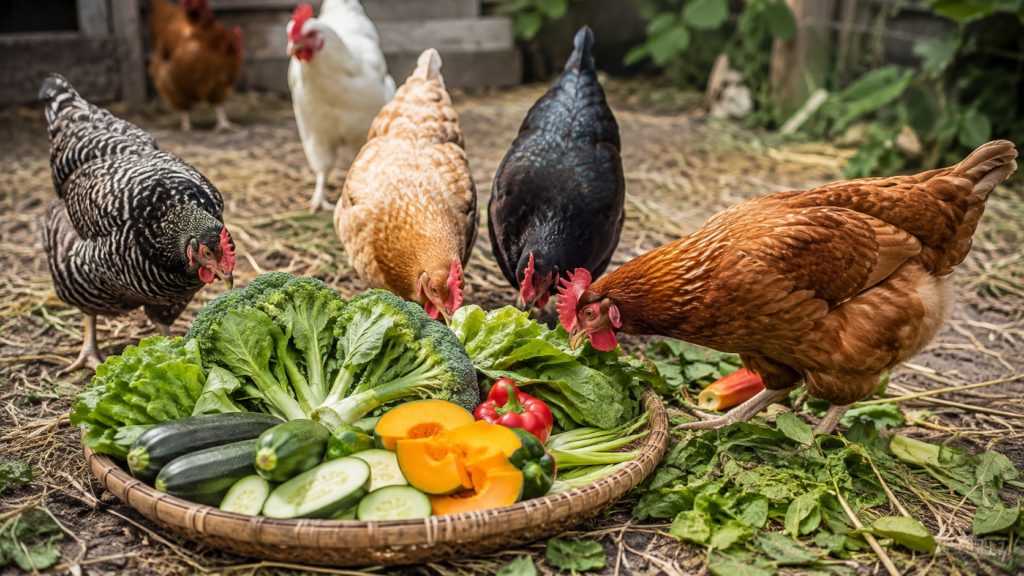
Chickens can eat small amounts of leafy greens, cucumbers, zucchini, pumpkin, squash, carrots, peas, broccoli, cauliflower, and cooked sweet potato daily as part of a balanced diet. The safest rule is to keep vegetables and other treats to about 10% of the flock’s total daily intake, with a complete chicken feed making up the rest.
This guide explains what vegetables can chickens eat daily, how much to offer, how to prepare them, and when to pull back. It is written for backyard chicken keepers who want practical feeding advice that supports healthy digestion, steady laying, and less waste in the run.
Why Does Daily Vegetable Feeding Need a Limit?
Vegetables can be excellent enrichment for chickens, but they are not a replacement for a complete layer, grower, or starter feed. Commercial poultry feed is formulated to provide the right balance of protein, calcium, amino acids, vitamins, and minerals that hens need for eggs, feathers, bones, and immune function.
The problem with too many vegetables is dilution. Even healthy vegetables are usually high in water and fiber but lower in protein and energy than formulated feed, so a bird that fills up on scraps may eat less of the nutrition she actually needs.
The best daily vegetable routine is predictable, moderate, and varied. A non-obvious expert tip: offer vegetables after your flock has had access to its complete feed for a few hours, not first thing in the morning, so treats do not displace the most important meal of the day.
What Vegetables Can Chickens Eat Daily? Safe Options and Amounts
The table below gives a practical starting point for adult backyard hens. Amounts are approximate because breed size, season, free-ranging access, and laying status all affect appetite.
| Vegetable | Amount/Spec | Why it matters |
|---|---|---|
| Leafy greens such as romaine, kale, chard, spinach, and collards | 1 to 2 loose handfuls per 6 hens, chopped or hung whole | Greens provide enrichment, moisture, and micronutrients, but rotating types prevents overdoing any one leafy vegetable. |
| Cucumber | Half to 1 medium cucumber per 6 hens | High water content makes cucumber useful in warm weather without being too calorie-dense. |
| Zucchini and summer squash | 1 small squash per 6 hens, split lengthwise | Soft flesh and seeds are easy to peck, and the shape keeps birds busy. |
| Pumpkin and winter squash | A few wedges or 1 small split squash for a flock | Good seasonal enrichment with edible flesh and seeds, though it should still be treated as a supplement. |
| Carrots | 1 to 2 medium carrots per 6 hens, grated or finely chopped | Raw carrots are tough, so smaller pieces improve access and reduce waste. |
| Broccoli and cauliflower | 1 small head or several florets per flock, chopped or hung | These cruciferous vegetables are nutritious and entertaining, but large amounts may cause loose droppings in some birds. |
| Peas | Small handful per 6 hens, fresh or thawed | Peas are palatable and offer more protein than many watery vegetables, making them a useful training treat. |
| Green beans | Cooked only, small handful per 6 hens | Cooking improves digestibility and makes beans safer than tough raw pods. |
| Sweet potato | Cooked, a few small cubes per bird | Cooked sweet potato is energy-rich, so it is best as a small add-on rather than a large daily serving. |
| Bell peppers | A few chopped pieces per bird, no moldy parts | Ripe peppers add variety and color; avoid confusing them with spicy peppers if your flock rejects them. |
For most backyard flocks, a good daily portion is roughly 1 to 2 cups of chopped vegetables for every 6 adult hens, adjusted down if the birds are small or not finishing their regular feed. If vegetables are replacing pellets or crumble in the feeder, the portion is too large.
How to Feed Daily Vegetables to Chickens Safely
Start with complete feed: Keep a balanced chicken feed available before treats come out. Adult laying hens need consistent nutrition to maintain egg production, shell quality, and body condition. Vegetables should sit beside the diet, not become the diet.
Use the 10% treat rule: Count vegetables, scratch grains, fruit, mealworms, and kitchen scraps together as treats. The University of Georgia Extension commonly advises limiting treats and scraps so they do not unbalance the ration. If you are unsure, feed less and watch how quickly the flock returns to its regular feed.
Wash and inspect produce: Rinse soil from garden vegetables and remove slimy, moldy, or spoiled areas. Chickens are hardy, but moldy scraps can introduce toxins and digestive upset. When in doubt, compost questionable produce instead of feeding it.
Chop to the right size: Soft vegetables can be split or hung whole, but hard vegetables should be grated, diced, cooked, or offered in thin strips. This helps smaller hens and pullets eat safely. Avoid long, stringy pieces that could be difficult to swallow.
Offer vegetables in a clean spot: Put vegetables in a shallow pan, hanging basket, treat holder, or clean patch of ground. Feeding on wet litter invites mess, bacteria, and flies. Remove leftovers before they rot, especially during warm weather.
Rotate the menu: Instead of giving kale every day for weeks, rotate greens, squash, cucumber, carrots, peas, and broccoli. Variety makes the diet more interesting and reduces the chance that one food dominates intake. Rotation also helps you spot which vegetables cause loose droppings or picky behavior.
Watch the flock after changes: Check droppings, feed consumption, egg production, and overall behavior when adding new vegetables. A little watery manure after cucumber on a hot day is usually not alarming, but persistent diarrhea, lethargy, or sudden laying changes mean it is time to simplify the diet and look for other causes.
Can chickens eat vegetables every day?
Yes, chickens can eat vegetables every day if the portions are modest and the vegetables are safe. Daily vegetables work best as a supplement for hydration, foraging behavior, and variety, while a complete feed remains the main source of nutrition.
Think of vegetables as a side dish. A flock can benefit from them, but the birds should still show strong interest in their pellets or crumble and should maintain normal body weight, droppings, and egg production.
| Option | Best for | What to expect |
|---|---|---|
| Daily leafy greens | Most adult flocks needing simple enrichment | Quick interest, easy prep, and minimal mess if portions are small. |
| Watery vegetables like cucumber or zucchini | Hot weather and birds that need hydration support | More moisture in the diet and possibly slightly wetter droppings. |
| Cooked root vegetables | Cold-weather treats or older birds that prefer soft foods | More filling treats, so portions should be smaller. |
| Hanging whole vegetables | Bored flocks or confined runs | Longer pecking time and less bullying around one dish. |
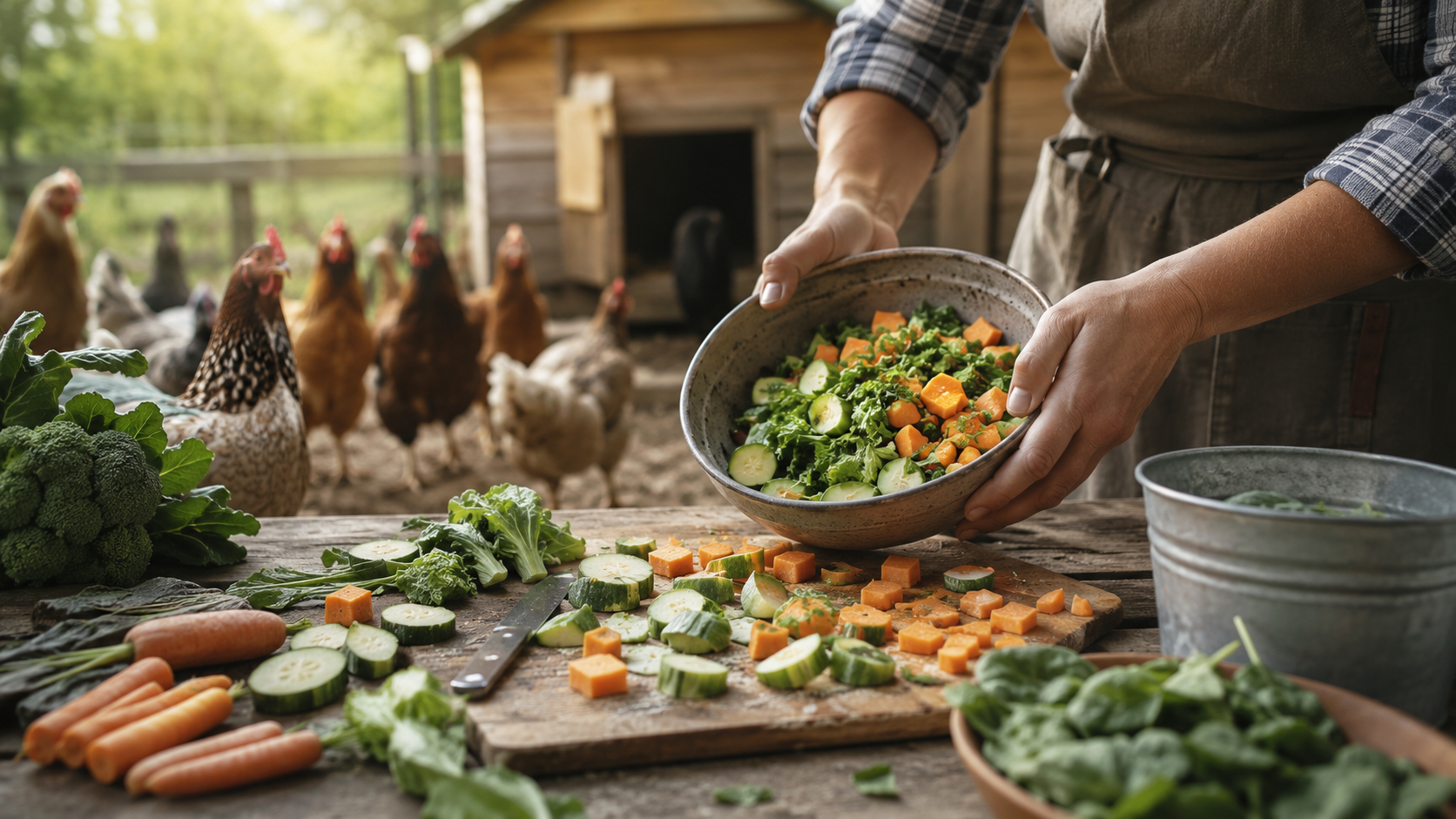
How to Customize Daily Vegetables for Your Flock
For a small backyard flock: Start with very small amounts, such as a handful of greens or a few cucumber slices for three or four hens. Small flocks can be overfed scraps easily because a little kitchen waste looks harmless to the keeper but is a lot for the birds.
For a mixed-age flock: Be extra careful with chicks and young pullets. Chicks should primarily eat chick starter, and any treats require appropriate chick grit. Adult hens can handle more variety, but young birds need a narrower diet to grow properly.
For a high-production laying flock: Keep vegetables especially limited during peak laying. Hens producing eggs regularly have high calcium and protein demands. If egg shells thin out or egg numbers drop after treat portions increase, reduce vegetables and review the main ration.
For a winter flock: Use vegetables for activity when pasture is limited, but do not rely on watery produce for calories. Cooked squash, a small amount of cooked sweet potato, or chopped greens can add interest, while complete feed remains essential for body heat and laying support.
For a garden-fed flock: Use clean, safe trimmings, but avoid treating the run like a compost pile. Chickens should not be given unknown weeds, spoiled produce, or plants from areas treated with unsafe chemicals. Feed what you can identify and control.
Companion Feeding Advice for Healthier Daily Routines
Vegetables fit into a bigger feeding system, and that system starts with knowing what your flock should eat every day. If you are still building the foundation, Cedar & Cluck’s guide to what to feed chickens explains the role of starter, grower, layer feed, grit, calcium, and treats.
It is just as important to know the no-go list. Before sending kitchen scraps to the run, compare them with the site’s guide to what chickens cannot eat, especially if you are feeding leftovers that may contain onion, avocado, excess salt, chocolate, or spoiled ingredients.
A simple routine works well for most keepers: feed the main ration in the morning, offer a small vegetable portion later in the day, and clean up leftovers before evening lockup. This keeps nutrition predictable while still giving birds something fresh to peck and investigate.
Common Daily Vegetable Feeding Problems and How to Fix Them
| Problem | Likely cause | Easy fix |
|---|---|---|
| Loose or watery droppings | Too many watery vegetables such as cucumber, lettuce, or zucchini | Cut portions in half and switch to drier options like chopped greens or a few peas. |
| Thin egg shells | Treats displacing layer feed or calcium intake | Reduce all treats, provide layer feed consistently, and offer oyster shell separately for laying hens. |
| Birds ignore their pellets | Vegetables and scraps are being offered too early or too generously | Offer vegetables later in the day after the flock has eaten its main feed. |
| Bullying around treats | One pile creates competition | Scatter small pieces widely or hang several vegetable sections in different spots. |
| Leftovers attract flies or rodents | Too much produce or poor cleanup | Feed only what birds finish quickly and remove scraps before roosting time. |
| Chickens reject a new vegetable | Unfamiliar texture, size, or smell | Try chopping it smaller, lightly cooking hard vegetables, or mixing a small amount with familiar greens. |
| Crop feels overly full late at night | Large fibrous pieces or excessive treats | Pause fibrous vegetables, provide grit, and monitor the bird closely for normal emptying by morning. |
Most feeding problems improve when you return to basics: complete feed, clean water, grit when needed, and small treat portions. If a chicken seems sick, isolated, or persistently abnormal, vegetable changes may not be the cause and a poultry-savvy veterinarian or extension resource is the safer next step.
How to Store and Maintain Safe Vegetable Treats
Store vegetables for chickens the same way you would store vegetables for your own kitchen: clean, cool, and protected from spoilage. Refrigerate cut produce, keep it covered, and discard anything slimy, sour-smelling, moldy, or heavily bruised. Chickens do not need perfect-looking food, but they do need safe food.
The USDA Food Safety and Inspection Service recommends refrigerating perishable foods promptly and keeping cold foods at safe temperatures to slow bacterial growth. While chickens are not humans, the same basic storage habits help prevent spoiled scraps from becoming a flock-health problem.
In hot weather, offer smaller portions more often instead of leaving a pile of produce in the run. In freezing weather, remove uneaten vegetables before they turn into icy, dirty lumps that birds may ignore or peck at later when quality has declined.
Frequently Asked Questions
What vegetables can chickens eat daily without getting sick?
Chickens can usually eat leafy greens, cucumber, zucchini, squash, carrots, peas, broccoli, cauliflower, and cooked sweet potato in small daily amounts. The key is moderation and variety, not unlimited access. Watch droppings and feed intake whenever you add a new food.
Can chickens eat lettuce every day?
Chickens can eat lettuce every day in small amounts, especially romaine and other darker leafy types. Iceberg lettuce is mostly water and should not be a major treat. Too much lettuce can contribute to watery droppings and reduced interest in balanced feed.
Can chickens eat raw vegetables?
Many raw vegetables are fine, including greens, cucumbers, zucchini, carrots, and broccoli. Hard vegetables should be chopped, grated, or split so birds can peck them safely. Some vegetables, such as green beans and potatoes, should be cooked before feeding.
How much vegetables should I feed my chickens per day?
A practical starting amount is 1 to 2 cups of chopped vegetables for every 6 adult hens. Keep all treats combined to about 10% of the total diet. If birds leave their regular feed, reduce the vegetable portion.
Are there vegetables chickens should never eat?
Avoid green potato skins, raw potato sprouts, avocado skins and pits, moldy produce, and scraps heavily seasoned with salt, onion, or garlic. Tomato fruit is generally fine when ripe, but avoid feeding tomato leaves and stems. If you cannot identify a plant or know it is safe, do not feed it.
Do chickens need grit when eating vegetables?
Chickens need grit when they eat fibrous foods and do not have natural access to small stones or coarse soil. Grit helps the gizzard grind food properly. Birds eating only commercial crumble or pellets may not need much added grit, but treat-fed and confined flocks usually benefit from having it available.
Fresh Vegetables, Steady Feed, Happier Hens
The best answer to what vegetables can chickens eat daily is simple: safe vegetables are welcome, but they belong in small, thoughtful portions beside a complete feed. Greens, squash, cucumber, carrots, peas, and similar produce can make daily care more enriching without unbalancing the diet.
Use vegetables as a tool for variety, hydration, and flock observation, then adjust based on what your birds show you. For more practical chicken-keeping guidance, visit Cedar & Cluck and keep building a routine your flock can thrive on.
