
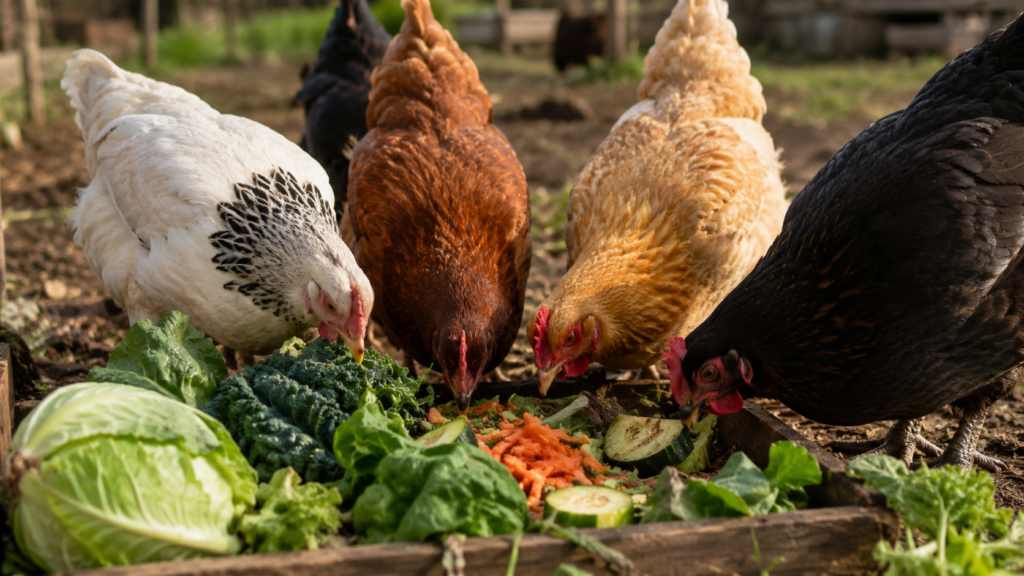
Chickens can eat leafy greens, squash, cucumbers, peas, carrots, pumpkin, cabbage, broccoli, and many other fresh vegetables daily as long as vegetables are fed as a supplement, not the main diet. For most backyard flocks, vegetables should make up no more than about 10% of what chickens eat each day, with a complete layer or grower feed providing the balanced nutrition they need.
This guide explains what vegetables can chickens eat daily, how to portion them, which ones need preparation, and how to keep treats from interfering with egg laying or flock health. It is written for backyard keepers who want to use kitchen scraps or garden produce wisely without guessing.
Why Does Vegetable Choice Matter for Chickens?
Vegetables can add moisture, fiber, variety, and enrichment to a flock’s routine, but they do not replace formulated poultry feed. A good feed contains carefully balanced protein, calcium, phosphorus, vitamins, and energy, while vegetables vary widely in nutrients and calories.
The biggest mistake is not feeding vegetables; it is letting vegetables dilute the main ration. If hens fill up on lettuce, cabbage, or cucumbers before eating enough layer feed, egg production, shell quality, and body condition can suffer over time.
Think of vegetables as a daily side dish, not the meal. A non-obvious expert tip: offer watery vegetables later in the day after your flock has already eaten feed for several hours, especially with laying hens.
What Vegetables Can Chickens Eat Daily? The Core List
The safest daily vegetables are fresh, clean, unseasoned, and easy for chickens to peck. The table below focuses on practical options most keepers can feed often, including how to serve them and why each one earns a place in the rotation.
| Vegetable | Amount/Spec | Why it matters |
|---|---|---|
| Romaine, leaf lettuce, and spring greens | A few torn leaves per 4 to 6 hens | Hydrating, easy to digest, and useful for enrichment, but less nutrient-dense than feed. |
| Kale, collards, and Swiss chard | Small handful, chopped or hung whole | More nutrient-dense leafy greens that encourage natural pecking and activity. |
| Cabbage | One wedge or hanging half for a flock | Excellent boredom buster, especially in winter, but best rotated with other greens. |
| Cucumber | Sliced lengthwise or chopped | Provides moisture during hot weather and is easy for chickens to eat. |
| Zucchini and summer squash | Split open or grated | Mild, soft, and usually accepted by picky birds once the flesh is exposed. |
| Pumpkin and winter squash | Raw or cooked, split open, seeds included | Good seasonal treat with fiber and enrichment value; do not treat it as a dewormer. |
| Carrots | Grated raw or cooked and cooled | More useful when shredded or softened because whole raw carrots are hard to peck. |
| Broccoli | Small florets, chopped stems, or hanging head | Nutritious and engaging, but should be part of a rotation rather than the only green. |
| Peas | Fresh or thawed frozen, plain | Popular with chickens and more calorie-dense than many watery vegetables. |
| Green beans | Cooked, plain, and chopped | Safe when cooked; raw beans are not a good choice because legumes can contain anti-nutritional compounds. |
| Beet greens and beetroot | Small chopped portions | Adds variety, though beet pigment can color droppings and alarm new keepers. |
| Sweet corn | Small amount, fresh or thawed, plain | High-energy treat that chickens love, but too much can crowd out better nutrition. |
Rotate vegetables instead of feeding one type every day. Variety helps prevent overdoing any single plant compound and keeps the flock interested.
How to Feed Daily Vegetables to Chickens Safely
Start with the main feed: Make sure your birds have constant access to the right complete feed for their age and purpose. Chicks need chick starter, growing birds need grower feed, and laying hens usually need layer feed with appropriate calcium.
Use the 90/10 rule: Keep vegetables, fruit, scratch, mealworms, and other extras to about 10% of the daily diet. The University of Minnesota Extension recommends limiting treats because too many extras can unbalance a chicken’s diet and reduce nutrition from complete feed.
Wash and inspect produce: Rinse soil, spoiled spots, and residues from garden vegetables before feeding. Do not offer moldy, slimy, fermented, or rotten vegetables, even if chickens seem willing to peck at them.
Cut for the bird, not the human: Chickens do not chew like we do, so long strings, tough chunks, and hard rounds can be difficult. Chop stems, grate hard roots, split squash, and cook firm vegetables when needed.
Serve plain: Avoid butter, oil, salt, dressings, sauces, garlic-heavy leftovers, and seasoned table scraps. A vegetable that is safe raw from the garden may become a poor choice after it has been cooked into a salty casserole.
Feed in a clean spot: Put vegetables in a shallow pan, hanging feeder, treat basket, or clean run area. Tossing wet scraps into deep mud or soiled bedding increases the chance of contamination and wasted food.
Remove leftovers: Pick up uneaten vegetables before they spoil, especially in hot or wet weather. A few dry cabbage leaves are one thing; a pile of damp, decaying scraps is an invitation for flies, rodents, and bad smells.
Watch the eggs and droppings: Loose droppings, pale yolks, thin shells, or reduced laying can signal too many extras or not enough balanced feed. Adjust portions before assuming the flock needs supplements.
Can chickens eat vegetables every day?
Yes, chickens can eat vegetables every day when the portions are modest and the vegetables are safe, fresh, and plain. Daily vegetables are best used for variety and enrichment, while the bulk of calories and nutrients should still come from a complete poultry ration.
If your hens ignore feed and wait for scraps, vegetables have become too large a part of the routine. Offer fewer scraps for a week and check whether feed intake and egg production improve.
| Option | Best for | What to expect |
|---|---|---|
| Small daily greens | Most backyard laying flocks | Steady enrichment without much risk of diet dilution. |
| Vegetable rotation 3 to 5 days weekly | New keepers or small flocks | Easier monitoring of droppings, appetite, and preferences. |
| Seasonal garden surplus | Summer and fall abundance | Good use of extras if portions are controlled and leftovers are removed. |
| Hanging whole vegetables | Bored birds or winter confinement | More activity and less waste, especially with cabbage, kale, and broccoli. |
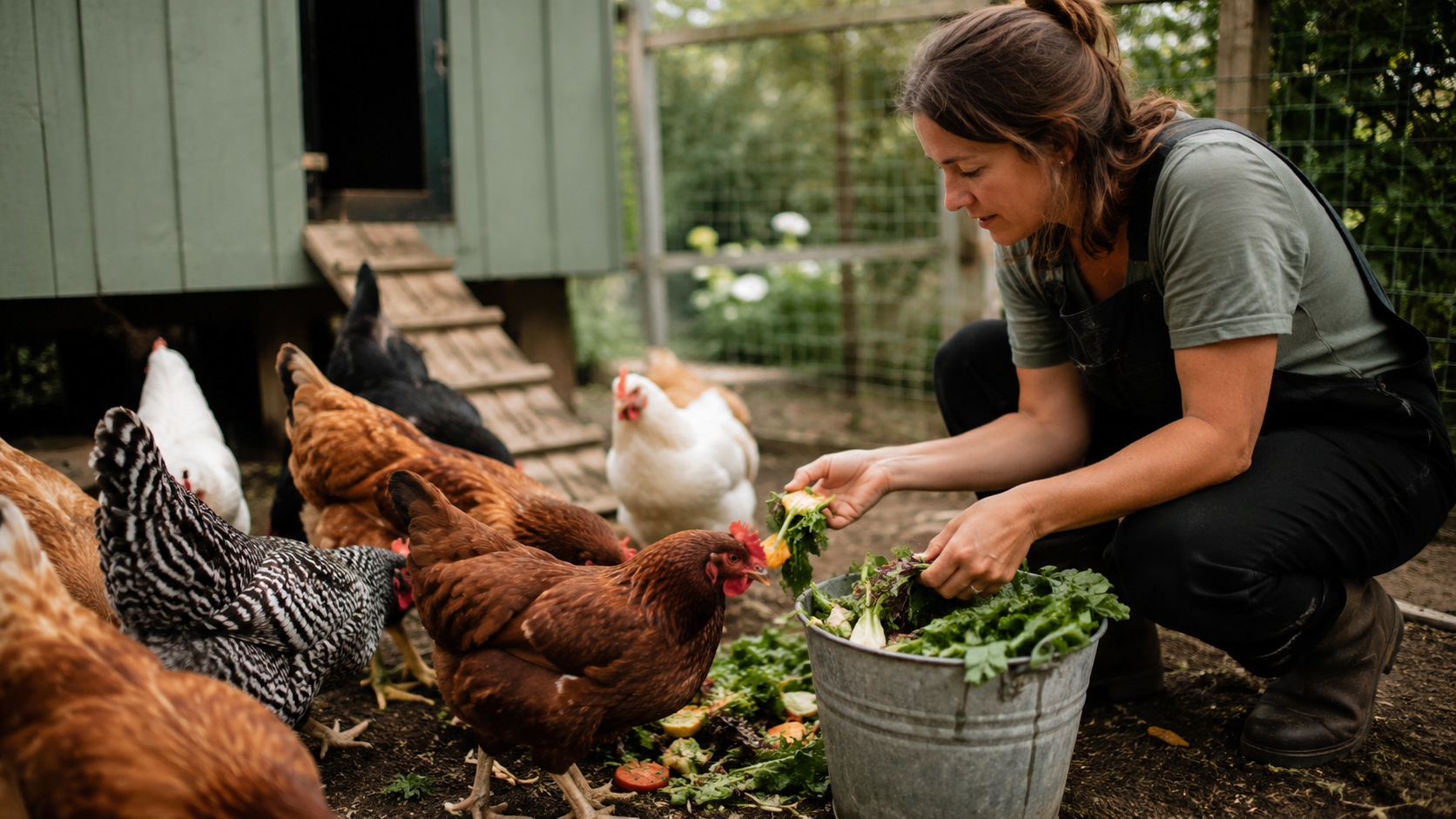
How to Customize Vegetable Feeding for Your Flock
For a laying flock: Put layer feed first and vegetables second. Hens producing eggs have higher calcium and protein demands, so too many low-calorie greens can show up as fewer eggs or weaker shells.
For a hot-weather flock: Lean on watery vegetables such as cucumber, zucchini, and lettuce in small amounts. Serve them in the afternoon for hydration support, but keep cool drinking water available at all times.
For a winter flock: Use cabbage, kale, pumpkin, squash, and broccoli as activity foods when pasture is limited. Hanging a cabbage or bunch of greens can reduce boredom pecking during short, cold days.
For chicks and pullets: Be much more conservative. Young birds should focus on starter or grower feed, and any vegetable treats should be finely chopped, introduced slowly, and paired with appropriate chick grit if they are eating anything beyond feed.
For overweight or low-activity hens: Choose leafy greens and watery vegetables instead of corn, peas, and starchy scraps. Also reduce scratch grains, which often cause more weight gain than vegetables do.
Practical Pairings for Better Feeding and Egg Results
Vegetables work best when they fit into a clear feeding routine. If you are still sorting out the basics of feed types, grit, calcium, scraps, and treats, Cedar & Cluck’s guide to what to feed chickens is the natural companion to this daily vegetable list.
Keep in mind that diet is only one part of egg production. If your hens are eating well but laying poorly, compare their age, daylight, stress, molt, and nest setup with the troubleshooting steps in why chickens are not laying eggs.
A simple daily rhythm works for many backyard flocks: complete feed in the feeder all day, clean water always available, grit offered separately when needed, and a small vegetable portion after the birds have already eaten their main ration. That routine keeps treats enjoyable without turning them into the diet.
Common Daily Vegetable Feeding Problems and How to Fix Them
| Problem | Likely cause | Easy fix |
|---|---|---|
| Watery droppings after vegetables | Too many watery foods such as cucumber, lettuce, or zucchini | Cut the portion in half and rotate in firmer vegetables like kale or squash. |
| Hens stop eating much feed | Vegetables and treats are being offered too early or too generously | Offer vegetables late in the day and limit all extras to about 10% of intake. |
| Thin or weak eggshells | Diet dilution, low calcium intake, or hens filling up on scraps | Prioritize layer feed and provide oyster shell separately for laying hens. |
| Vegetables left uneaten | Pieces are too large, unfamiliar, or tough | Chop, grate, cook and cool, or hang vegetables to make them more inviting. |
| Rodents around the coop | Scraps left overnight or tossed into bedding | Feed in a dish and remove leftovers before evening lockup. |
| Crop feels overly full or odd | Bird ate too much fibrous material or long stringy pieces | Avoid long strands, chop tough greens, and contact a poultry vet if the crop does not empty overnight. |
| Birds fight over scraps | Food is placed in one small pile | Spread vegetables in several stations so lower-ranking hens can eat safely. |
Most vegetable problems are portion, timing, or sanitation problems rather than problems with vegetables themselves. When in doubt, scale back for several days and let the flock’s normal feed do the heavy lifting.
Vegetable Storage and Freshness for Chicken Feeding
Store chicken vegetables the same way you would store produce for your kitchen: cool, clean, and protected from spoilage. The USDA Food Safety and Inspection Service advises keeping perishable foods out of the danger zone and refrigerating foods promptly, and the same common-sense approach helps keep poultry scraps from becoming moldy or contaminated.
Do not save questionable scraps for the birds just because you do not want to waste them. Moldy produce can contain toxins, and rotten wet scraps can upset digestion and attract pests long before a chicken benefits from them.
If you grow a garden, sort flock vegetables into three groups: fresh daily trimmings, short-term refrigerator scraps, and compost-only waste. Chickens are not a disposal system for spoiled food; they are livestock that reward careful feeding with better health and steadier eggs.
Frequently Asked Questions
What vegetables can chickens eat daily without getting sick?
Chickens can usually eat leafy greens, cucumbers, zucchini, squash, pumpkin, carrots, peas, cabbage, broccoli, and cooked green beans daily in small portions. The vegetables should be fresh, plain, and fed alongside a complete ration rather than replacing it.
How many vegetables should I give my chickens per day?
A practical starting point is one small handful of chopped vegetables per 3 to 4 adult chickens. If you feed several types of treats, keep all extras combined to about 10% of the day’s total diet.
Can chickens eat raw vegetables?
Yes, many raw vegetables are fine, including lettuce, kale, cucumber, zucchini, pumpkin, cabbage, and grated carrots. Hard, tough, or legume-based vegetables may need chopping or cooking, and green beans should be cooked and served plain.
What vegetables should chickens not eat?
Avoid green potato skins, raw dried beans, moldy vegetables, spoiled scraps, and heavily salted or seasoned vegetable dishes. Also avoid treating onions, garlic, and other strong alliums as daily foods, especially in large amounts.
Can too many vegetables stop chickens from laying eggs?
Too many vegetables can contribute to poor laying if they displace balanced feed. Hens need enough protein, calories, calcium, and trace nutrients to produce eggs consistently, and vegetables alone cannot provide that balance.
Do chickens need grit when eating vegetables?
If chickens eat anything other than crumble, pellets, or mash, they generally need access to appropriate grit to help grind food in the gizzard. Birds that free-range may find some grit naturally, but offering poultry grit separately is a simple safeguard.
Keep the Greens Helpful, Not Harmful
The best answer to what vegetables can chickens eat daily is simple: feed safe vegetables in small, fresh, varied portions while letting complete feed remain the foundation. Greens and garden scraps should make your flock’s day more interesting, not quietly unbalance the diet.
Use this list as a practical routine, then adjust based on your birds’ droppings, appetite, eggs, and behavior. For more grounded backyard chicken guidance, visit Cedar & Cluck and keep building a healthier flock one good habit at a time.
