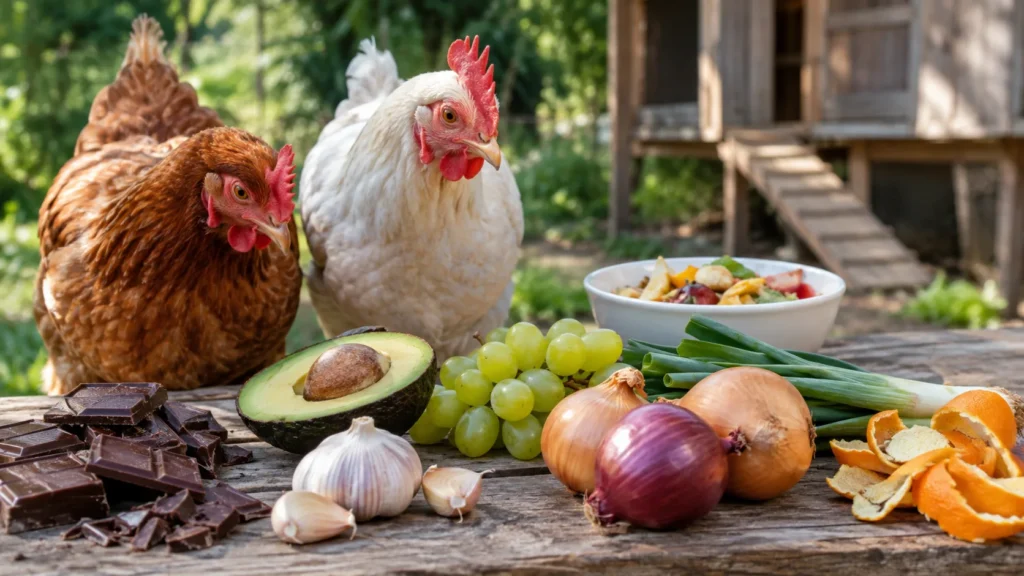
What can chickens not eat? Chickens should not eat chocolate, caffeine, alcohol, avocado skin or pits, raw dried beans, green potato parts, rhubarb leaves, moldy food, heavily salted scraps, or spoiled meat and dairy. These foods can cause poisoning, digestive problems, choking, or serious illness, so a complete chicken feed should remain the foundation of the diet.
This guide explains the foods to avoid, how to check questionable scraps, what to do if a chicken eats something risky, and how to offer treats safely. It is written for new and experienced backyard keepers who want practical rules rather than a confusing list of internet rumors.
What Makes Certain Foods Unsafe for Chickens?
Chickens are opportunistic eaters, not reliable judges of safety. They may peck at bitter leaves, spoiled leftovers, toxic plant parts, or food that has started to ferment because curiosity and hunger override their ability to identify hazards.
The risk depends on the food, the plant part, the preparation, and the amount eaten. A ripe tomato is very different from its leaves and stem, while a cooked bean is different from a raw dried bean. Mold is also unpredictable: one small spot may hide toxins that are not visible across the rest of a soft or damp food.
The safest principle is simple: if you would not confidently serve it fresh, fully cooked when appropriate, and in a small portion, do not put it in the chicken run. An expert tip is to keep a dedicated “questionable scraps” container for compost rather than letting chickens make the decision for you.
What Can Chickens Not Eat? The Backyard Safety Checklist
| Food or material | Amount/specification to avoid | Why it matters |
|---|---|---|
| Chocolate, coffee, tea, and energy drinks | All forms, including grounds and caffeinated drinks | Caffeine and related stimulants can affect the heart and nervous system. |
| Alcohol | Beer, wine, liquor, fermented drinks, and alcohol-containing foods | Alcohol can cause dangerous nervous-system effects and poor coordination. |
| Avocado skin, leaves, and pit | Do not feed the plant parts; avoid the pit as a choking hazard | Avocado plant material may contain persin, and the pit can obstruct the digestive tract. |
| Raw dried beans | Uncooked or inadequately cooked kidney beans and other dried beans | Raw beans contain compounds that can cause severe digestive illness; cooking reduces the risk. |
| Green potatoes and potato sprouts | Green skin, sprouts, eyes, leaves, and stems | These parts can contain concentrated glycoalkaloids. |
| Tomato, eggplant, and pepper leaves or stems | Green plant parts rather than ripe fruit | These nightshade plant parts are a poor risk compared with ripe, washed fruit. |
| Rhubarb leaves | Leaves and trimmings | Rhubarb leaves contain compounds that can irritate the digestive system and affect mineral balance. |
| Onions, garlic, and very pungent alliums | Large amounts, concentrated scraps, or repeated feeding | They may irritate digestion and are unnecessary when safer treats are available. |
| Moldy, rotten, or fermented food | Any visibly moldy grain, bread, fruit, feed, or leftovers | Mold toxins are unpredictable and may remain even after the visible mold is removed. |
| Very salty, sugary, or greasy food | Chips, candy, heavily seasoned food, fried scraps, and fast food | These foods displace balanced feed and can contribute to digestive and nutritional problems. |
| Raw meat, spoiled dairy, and unknown leftovers | Food that is spoiled, unrefrigerated, or contaminated | It can carry pathogens and may attract pests to the flock area. |
| Plastic, rubber, string, and treated wood | Any non-food item within reach | Chickens may swallow small objects, causing crop or intestinal blockage. |
Not every item in a chicken’s diet needs to be on a “toxic” list to be a bad choice. Excess bread, cooked pasta, rice, or fruit can fill the crop without supplying the protein, vitamins, and minerals found in a complete ration. Treats should usually stay near 10 percent of the daily diet, with clean water available at all times.
How to Check and Remove Unsafe Chicken Food Step by Step
Start with the complete ration: Feed age-appropriate commercial chicken feed first, then offer extras only after the flock has eaten its balanced ration. Chicks, pullets, laying hens, and meat birds have different nutritional needs, so do not use one treat plan for every age group.
Inspect every scrap: Look at leftovers before placing them in a feeder or dish. Reject anything slimy, sour-smelling, moldy, contaminated with chemicals, or mixed with packaging, bones, string, or sharp pieces.
Separate safe parts: Remove leaves, pits, stems, sprouts, peels, and hard cores when they are questionable. For example, serve a small amount of ripe tomato flesh but discard the plant and green portions rather than tossing the entire plant into the run.
Cook foods that require cooking: Never offer raw dried beans or uncooked foods known to become safer through cooking. Serve cooked foods plain and cooled, without butter, sauces, heavy salt, onion powder, or seasoning blends.
Control the portion: Chop suitable treats into bite-size pieces and provide only a small handful for the flock. A treat should be an addition, not a replacement for layer, grower, or all-purpose feed.
Use a clean feeding area: Put scraps in a shallow dish that can be washed, rather than scattering them into bedding. Remove uneaten food promptly, especially in warm or wet weather, when bacteria and mold develop quickly.
Observe the flock: Watch for weakness, repeated vomiting-like motions, diarrhea, breathing trouble, tremors, collapse, or unusual lethargy after a new food. The Merck Veterinary Manual is a useful veterinary reference, but a poultry veterinarian should guide urgent treatment.
Record a suspected exposure: Save the package, plant sample, or ingredient list and note what was eaten, approximately how much, and when. Contact a veterinarian or animal poison service promptly if the food was toxic, the amount was large, or any symptoms appear; do not induce vomiting unless a professional specifically instructs you.
What Can Chickens Eat Instead of Unsafe Foods?
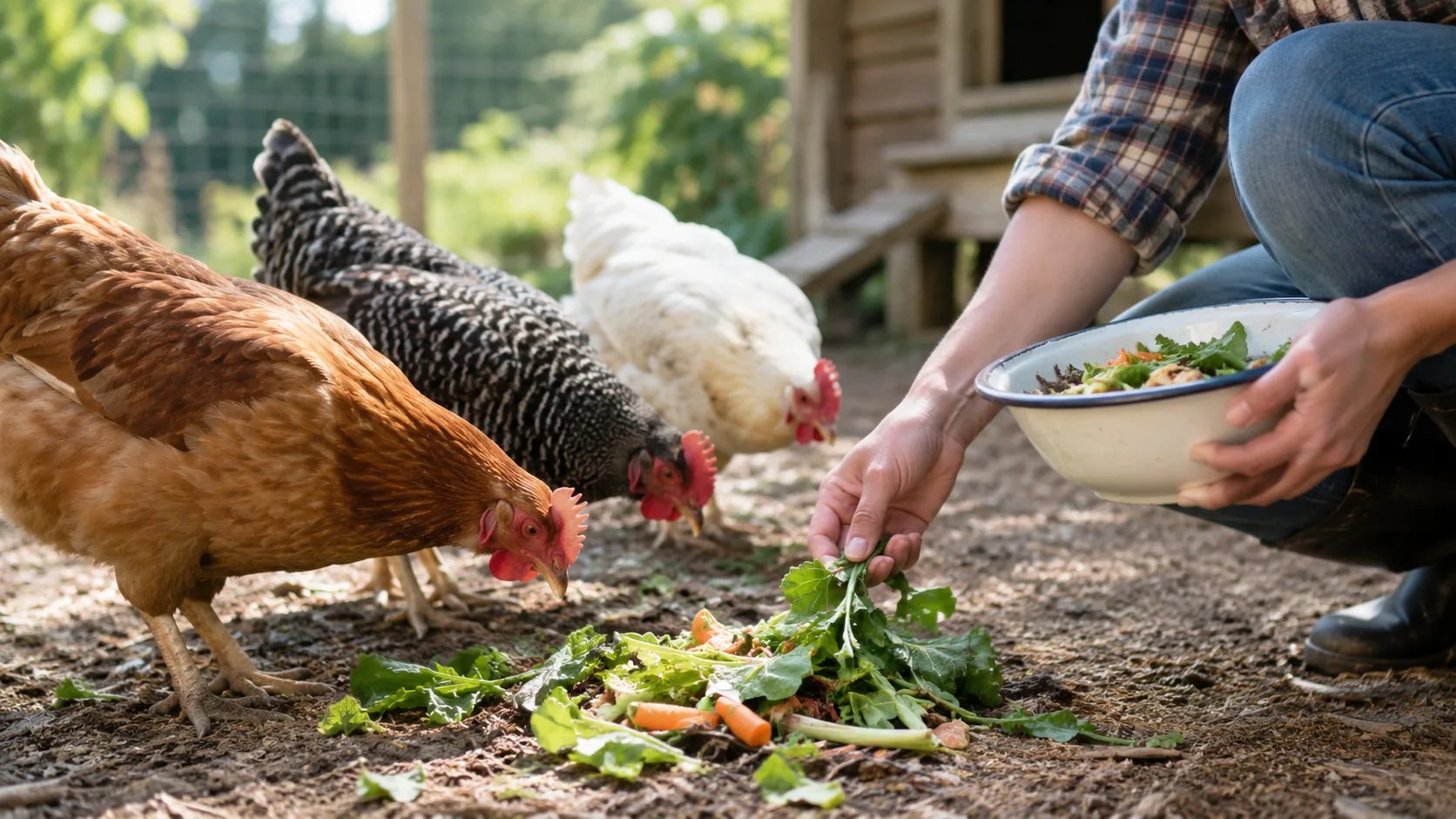
Safe alternatives include small portions of washed leafy greens, peas, corn, cucumber, pumpkin, berries, melon, plain cooked rice, and plain cooked vegetables. The food should be fresh, free of seasoning, and easy to peck into small pieces.
| Option | Best for | What to expect |
|---|---|---|
| Leafy greens and herbs | Routine low-calorie enrichment | Good pecking activity, but they should not replace complete feed. |
| Peas and corn | Training or flock treats | Popular and easy to portion; use modest amounts because they are energy-dense. |
| Pumpkin and squash | Seasonal treats and variety | Soft flesh is generally easy to eat; remove spoiled pieces and hard decorations. |
| Plain cooked rice or vegetables | Using safe kitchen leftovers | Serve cooled and unseasoned, with no sauces, excess salt, or mold. |
How to Adapt the No-Risk Feeding Method for Your Flock
For a flock with free-range access: Treat the yard as part of the feeding plan, not as a guarantee of safety. Walk the area for toxic ornamentals, garden chemicals, dropped litter, and compost scraps, and block access to plants you cannot identify.
For hens with a sensitive digestive system: Keep treats especially simple and introduce only one new food at a time. If loose droppings begin, pause extras for several days while checking water, feed freshness, and overall health.
For chicks and young pullets: Make starter feed the clear priority and keep treats rare. Young birds can choke on large chunks and can suffer nutritional imbalance more quickly when treats displace starter ration.
For a mixed-age flock: Feed in a way that prevents dominant hens from taking everything. Scatter a small amount of suitable treat across a clean area or use multiple dishes, but ensure every bird still has access to the correct primary feed.
For a flock with garden access: Fence off beds containing potatoes, tomatoes, eggplants, peppers, rhubarb, pesticides, or slug bait. Garden produce is not automatically chicken-safe simply because it is grown at home.
Safe Feeding Habits That Pair With Food Safety
A reliable diet starts with a consistent ration, clean water, grit when birds need it, and a feeding setup that stays dry. Cedar & Cluck’s practical backyard chicken feeding guide explains how feed, treats, and age fit together. For fresh produce ideas, use this guide to vegetables chickens can eat daily as a starting point, while still checking each item for spoilage and preparation hazards.
Keep feed in a sealed, rodent-resistant container and avoid leaving wet scraps beside the coop overnight. A clean feeding station also makes it easier to notice changes in appetite, droppings, or flock behavior.
Common Chicken Food Safety Problems and How to Fix Them
| Problem | Likely cause | Easy fix |
|---|---|---|
| Several birds have loose droppings | Too many watery treats, spoiled food, or a sudden diet change | Remove extras, provide fresh feed and water, and monitor closely. |
| A chicken ate a questionable plant | Free ranging near an unidentified ornamental or garden plant | Remove access, identify the plant, save a sample, and contact a veterinarian if symptoms develop. |
| Mold keeps appearing in the feeder | Wet feed, rain exposure, or a feeder that is too large | Discard contaminated feed, wash and dry the feeder, and offer smaller fresh portions. |
| Hens ignore their regular feed | Too many treats or highly palatable table scraps | Stop treats temporarily and return to a measured complete ration. |
| One hen is swallowing non-food items | Boredom, mineral imbalance, or access to litter and plastic | Remove hazards, improve enrichment, and ask a veterinarian about persistent abnormal eating. |
| A bird is weak after eating scraps | Possible toxin, obstruction, infection, or unrelated illness | Isolate safely, record the exposure, and seek prompt veterinary advice. |
| Dominant hens take all the treats | One feeding point or treats scattered in a small area | Use several dishes or spread a small amount over a wider clean surface. |
When symptoms affect more than one bird, treat the situation as a flock-health issue rather than assuming the food was the only cause. Remove the suspected food, preserve useful evidence, and get professional advice before trying home remedies.
How to Store Chicken Feed and Keep Treats Safe
Store commercial feed in a cool, dry, ventilated location protected from rodents, insects, sunlight, and rain. Mark the purchase date, use older feed first, and discard feed that smells rancid, feels damp, or shows mold, webbing, insects, or unexplained clumping.
The U.S. Food and Drug Administration’s animal food and feed guidance emphasizes the importance of safe handling and preventing contamination. Wash treat dishes after use, disinfect surfaces when spoiled food has been present, and never mix fresh feed with old feed at the bottom of a dirty bin.
For long-term flock health, prevention is easier than treatment: keep the primary ration consistent, make unsafe foods inaccessible, and inspect the run as carefully as you inspect the kitchen scraps.
Frequently Asked Questions
Can chickens eat bread?
Chickens can eat a small amount of fresh, plain bread, but it should not be a regular substitute for complete feed. Never offer moldy bread, bread containing chocolate or raisins, or heavily seasoned bread.
Can chickens eat onions and garlic?
Small accidental amounts are not usually a reason to panic, but large or repeated portions are poor choices. Onions and garlic can irritate digestion, and concentrated leftovers are unnecessary when safer treats are available.
Can chickens eat avocado?
Do not feed avocado skin, leaves, or the pit. Because the safety of different avocado parts and varieties can be uncertain, many keepers choose to exclude avocado entirely rather than separate the flesh carefully.
Can chickens eat raw potatoes?
Do not feed green potatoes, sprouts, eyes, leaves, or stems. If offering potato at all, use a small amount of plain, fully cooked potato with all green portions removed and no salt, butter, or seasoning.
What should I do if my chicken eats something toxic?
Remove the food, separate the bird if it is being bullied, and write down the ingredient and estimated amount. Contact a poultry veterinarian or animal poison service promptly, especially if the chicken is weak, trembling, struggling to breathe, or having seizures.
How many treats can chickens have each day?
Keep treats to roughly 10 percent of the flock’s daily intake, with the rest coming from a nutritionally complete ration. Use less for chicks, underweight birds with dietary problems, or hens that are refusing their normal feed.
A Safer Scrap Routine for Happier Hens
The most useful answer to what can chickens not eat is not just a memorized toxic-food list. It is a repeatable habit: feed a complete ration first, reject moldy or questionable scraps, remove dangerous plant parts, avoid heavily processed foods, and introduce treats in small portions.
When you make food safety part of everyday flock care, your chickens get variety without losing nutritional balance. For more researched, practical guidance on feeding, coops, breeds, and daily care, visit Cedar & Cluck and build a safer routine for your backyard flock.
