
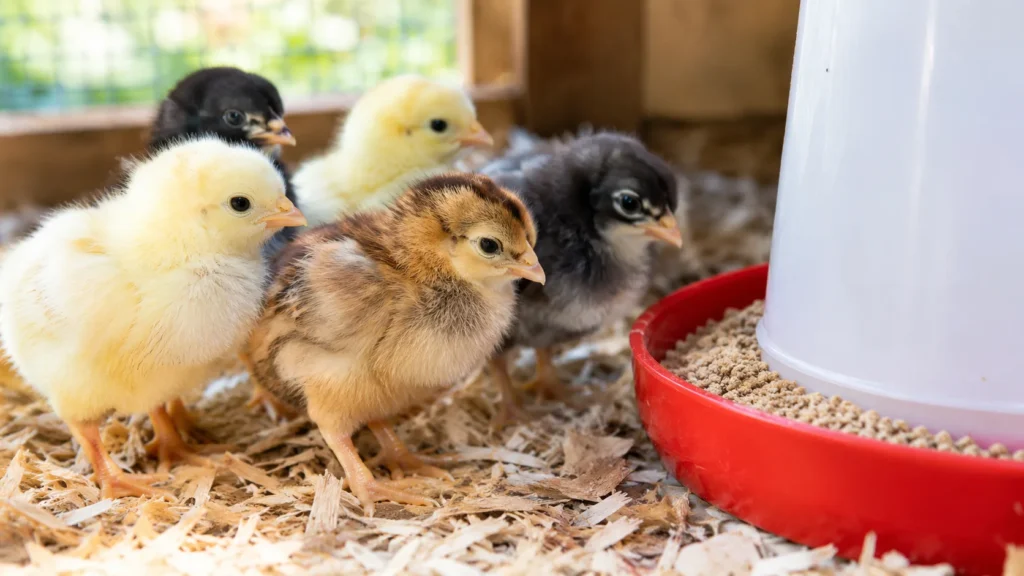
Newly hatched chicks can usually go without food for about 24 to 48 hours because they absorb the egg yolk shortly before hatching. After that, chicks should have constant access to chick starter feed; once they are in a brooder, going more than a few hours without food can become risky, especially if they are cold, weak, shipped, or very young.
This guide explains how long can chicks go without food in real backyard situations, including hatch day, shipping, brooder setup, overnight gaps, and emergencies. It is written for new chicken keepers who want a practical, safe timeline instead of vague advice.
Why Can Newly Hatched Chicks Go Without Food for a Short Time?
Chicks hatch with a temporary energy reserve. In the final stage before hatching, a chick draws the remaining yolk into its abdomen, and that yolk supplies calories, moisture, and nutrients during the first day or two of life.
That reserve is why hatcheries can safely ship healthy day-old chicks under controlled conditions. It does not mean chicks thrive without feed, and it does not apply equally to weak chicks, chilled chicks, late hatchers, or chicks that have already spent time in transit.
The non-obvious expert tip is to start counting from hatch, not from pickup. A chick that arrives at the post office “one day old” may already be 36 to 48 hours past hatch, so feed and water should be ready before you bring the box home.
How Long Can Chicks Go Without Food? The Safe Timeline
The safest rule is simple: once chicks are out of the incubator, shipping box, or hen’s nest and placed in a brooder, give them chick starter immediately. Even if they can technically survive longer, steady access to feed supports warmth, growth, gut development, and recovery from hatch stress.
Use the timeline below as a practical safety guide, not a challenge to see how long they can manage. Chicks are small animals with fast metabolisms, and stress shortens the safe window quickly.
| Situation | Safe food timeline | Why it matters |
|---|---|---|
| Freshly hatched in an incubator | Usually 24 hours, up to about 48 hours if warm and healthy | The absorbed yolk provides short-term nutrition while chicks dry and rest. |
| Day-old chicks shipped by mail | Offer feed immediately on arrival | Transit may already have used much of the yolk reserve, especially in delays or cold weather. |
| Chicks already in a brooder | Do not intentionally leave without feed; refill before it runs out | Brooder chicks are active, growing, and need steady calories to maintain energy. |
| Weak, small, chilled, or late-hatched chicks | Feed as soon as they are stable and drinking | These chicks burn reserves faster and may not compete well at the feeder. |
| Chicks under a broody hen | Provide chick starter near the nest once chicks begin moving around | Early access prevents weaker chicks from falling behind while the hatch finishes. |
| Accidental overnight empty feeder | Correct immediately and monitor closely | A single short gap may be tolerated, but repeated gaps cause stress and poor growth. |
How to Feed Chicks Safely After a Food Gap
Warm them first: Cold chicks do not digest feed well and may not eat even when food is available. Make sure the brooder has a warm zone and a cooler escape area, and watch whether chicks spread out comfortably rather than piling or panting.
Offer water before feed: If chicks have been shipped, delayed, or without care for several hours, dip each beak gently in clean, lukewarm water once. Do not force water into the beak; the goal is to show them where it is and let them swallow voluntarily.
Use the right starter: Provide a complete chick starter feed, not scratch grains, cracked corn, oats, or kitchen scraps. The Poultry Extension network emphasizes complete nutrition for young poultry because chicks need balanced protein, vitamins, and minerals for rapid early growth.
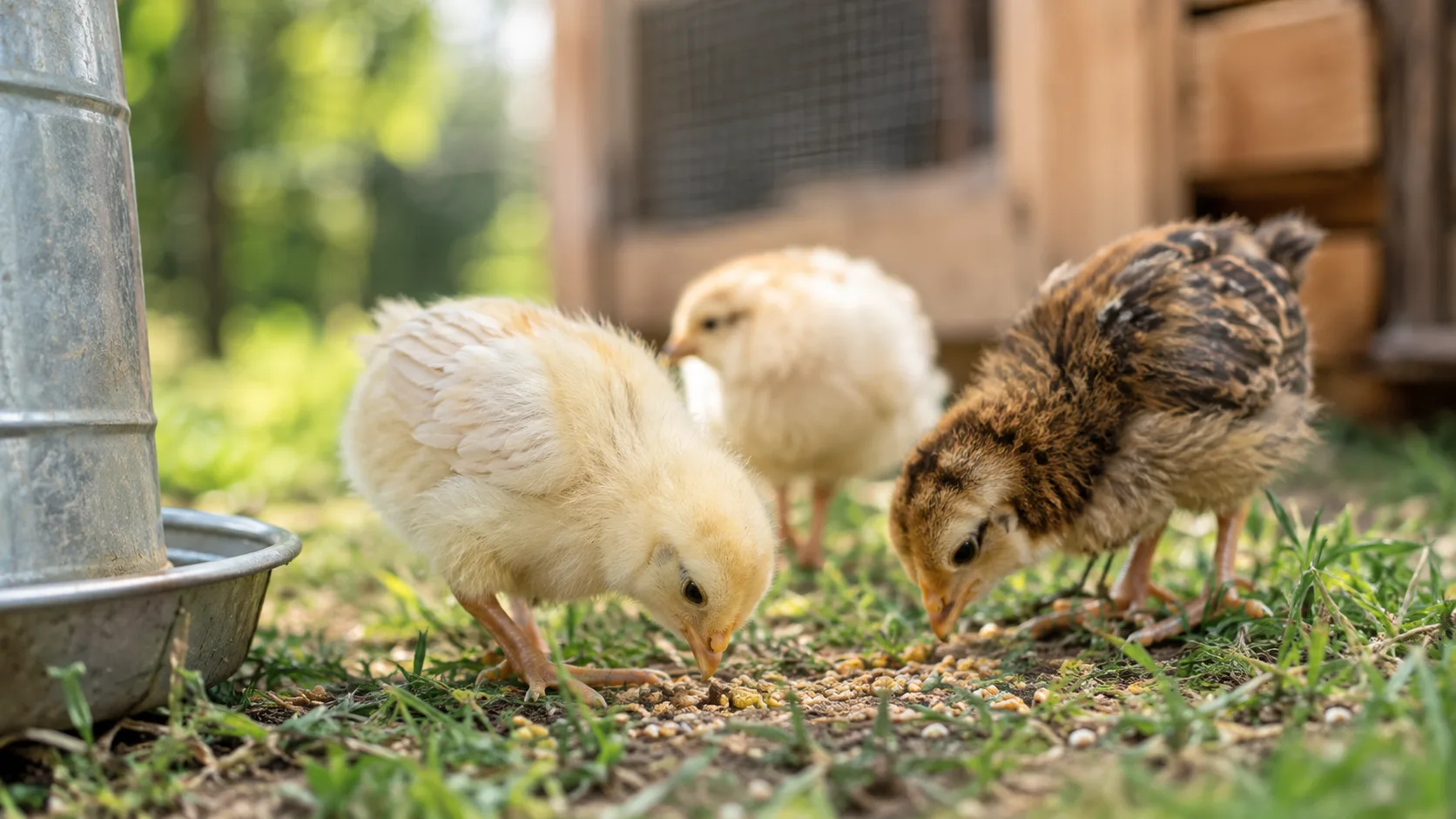
Make feed easy to find: For the first day, sprinkle a little starter on a clean paper towel or shallow tray near the feeder. The tapping sound and visible crumbles encourage chicks to peck, then you can transition them fully to a chick feeder.
Keep the feeder full but clean: Chicks scratch bedding into everything, so check the feeder several times a day during the first week. Replace damp or soiled feed immediately because wet feed can sour quickly and discourage eating.
Watch the smallest chicks: A chick that stands apart, peeps sharply, keeps its eyes closed, or has an empty crop while others are eating needs attention. Place it near feed and water, reduce competition, and consider a separate warm recovery area if it is being pushed away.
Check crops at bedtime: In the evening, gently feel a few crops at the base of the neck. A chick that has eaten should have a small, soft fullness there; consistently empty crops mean your feeder placement, brooder temperature, or chick health needs correcting.
Can baby chicks survive 3 days without food?
Some newly hatched chicks may survive close to three days without food if they are warm, healthy, and still relying on absorbed yolk, but that is not a safe backyard care target. By 72 hours after hatch, the risk of dehydration, weakness, pasty butt, poor growth, and death rises sharply, especially if the chicks have also been shipped or chilled.
If chicks are approaching or past the 48-hour mark, treat feed and water access as urgent. The goal is not only survival; it is getting them eating, drinking, warming, and growing before they crash.
| Option | Best for | What to expect |
|---|---|---|
| Immediate chick starter and water | Most chicks after hatch, pickup, or mail delivery | Normal pecking, drinking, resting, and steady energy within a few hours. |
| Brooder paper towel feeding | New arrivals that do not recognize the feeder yet | Faster first pecks and easier monitoring of droppings and activity. |
| Separate warm recovery space | Weak, chilled, trampled, or smaller chicks | Less competition and a better chance to eat without being shoved aside. |
| Veterinary help | Chicks that remain limp, cold, swollen, or unable to swallow | Professional guidance when feeding alone may not solve the underlying problem. |
How to Adjust the Feeding Plan for Different Chick Situations
For a shipped chick order: Have the brooder warmed, water filled, and chick starter ready before the post office calls. Open the box in the brooder area, place each chick near water, and make sure every bird has a chance to drink and peck within the first hour.
For a home incubator hatch: Leave newly hatched chicks in the incubator until they are dry and steady, as long as conditions are stable and other eggs are still hatching. Once you move them to the brooder, feed and water should be waiting, not added later.
For broody hen chicks: Set chick starter and a shallow chick-safe waterer close enough that tiny chicks can reach it without leaving the hen too far. Use a setup that lets chicks eat while blocking adult hens from stealing all the starter if the flock is mixed.
For bantam chicks or small breeds: Use extra-shallow feeders and finely crumbled starter because tiny chicks may struggle with large crumbles or tall feeder lips. Check them more often, since small chicks lose energy faster when they miss meals.
For delayed or stressed chicks: Prioritize warmth, water, and quiet before handling or photographing them. Keep the brooder calm, reduce drafts, and monitor crops, droppings, and behavior several times that first day.
What to Set Up Alongside Chick Feed
Food works only when the rest of the brooder supports eating. Chicks that are too cold huddle instead of feeding, while chicks that are overheated may avoid the warm side and become stressed. Feeder placement should be close to warmth but not directly under a heat plate or lamp where feed can overheat or get buried by crowding.
For a safe first-week menu, pair this article with Cedar & Cluck’s guide to what to feed newborn chickens during the first week. It explains starter feed, grit, treats, and what not to rush.
Water is the other half of the survival timeline. If you are dealing with shipping delays, power outages, or an empty waterer, read how long chicks can go without water because dehydration usually becomes dangerous faster than lack of feed.
Common Chick Feeding Problems and How to Fix Them
| Problem | Likely cause | Easy fix |
|---|---|---|
| Chicks peep loudly and do not eat | Brooder too cold, feeder too far away, or chicks stressed from travel | Adjust heat, place feed closer to the warm zone, and dip beaks in water once. |
| Feed disappears but chicks seem thin | Feed is being scratched out, buried, or eaten by older birds | Use a chick feeder with small openings and separate chicks from adult birds. |
| One chick is not eating | Weakness, bullying, pasty butt, chilling, or failure to learn the feeder | Check the vent, warm the chick, isolate with a buddy, and offer starter on a paper towel. |
| Wet, clumpy feed in the brooder | Waterer too close, bedding kicked in, or chicks standing in the feeder | Raise the feeder slightly, move water a short distance away, and replace wet feed. |
| Chicks eat bedding instead of feed | Loose shavings introduced before they recognize starter | Use paper towels for the first day or two and sprinkle starter where they can see it. |
| Pasty butt after arrival | Shipping stress, chilling, dehydration, or brooder temperature problems | Clean gently with warm water, dry the chick fully, and correct heat and water access. |
| Uneven chick growth | Competition at the feeder or too little feeder space | Add a second feeder and watch small chicks eat without being pushed away. |
When in doubt, correct the basics before guessing at complicated causes: warmth, clean water, complete starter feed, dry bedding, and enough feeder space. If a chick is limp, gasping, unable to stand, or getting worse despite supportive care, contact a poultry-savvy veterinarian or local extension office.
Maintaining Feed Quality and Brooder Access
Chick starter should stay dry, fresh, and protected from rodents. Store it in a sealed container in a cool, dry place, and avoid buying more than you can use while it still smells fresh and clean. Rancid or moldy feed is not worth the risk for fast-growing chicks.
The USDA Animal and Plant Health Inspection Service recommends biosecurity practices that reduce disease risk around poultry, including keeping equipment clean and limiting contamination. For chick feeding, that means washing feeders regularly, keeping bedding out of feed, and not sharing dirty equipment between groups of birds.
Feeder height should change as chicks grow. In the first few days, the feeder must be low and obvious; by the second week, raising it to about back height helps reduce waste while still allowing easy access.
Frequently Asked Questions
How long can chicks go without food after hatching?
Healthy newly hatched chicks can usually go 24 to 48 hours without food because they have absorbed yolk reserves. However, once they are moved to a brooder, it is best to offer chick starter immediately.
How long can chicks go without food in a brooder?
Chicks in a brooder should not be intentionally left without food. A short accidental gap of a few hours may not harm healthy chicks, but repeated or overnight shortages can cause stress, weakness, and poor growth.
Do chicks need food the first night?
If they have just hatched and are still drying in the incubator, they may not need feed that first night. If they are already in the brooder, provide feed and water so they can eat when ready.
Can shipped chicks wait before eating?
No, shipped chicks should be offered water and chick starter as soon as they arrive. They may have already spent a day or more using their yolk reserves during packing, transit, and pickup.
What should baby chicks eat first?
Baby chicks should eat a complete chick starter feed, usually in crumble form. Avoid scratch grains, large treats, and random kitchen scraps during the first days because they do not provide balanced nutrition.
Why are my chicks not eating?
The most common reasons are chilling, stress, poor feeder placement, wet feed, or chicks not recognizing the feed yet. Warm them properly, offer clean water, sprinkle starter on a paper towel, and watch whether each chick begins pecking.
Keep Chicks Eating, Warm, and Growing
The key answer is that newly hatched chicks have a short built-in reserve, but brooder chicks need steady access to proper starter feed. Treat 24 to 48 hours as the hatch-window limit, not a normal feeding routine.
If you are raising chicks this season, set up feed, water, heat, and bedding before they arrive so the first day is calm instead of rushed. For more practical backyard chicken guides, visit Cedar & Cluck.
