
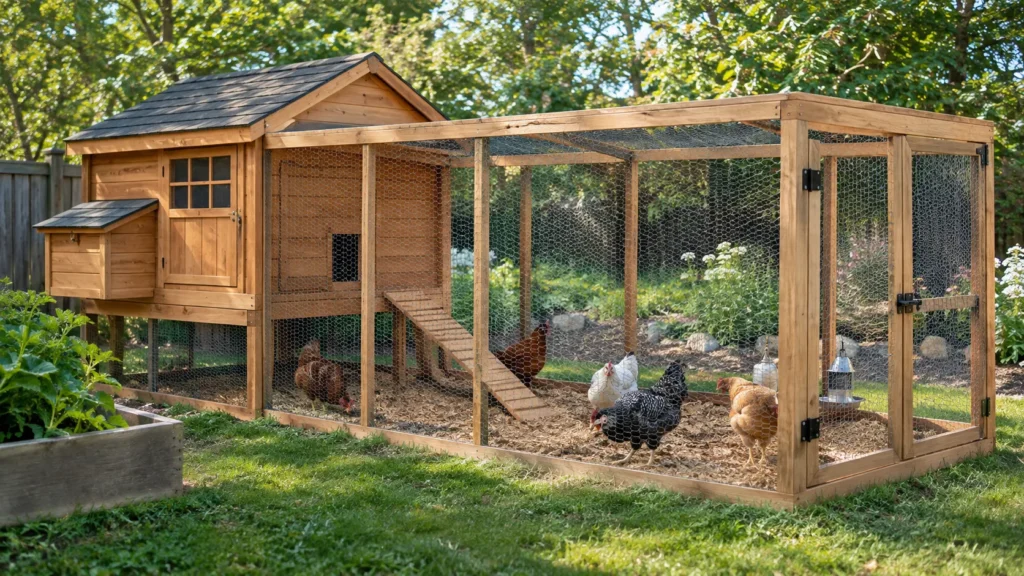
Chicken coops with runs work best when the coop gives hens a dry, secure place to sleep and lay, while the run provides protected outdoor space for daily movement. For most backyard keepers, the right setup is one that is easy to clean, predator-resistant, well-ventilated, and sized so the birds do not crowd.
This guide explains how to plan chicken coops with runs for real backyard use. It is for beginners choosing their first setup, and for keepers who want to fix a cramped or messy run without guessing.
What Makes Chicken Coops With Runs Work Well?
The best chicken coops with runs balance four things: space, airflow, security, and maintenance. The coop is for sleeping, laying, and getting out of bad weather, while the run is where hens spend much of the day when you are not free-ranging them.
If one part is too small or poorly designed, the whole system becomes harder to manage. A cramped coop leads to moisture and manure buildup, while a weak run invites predators, muddy ground, and stress.
Good coop-run design also fits your routine. If you can clean it quickly, refill feed and water without crawling around, and check on the flock easily, you will use it consistently and the birds will be healthier.
One non-obvious tip: plan the run so the door opens into a dry, clear path, not directly into a mud zone. That small detail makes daily care much easier in wet weather.
Chicken Coops With Runs: The Practical Backyard Setup Plan
Use the table below as a baseline for a small backyard flock. If your birds are larger breeds, spend long hours in the run, or you live in wet or hot weather, size up when possible.
| Item | Amount / Spec | Why it matters |
|---|---|---|
| Coop floor space | About 4 sq ft per standard hen | Gives birds enough room to roost and move without crowding |
| Run space | At least 8 to 10 sq ft per hen; more is better | Reduces boredom, pecking, mud, and pressure on the coop |
| Roosts | Enough linear perch space for all hens, with room between bars | Helps birds sleep off the floor and stay cleaner |
| Nesting boxes | About 1 box for every 3 to 4 hens | Keeps laying areas orderly and reduces egg damage |
| Ventilation | High openings protected from rain and drafts | Helps control moisture and ammonia without chilling birds |
| Run footing | Drainage-friendly base with dry bedding or ground cover | Prevents a muddy, smelly run that becomes hard to clean |
| Predator protection | Hardware cloth, locked latches, and covered top or wire roof | Protects against digging, reaching, and night attacks |
The USDA’s general backyard poultry guidance stresses strong biosecurity and limiting exposure to wild birds and contaminated areas. That applies directly to chicken coops with runs, because a well-contained run makes it easier to manage contact, waste, and visitor traffic.
Step-by-Step: How to Set Up Chicken Coops With Runs
Step 1: Size the flock first: Decide how many birds you will keep before you buy or build. A run that feels roomy for three hens can become tight fast at six or eight, especially if you want them outside all day. If you are still deciding on flock size, start with How Many Chickens Should a Beginner Start With? A Practical Starter Plan.
Step 2: Place the coop for drainage: Choose a slightly raised area with good sun and airflow. Avoid low spots where water collects, because a damp run turns into mud and raises odor and fly pressure. If possible, orient the run so prevailing rain and wind do not blow straight into the main door.
Step 3: Build the coop for sleep and laying: Keep the sleeping area dry, enclosed, and easy to clean. Hens need a calm place to roost at night and lay eggs without crowding. If you are still deciding on dimensions, how big should a chicken coop be is a useful reference for floor space planning.
Step 4: Make the run predator-resistant: Use hardware cloth instead of flimsy chicken wire where predators can reach or dig. Secure latches, cover the top if hawks are a concern, and bury or apron the wire at the base. The USDA and extension programs both emphasize keeping poultry separated from wildlife contact when possible, which is easier when the run is enclosed and maintained well.
Step 5: Add weather protection: Put part of the run under roof, tarp, or metal covering so birds can stay outside in rain or snow. A shaded, sheltered section also helps in hot weather. Keep the shelter high enough for you to enter and clean without bumping into edges or exposed screws.
Step 6: Set up feed and water access: Hang or raise feeders and waterers so bedding and droppings do not get in them. Place them where birds can reach them without crowding the coop doorway. For feeding basics, see What to Feed Chickens: A Practical Backyard Feeding Guide.
Step 7: Plan the cleaning routine: Use a surface and layout that lets you rake, scoop, or shovel waste quickly. A run with a dry corner, removable bedding, and easy access gates saves time every week. For the coop itself, regular upkeep matters as much as size, so build around a routine you can actually maintain.
How Big Should Chicken Coops With Runs Be?
For most standard hens, a practical setup gives about 4 square feet per bird inside the coop and 8 to 10 square feet per bird in the run. That is the minimum range that keeps care manageable for many backyards, though more outdoor space is always better.
If your hens will spend long hours in the run, choose the larger end of the range. If you keep heavy breeds, live in a climate with wet ground, or have a flock that tends to scratch up the same area repeatedly, extra square footage makes a noticeable difference.
| Option | Best for | What to expect |
|---|---|---|
| 4 sq ft coop / 8 sq ft run | Very small starter flocks with daily oversight | Works, but fills up fast and needs frequent cleaning |
| 4 sq ft coop / 10 sq ft run | Typical backyard flocks | A more comfortable balance of space and manageability |
| 4 sq ft coop / 12+ sq ft run | Busy keepers, larger breeds, or wet climates | Easier footing, less crowding, and better long-term flexibility |
Customization for Different Backyard Setups
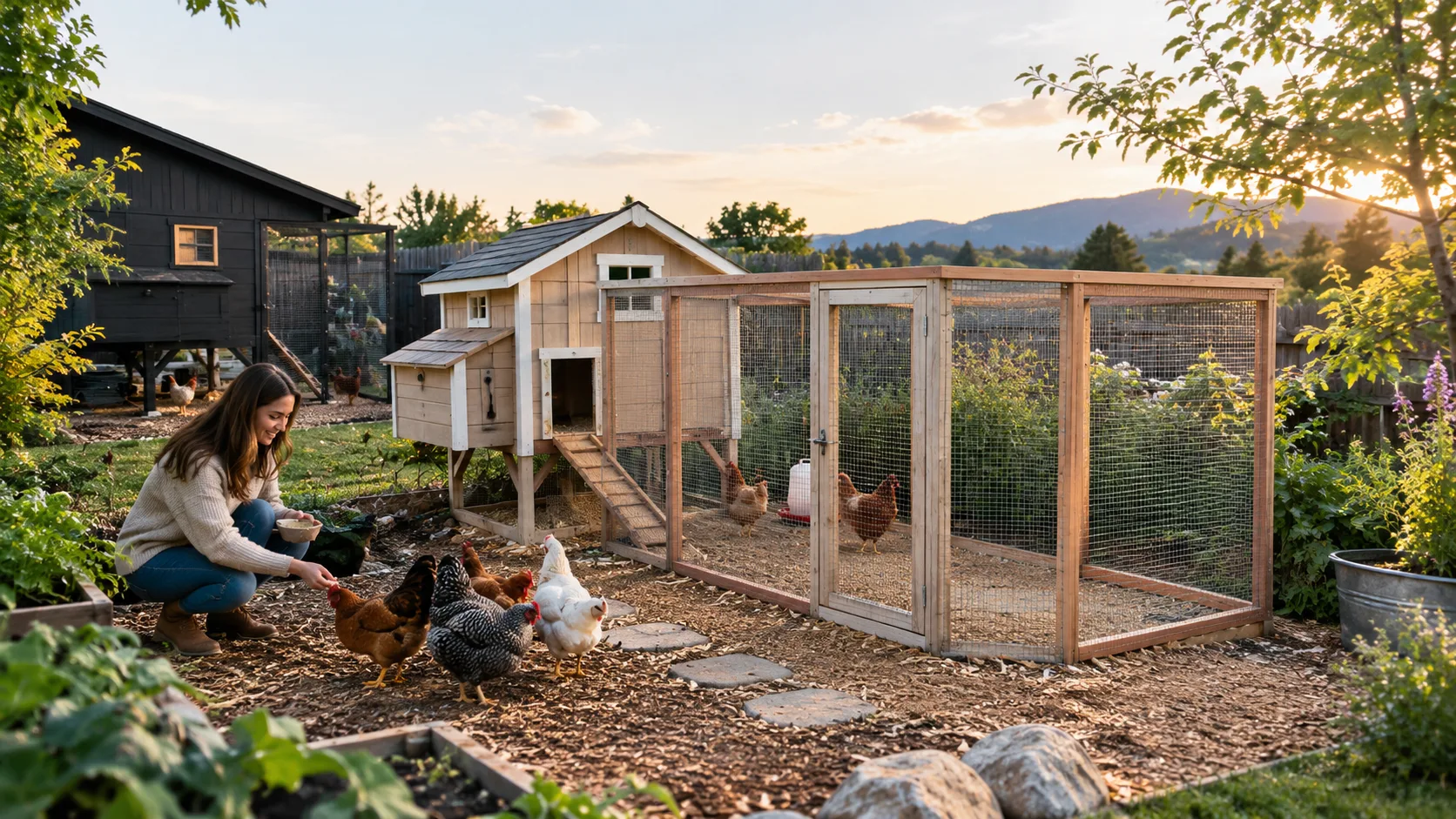
For a small yard: Prioritize vertical height, secure storage, and a run that uses every usable inch. A compact chicken coop with run can still work well if the birds get strong protection, good ventilation, and enough floor space. Use hanging feeders and mounted waterers to keep the floor clear.
For wet climates: Drainage matters more than almost anything else. Raise the coop, add gravel or another free-draining base under part of the run, and include a roofed section so the flock always has a dry patch. A muddy run is not just messy; it makes cleaning harder and encourages parasites.
For hot climates: Increase shade and airflow. Use open run sides protected with hardware cloth, not solid walls, and make sure the coop has high vents that stay dry in rain. Chickens handle heat better when they can choose between shade, breeze, and resting space.
For winter use: Keep the run usable by blocking driving snow and wind while preserving ventilation. Birds still need fresh air, but they also need a dry place to scratch and stretch on mild days. If your flock slows down in cold weather, Do Hens Stop Laying Eggs in Winter? explains what to expect.
For a mixed flock: Give timid birds hiding spots and separate feed stations if needed. Some hens dominate the run, especially around treats and favorite dust-bath spots. Multiple access points and visual barriers can reduce bullying without making the setup complicated.
Related Setup Advice for a Better Flock
Chicken coops with runs work best when the rest of your setup supports them. If you are still comparing flock size and coop footprint, the guide on how big should a chicken coop be will help you avoid underbuilding from the start.
Predator safety is the other big pairing issue, especially if hawks, raccoons, or neighborhood dogs are common where you live. For practical run protection ideas, read How to Protect Chickens From Hawks: A Practical Backyard Defense Plan.
Common Chicken Coops With Runs Problems and How to Fix Them
| Problem | Likely cause | Easy fix |
|---|---|---|
| Muddy run | Poor drainage or too many birds in one area | Add roof cover, gravel, and a dry bedding layer |
| Strong ammonia smell | Wet bedding and poor airflow | Improve ventilation and clean more often |
| Eggs laid on the floor | Nest boxes are hard to reach or poorly placed | Add better nesting boxes and keep them dark and quiet |
| Feather picking | Boredom, crowding, or lack of space | Increase run room and add scratch, perches, or enrichment |
| Predator digging | Unprotected wire edges at ground level | Bury wire, install an apron, or add pavers around the perimeter |
| Waterers constantly dirty | Low placement or traffic around the watering area | Raise the waterer and move it away from the highest-traffic spot |
If a coop-run setup is becoming difficult, the problem is usually not the birds. It is usually space, drainage, or access. Fix the layout first, then fine-tune bedding, feeders, and run coverage.
Chicken Coops With Runs: Maintenance and Longevity
A good coop-run setup lasts much longer when you stay ahead of moisture, damage, and wear. The CDC’s backyard poultry guidance recommends handwashing after contact with birds and keeping cleaning habits consistent, which is a smart reminder that a tidy run supports both flock health and human health.
Check latches, wire, roof edges, and door hinges every few weeks. Replace broken fasteners quickly, because small gaps become predator entry points before most keepers notice them.
Also watch how the run ages through the seasons. If one area always stays muddy or one gate area keeps sinking, adjust the ground cover before the issue spreads.
Frequently Asked Questions
What is the best size for chicken coops with runs?
A practical starting point is about 4 square feet per standard hen in the coop and 8 to 10 square feet per hen in the run. Larger is better if your birds spend most of the day enclosed. The more time they spend in the run, the more space they need.
Do chicken coops with runs need to be covered?
Not always, but a partial or full cover is very helpful. A roofed section keeps feed drier, gives birds shade, and reduces mud in rainy weather. A cover also adds predator protection if hawks or climbing animals are a concern.
Can chickens live full-time in a run?
Yes, if the run is large, secure, and managed well. They still need clean water, shade, dust-bathing space, and regular human checks. If the run is small, the birds will need more enrichment and closer maintenance.
Are chicken coops with runs better than free-ranging?
They are often easier to manage and safer in predator-heavy areas. Free-ranging can give birds more forage and exercise, but it also increases exposure to hawks, dogs, and hidden hazards. Many keepers use a run as the daily default and free-range only when supervised.
How often should I clean a coop and run?
Small daily tasks help a lot, such as checking water, removing obvious wet spots, and keeping feed dry. Deeper cleaning depends on flock size, bedding type, and weather, but the key is not letting buildup get ahead of you. The cleaner the run stays, the easier the whole system is to manage.
What should I put on the floor of a chicken run?
Choose a base that drains well and is easy to refresh, such as wood chips, sand in suitable climates, or natural ground with managed bedding. The best choice depends on your weather and how much traffic the birds create. Avoid letting the surface turn into bare mud.
A Simple Setup That Makes Daily Chicken Care Easier
The best chicken coops with runs are not the fanciest ones. They are the ones that stay dry, feel safe, clean up quickly, and give your flock enough room to behave like chickens.
If you build around space, airflow, drainage, and predator protection, you will avoid most beginner mistakes. For more practical backyard chicken guidance, visit Cedar & Cluck.
