
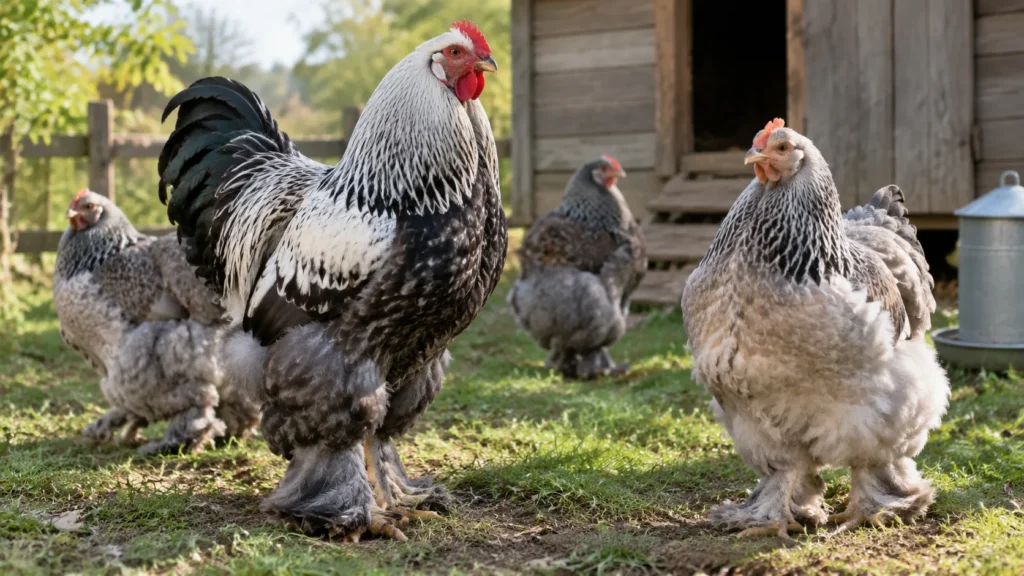
A Brahma chicken is a large, calm, cold-hardy breed known for feathered feet, gentle behavior, and a substantial body. Brahma hens typically lay about three to four medium-to-large brown eggs per week under good conditions, although production varies with age, season, nutrition, and daylight.
This guide explains what makes Brahmas different, how much space and care they need, what to expect from their eggs and temperament, and how to avoid common problems. It is written for beginners and backyard keepers deciding whether this impressive breed fits their flock.
What Makes the Brahma Chicken Different?
Brahmas are a heavy breed with a broad body, full feathering, and distinctive feathers covering the outside of their legs and toes. They mature slowly compared with lighter production breeds, but their size and quiet disposition make them appealing as both companion birds and useful backyard layers.
The breed is generally calm, people-friendly, and less flighty than many smaller chickens. Brahmas can handle cold conditions well because of their dense feathering, but wet bedding and muddy runs are especially troublesome when feathers cover their feet.
A non-obvious tip is to judge perch height for the individual bird, not the average chicken. A Brahma jumping down from a high perch can injure its feet or legs, so low, wide, well-supported perches are safer than tall roosts designed for lighter breeds.
Brahma Chicken Care Plan at a Glance
The best Brahma setup starts with floor space, dry footing, and easy access to food and water. Do not try to manage this breed like a standard-sized layer in a compact coop. Their body size, slower movement, and feathered feet call for a little more room and a layout that minimizes climbing and mud.
| Item | Amount or specification | Why it matters |
|---|---|---|
| Indoor coop space | About 4 to 6 square feet per adult Brahma, with more space preferred | Heavy birds need room to move, turn, and avoid bullying without crowding. |
| Run space | At least 10 square feet per bird when possible | Extra outdoor room reduces mud, feather damage, and competition around resources. |
| Perches | Low, sturdy roosts about 12 to 18 inches high and 12 to 14 inches wide | Wide footing supports large feet and reduces impact injuries when birds jump down. |
| Nesting boxes | One box for every three to four hens; use an oversized box around 14 by 14 inches or larger | A cramped box can discourage laying and damage feathers or eggs. |
| Layer feed | Complete layer ration once hens are laying, offered free-choice | Balanced feed supplies protein, energy, vitamins, and minerals more reliably than scraps. |
| Calcium | Oyster shell offered separately to laying hens | Separate calcium lets hens regulate intake without forcing excess calcium on nonlayers. |
| Water | Fresh, clean water available at all times | Even short interruptions can reduce eating, comfort, and egg production. |
| Footing | Dry litter, firm ground, and mud control near feeders and waterers | Moisture trapped around feathered toes can contribute to skin irritation and foot problems. |
How to Raise Brahma Chickens Step by Step
Choose healthy birds: Buy chicks or started birds from a breeder who can identify the variety, sex, age, and vaccination history. Look for clear eyes, clean nostrils, smooth breathing, strong legs, and active behavior. Avoid birds with persistently dirty vents, swollen joints, or severe foot scaling.
Plan for their adult size: Measure the coop and run before bringing Brahmas home, then account for feeders, waterers, nest boxes, and open walking space. A flock that fits as chicks may become overcrowded as adults. If your current setup is small, compare options in this guide to cold-weather chicken breeds before choosing a heavy breed.
Set up safe brooding: Chicks need a draft-free brooder, dry bedding, clean water, and chick starter feed. Use a heat source that allows the chicks to move toward or away from warmth rather than heating the entire enclosure evenly. Watch behavior: constant huddling suggests cold, while panting and spreading far from the heat suggests overheating.
Introduce birds gradually: Quarantine new birds away from the established flock and use separate equipment during the observation period. After quarantine, let the groups see one another through a secure divider before allowing supervised contact. The USDA APHIS backyard poultry guidance emphasizes biosecurity practices that help reduce disease spread between birds.
Feed for the life stage: Give growing Brahmas a complete chick or grower ration appropriate for their age, then transition to layer feed when pullets begin laying. Keep treats small enough that they do not replace balanced feed. Grit is useful when birds eat whole grains, grass, or other foods that need grinding, while oyster shell belongs in a separate dish for laying hens.
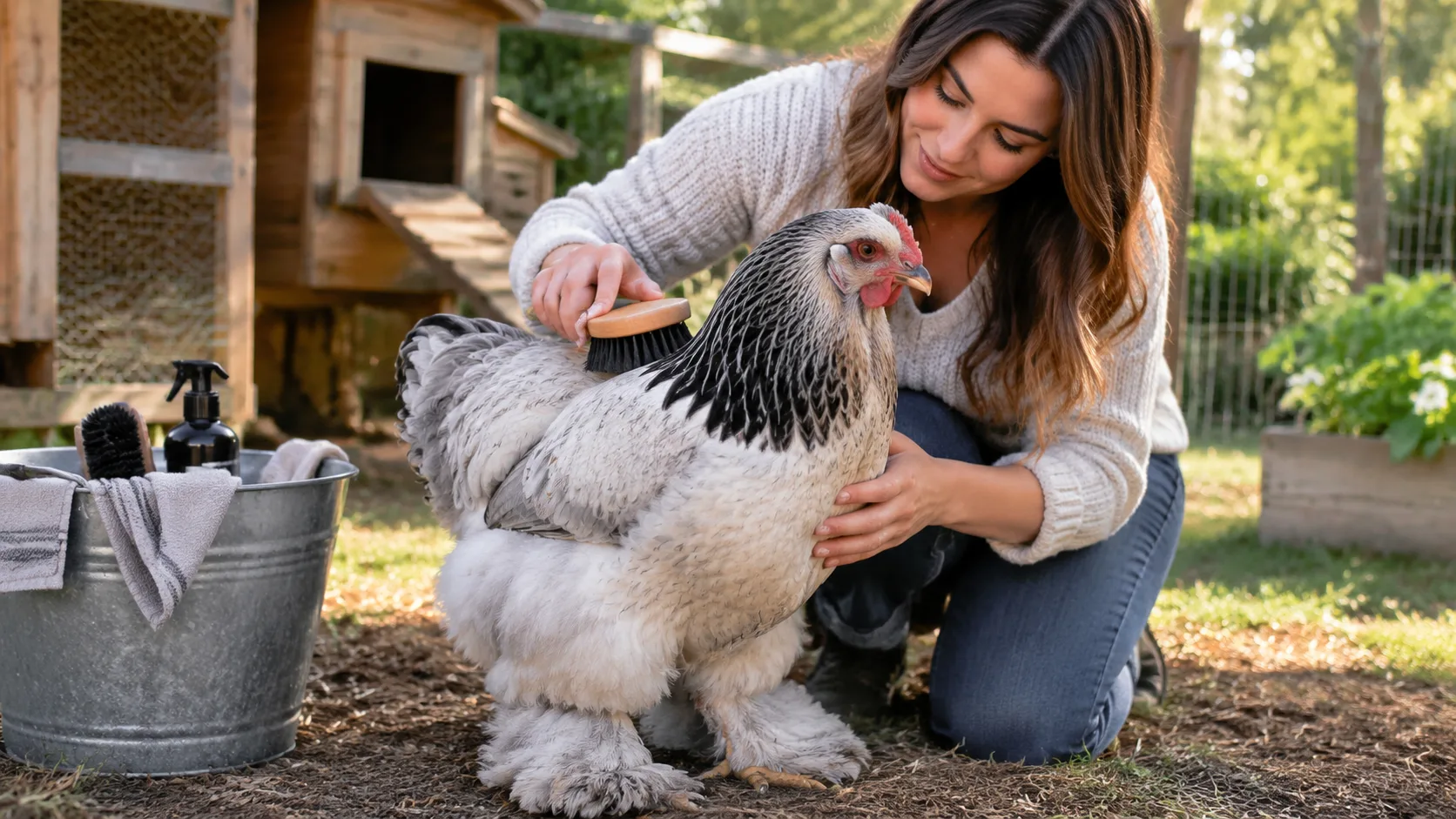
Protect their feet: Inspect feathered toes weekly for mud balls, cuts, swelling, mites, or an abnormal gait. Improve drainage around waterers and replace wet bedding promptly. Do not aggressively pull dried material from a sensitive toe; soften it first and seek veterinary guidance if skin is broken or swelling persists.
Manage the coop for airflow: Provide high ventilation openings that release moisture without creating a direct draft at roost level. Clean wet spots often, especially beneath the waterer, and keep litter dry. Brahmas tolerate cold well, but damp feathers and stale air create more risk than low temperatures alone.
Track eggs and body condition: Record laying patterns, appetite, droppings, and behavior during the first months. Brahmas may start laying later than lighter breeds, often around six to eight months, though individual timing varies. Sudden lethargy, breathing changes, lameness, or a sharp production drop deserves prompt veterinary attention.
Are Brahma Chickens Good for Beginners?
Yes, Brahma chickens can be excellent beginner birds when a keeper can provide adequate space, sturdy equipment, dry footing, and patience with slower maturity. Their calm temperament makes them easier to handle than nervous breeds, but their size increases the consequences of poor coop design.
| Option | Best for | What to expect |
|---|---|---|
| Light Brahma | Keepers wanting a large bird with a somewhat lighter build | Calm, cold-tolerant, feathered feet, and moderate brown egg production. |
| Dark Brahma | Keepers attracted to a striking traditional color pattern | Large, gentle birds with the same space and foot-care needs as other Brahmas. |
| Buff Brahma | Families wanting a soft golden-buff appearance | Friendly disposition and a substantial body, with slower maturity than many layers. |
| Hybrid production layer | Keepers prioritizing maximum egg numbers in limited space | Earlier, heavier laying, but often less suited to the large-bird setup and personality some people want. |
How to Customize Care for Your Brahma Chicken
For a small backyard: Keep the flock size modest and provide a run with several feeding and watering points. Brahmas need usable floor area, not just a large-looking structure, so remove bulky obstacles that reduce walking room. If space is very limited, a lighter breed may be a better practical choice.
For a cold climate: Focus on dry litter, wind protection, and ventilation rather than adding routine heat. Frostbite prevention matters because large combs can be exposed, especially in roosters. The breed’s dense feathers help with cold, but wet conditions and frozen water still require daily attention.
For a wet climate: Cover part of the run, improve drainage, and place waterers on a raised, stable platform. Check the feathered toes more frequently during rainy periods. A dry dust-bathing area gives birds a way to maintain feathers when the surrounding ground is damp.
For a family flock: Handle birds gently and regularly while they are young, using calm movements and proper support under the breast and feet. Teach children to sit quietly and let the chicken approach rather than chase it. For more breed comparisons, see this guide to the friendliest chicken breeds.
For an egg-focused flock: Add a more productive laying breed if you need a steady, high volume of eggs. Brahmas are better viewed as moderate layers and all-around flock members than as specialized egg machines. Supply consistent light, feed, water, and nest access, but do not force production at the expense of health.
Practical Companions for a Brahma Chicken Flock
Choose flockmates with compatible temperaments and enough room to retreat from one another. Very aggressive or highly active birds can overwhelm a slow-moving Brahma, particularly around feeders and doors. Provide multiple resource stations and inspect the flock after every introduction.
Use nest boxes with easy access and low entry points, and keep the route to the boxes free of sharp edges. Large hens can crush eggs in a poorly sized nest, so thick bedding and frequent collection help. A secure run, overhead cover, and regular predator checks are also important because large birds are not automatically safe from hawks, dogs, or other predators.
Common Brahma Chicken Problems and How to Fix Them
| Problem | Likely cause | Easy fix |
|---|---|---|
| Dirty or matted foot feathers | Mud, wet litter, or spilled water | Improve drainage, raise the waterer, replace wet bedding, and gently clean affected feathers. |
| Late or inconsistent laying | Young age, short daylight, molt, stress, illness, or poor nutrition | Confirm age, feed complete ration, provide water, check body condition, and investigate sudden changes. |
| Foot or leg soreness | High perches, hard landings, obesity, injury, or foot infection | Lower and widen perches, inspect the foot, and isolate or seek veterinary help if lameness continues. |
| Bullying at the feeder | Too little space or too few resource points | Add separate feeders and waterers, increase space, and monitor the lowest-ranking bird. |
| Respiratory noise | Dust, poor ventilation, irritation, or infectious disease | Improve airflow without drafts, reduce dust, isolate the bird, and contact a veterinarian for persistent signs. |
| Broken or dirty eggs | Small nest boxes, thin bedding, crowding, or infrequent collection | Use larger boxes, add clean bedding, provide enough boxes, and collect eggs regularly. |
| Frostbite on comb or toes | Moist coop air, freezing exposure, or poor ventilation | Reduce humidity, block direct wind, keep bedding dry, and obtain veterinary advice for severe tissue damage. |
Change one management factor at a time when possible so you can identify what helped. A Brahma that is eating, moving normally, breathing quietly, and maintaining clean feet is usually giving you reassuring signs, but any rapid decline should be treated as a health issue rather than a breed trait.
Maintaining Brahma Chickens for the Long Term
Make a weekly inspection routine part of normal care: check feet, legs, eyes, nostrils, vent feathers, body condition, and droppings. Refresh wet bedding immediately, wash waterers often, and keep feed protected from rodents. Regular observation makes subtle changes easier to spot before they become emergencies.
Brahmas can remain valuable flock members for many years, although egg production generally declines with age. The Livestock Conservancy’s Brahma breed information is a useful reference for the breed’s history and characteristics. For nutrition fundamentals, the University of Minnesota Extension chicken-feeding guidance reinforces the importance of complete feed, clean water, and appropriate supplementation.
Before winter, repair roof leaks, secure openings against predators, and test whether waterers will freeze. Before summer, add shade and increase air movement without creating unsafe gaps. Seasonal preparation is more reliable than trying to correct heat, moisture, or crowding after birds are already stressed.
Frequently Asked Questions
How big do Brahma chickens get?
Brahmas are one of the largest chicken breeds commonly kept in backyard flocks. Hens are heavy-bodied, while roosters are larger still, so equipment designed for standard-sized hens may be too narrow or fragile.
How many eggs does a Brahma chicken lay?
A healthy Brahma hen commonly lays around three to four brown eggs per week during her productive periods. Actual production changes with age, daylight, molt, nutrition, stress, and individual genetics.
When do Brahma chickens start laying eggs?
Brahmas often begin laying later than lightweight breeds, commonly around six to eight months of age. Some pullets take longer, especially during short winter days or after stress, so a delayed start is not automatically a problem.
Are Brahma chickens aggressive?
Most Brahmas are calm and relatively gentle, although individual birds vary. Roosters can still become territorial, and any flock can develop bullying when space, food, or hiding places are limited.
Can Brahma chickens live in cold weather?
Yes, Brahmas are generally well suited to cold weather because of their heavy feathering. They still need dry bedding, protection from direct wind, unfrozen water, and good ventilation to prevent moisture buildup inside the coop.
Do Brahma chickens need special foot care?
They need more foot monitoring than clean-legged breeds because feathers can collect mud and manure. Weekly checks, dry ground, raised waterers, and prompt attention to swelling or limping usually prevent minor problems from becoming serious.
Why Brahmas Earn Their Place in a Backyard Flock
A Brahma chicken is a strong choice when you want a large, calm, visually distinctive bird and can provide generous space. The breed rewards patient keepers with a steady presence in the flock, moderate brown egg production, and good cold-weather resilience.
Start with sound housing, low sturdy perches, dry footing, complete feed, and routine health checks. For more researched, beginner-friendly guidance on choosing and caring for backyard chickens, visit Cedar & Cluck.
