
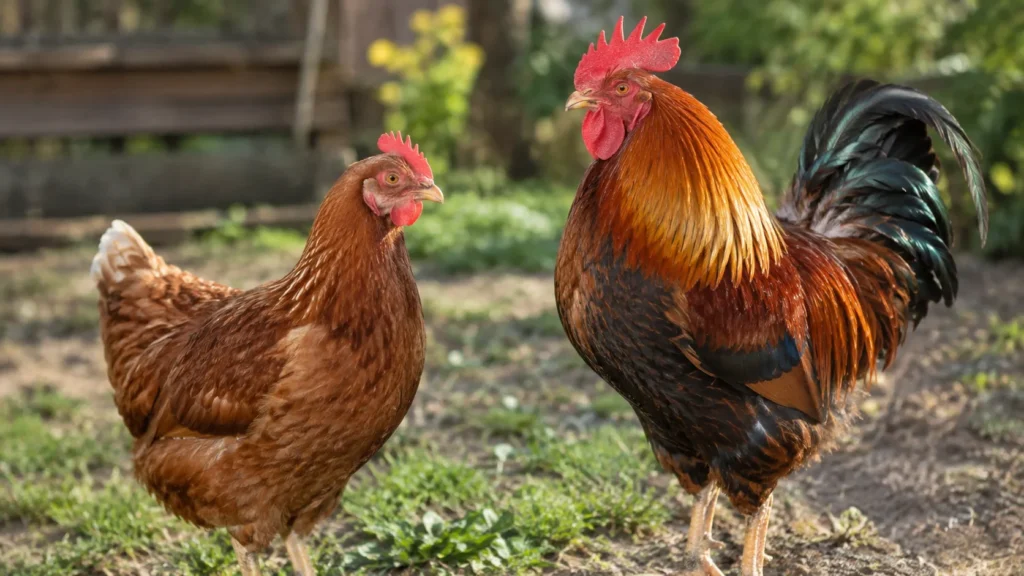
A chicken hen or rooster can often be identified by comb development, feather shape, leg structure, behavior, and eventually crowing or egg laying. However, the safest clues depend on the bird’s age and breed, and young chicks may remain difficult to sex accurately without specialized methods.
This guide explains how to identify hens and roosters from hatchling through adulthood, what signs are reliable, and which common guesses lead keepers astray. It is written for beginners buying chicks, raising a mixed flock, or trying to understand an unexpected bird in the backyard coop.
What Makes a Chicken Hen or Rooster Look Different?
Male and female chickens develop different physical traits because roosters mature toward breeding and flock-protection roles, while hens develop reproductive structures and egg-laying capacity. These differences do not appear all at once. Comb growth, feathering, body shape, and behavior usually become more useful as a bird gets older.
Breed matters greatly. A trait that is obvious in a fast-feathering breed may be subtle in a slow-maturing breed, and some hens have large combs or assertive personalities that can look “rooster-like.” Color-linked and sex-linked breeds may be easier to identify as chicks, while many common breeds cannot be sexed reliably by appearance during the first few weeks.
An expert tip is to compare the birds with their same-age flockmates rather than judging one bird in isolation. The chick developing noticeably earlier, standing taller, or showing a larger comb may be male, but the comparison is only a probability until stronger evidence appears.
Chicken Hen or Rooster: The Practical Identification Checklist
| Feature to check | What to look for | Why it matters |
|---|---|---|
| Age | Note whether the bird is a hatchling, juvenile, or adult | The reliability of each sexing clue changes as the chicken matures. |
| Comb and wattles | Compare size, redness, and early development with flockmates | Roosters often develop larger, redder facial features sooner, though breed differences can mislead. |
| Legs and stance | Look for thicker legs, a taller stance, and possible spur bumps | These can support a rooster identification but are not proof in young birds. |
| Feather shape | Inspect neck, saddle, and tail feathers after juvenile molt | Pointed hackle and saddle feathers are strong signs of a mature rooster. |
| Behavior | Watch for crowing, mounting, guarding, chest bumping, or tidbitting | Repeated adult behaviors provide useful evidence, but a confident hen may also be assertive. |
| Egg laying | Look for a normal egg from the bird | Egg laying confirms a hen, although no egg does not prove a bird is male. |
| Professional sexing | Use hatchery records, breed-specific sexing, or veterinary help | Specialized methods are more dependable when an early answer is essential. |
How to Tell a Chicken Hen or Rooster Step by Step
1. Record the bird’s age and breed: Start with the hatch date, breed, and whether the bird came from a sex-linked or straight-run group. Breed information sets realistic expectations because some varieties mature early while others remain ambiguous for months. A hatchery “pullet” designation is useful, but it is not the same as a guarantee when buying unsexed chicks.
2. Compare comb and wattle development: At roughly four to eight weeks, compare each chick’s comb with birds of the same breed and age. A rooster candidate may show a wider, taller, or pink-to-red comb earlier than its flockmates, while many pullets retain a smaller, paler comb. This clue is strongest within a flock comparison and weakest when used across unrelated breeds.
3. Check feathering without pulling feathers: Observe the neck and back as juvenile feathers come in. A mature rooster typically develops narrow, pointed hackle feathers and pointed saddle feathers, while a hen’s corresponding feathers are generally rounder. Never pull feathers to inspect them, because feather damage and stress can make identification harder and harm the bird.
4. Watch posture and leg development: Roosters often stand taller, carry the chest forward, and develop heavier legs than pullets of the same breed. Look for spur bumps on older birds, but do not treat them as absolute proof because hens can develop spur-like growths. The Merck Veterinary Manual’s poultry guidance is a useful veterinary reference when physical changes are accompanied by injury, lameness, or unusual growth.
5. Listen for adult vocalization: A developing rooster may begin making broken, squeaky attempts before producing a recognizable crow. A clear, repeated crow is strong evidence of a rooster, although rare hens can produce crow-like calls. Do not rely on one strange sound; listen over several days and consider whether the bird is distressed, isolated, or responding to another chicken.
6. Observe social behavior: Repeated mounting, wing-dragging, chest bumping, tidbitting, and flock-guarding are common rooster behaviors. A hen may also mount another hen or act dominant, especially when no rooster is present, so behavior should support rather than replace physical evidence. Avoid handling birds roughly or provoking aggression just to test their sex.
7. Confirm with reproductive evidence: A healthy bird that lays a normal egg is confirmed as a hen. A rooster does not lay eggs, but a bird that has not yet laid may simply be immature, molting, stressed, or affected by season, nutrition, or illness. For broader context, the USDA Animal and Plant Health Inspection Service poultry resources emphasize observing flock health and management rather than relying on one isolated sign.
Can You Tell If a Chicken Is a Hen or Rooster?
You can often make a good identification by combining age, breed, comb development, feather shape, body structure, and behavior. You usually cannot identify a very young, ordinary backyard chick with certainty from one visual clue alone. When accuracy is important, use hatchery sexing information or consult a poultry veterinarian.
| Identification option | Best for | What to expect |
|---|---|---|
| Visual comparison | Juveniles and adult backyard birds | Low to moderate confidence early, increasing as feathers and behavior mature. |
| Breed-based sexing | Sex-linked or auto-sexing breeds | Useful at hatch when the specific breed’s color or pattern rules are known. |
| Egg or crow confirmation | Adult birds | Very strong practical evidence, but it may require waiting several months. |
| Professional assessment | Valuable breeding birds or urgent flock decisions | More dependable than guessing, with possible cost and handling stress. |
How to Adapt the Identification Method for Different Birds
For a newly hatched chick: Do not make a firm decision based on head shape, personality, or leg length. Check whether the breed is sex-linked or auto-sexing, keep hatchery records, and photograph the chick periodically for comparison. If you purchased a straight-run chick, plan on uncertainty until development provides better clues.
For a four-to-eight-week-old juvenile: Compare comb color and size, feathering speed, posture, and leg thickness with same-age flockmates. Mark observations on a simple weekly chart rather than deciding after one inspection. A rapidly developing comb is a reason to monitor the bird, not automatic proof of a rooster.
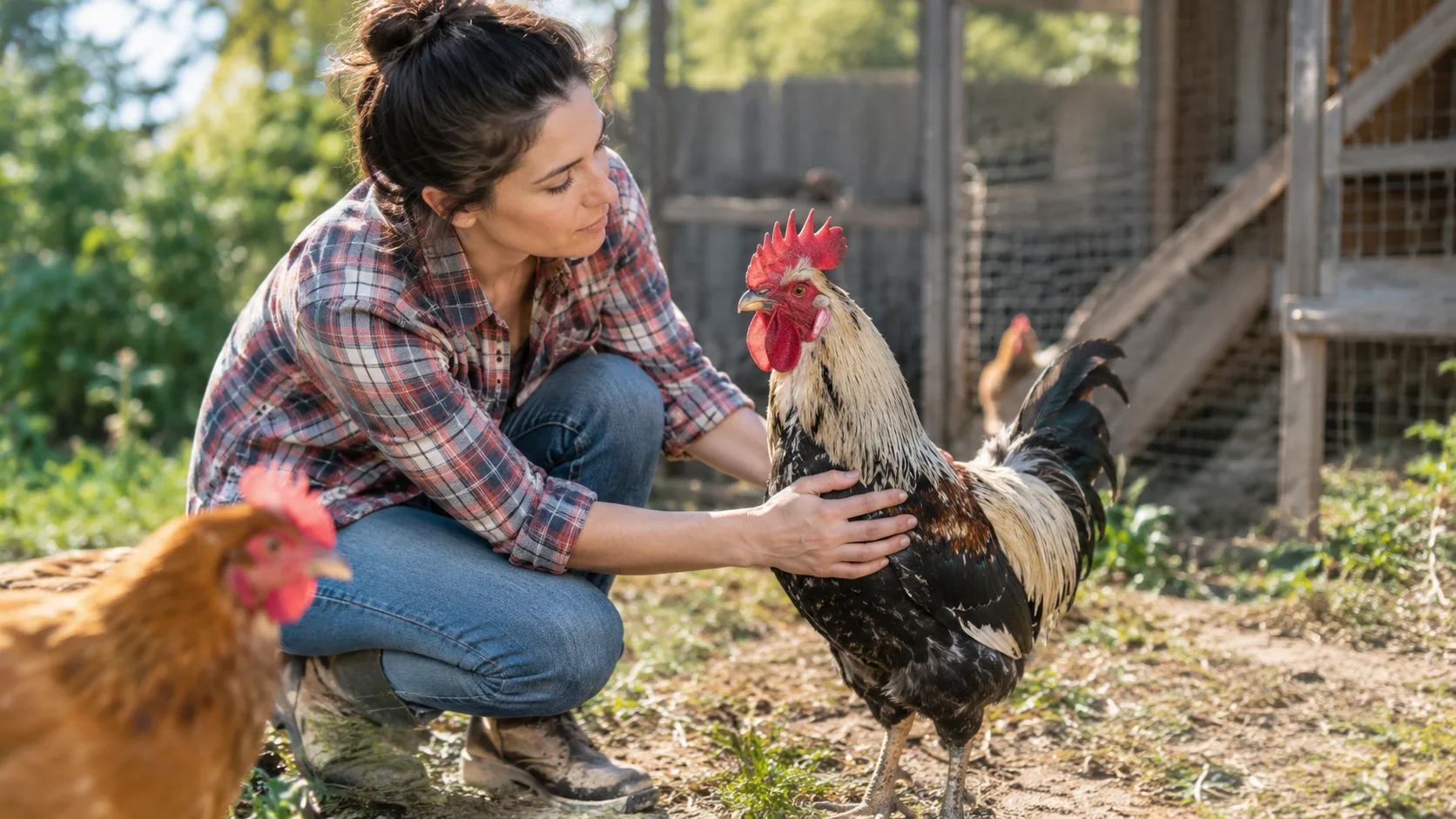
For a young bird near maturity: Focus on neck and saddle feather shape, crowing attempts, mounting, and the bird’s relationship with the flock. Handle the bird calmly if you need to inspect the feathers, supporting the body and avoiding pressure on the chest. By this stage, several clues usually point in the same direction.
For a mature flock: Egg laying confirms hens, while consistent crowing and pointed saddle feathers strongly support a rooster. Remember that mature hens can be bossy, mount flockmates, or develop spurs. Make decisions based on multiple signs and the bird’s health, not on temperament alone.
For a breed with unusual traits: Research the breed standard and typical maturity timeline before judging the bird. Large, slow-growing breeds may look juvenile longer, while Mediterranean breeds can develop combs early. A breed-specific comparison is more useful than applying a generic “hen versus rooster” rule.
Related Flock-Planning Advice
Once you identify the sex of your birds, plan housing around the flock you actually have. A rooster may require stronger fencing, more space, and careful supervision if he is aggressive or if several males are competing. Cedar & Cluck’s practical hen-or-rooster sexing guide provides another quick reference for comparing physical signs.
Housing and temperament also affect how easy identification is. Before adding birds, review the guide to friendliest chicken breeds so you can match breed tendencies with your household, handling experience, and available space.
Common Chicken Hen or Rooster Problems and How to Fix Them
| Problem | Likely cause | Easy fix |
|---|---|---|
| A young bird has a large comb | Early male development, breed variation, or naturally large-combed genetics | Compare with same-breed flockmates and wait for feather and behavior clues. |
| A hen acts aggressive or mounts others | Dominance, flock imbalance, or a hen taking a leadership role | Check for eggs and mature feathering before labeling the bird a rooster. |
| A suspected rooster does not crow | Young age, quiet temperament, isolation, or delayed maturity | Use physical signs and continue observing for several weeks. |
| A suspected hen has spurs | Individual variation or hormone-related spur growth | Do not use spurs alone; check feathers, comb, voice, and egg production. |
| Several birds are difficult to distinguish | Similar age, breed, and development stage | Photograph them weekly, use leg bands, and compare one feature at a time. |
| The flock has too many roosters | Straight-run chicks or inaccurate early assumptions | Separate aggressive males safely and make a responsible rehoming plan. |
| A bird seems weak during inspection | Handling stress, illness, injury, or poor condition | Stop the examination, return the bird to warmth and flock safety, and seek veterinary advice if needed. |
When identification creates a housing or welfare problem, prioritize safety over certainty. Separate fighting birds with secure partitions, provide enough room for retreat, and avoid chasing chickens around the run. A calm observation routine usually produces a better answer than repeated stressful handling.
Maintaining Accurate Flock Records as Birds Mature
Keep a simple record for each bird: hatch date, breed, source, leg-band color or number, weekly photos, and notable changes in comb, feathers, voice, and behavior. Records prevent you from confusing one bird with another and make it easier to spot health changes that are unrelated to sex.
Good flock management also includes clean water, complete feed, dry bedding, safe ventilation, and routine health checks. The USDA Defend the Flock guidance recommends practical biosecurity measures such as limiting contact with wild birds, cleaning equipment, and watching for signs of disease. These steps matter whether your flock contains hens, roosters, or both.
Do not trim or manipulate feathers to force a diagnosis, and do not keep an unsuitable rooster simply because you are waiting for absolute certainty. Once several reliable signs agree, make a welfare-focused decision about flock composition, housing, and rehoming.
Frequently Asked Questions
At what age can you tell if a chicken is a hen or rooster?
Some breeds show useful differences within the first few weeks, but many backyard chickens cannot be identified confidently until they are several months old. Comb growth, feather shape, crowing, and reproductive behavior become more informative as the bird matures.
Can a hen crow like a rooster?
Yes, an occasional hen can produce a crow-like call, especially when no rooster is present or when hormonal changes affect her behavior. A crow alone is strong evidence but should be checked against feather shape, comb development, and egg laying.
Do roosters always have bigger combs?
Roosters often develop larger and redder combs earlier, but this is not universal. Breed, genetics, age, comb type, and individual variation can make a hen’s comb appear larger than a young rooster’s.
Can you tell the sex of a chicken by its legs?
Thicker legs and a taller stance may suggest a rooster, particularly when compared with same-breed flockmates. Leg size is not reliable enough by itself, and spur growth is also variable between individuals.
Are all chickens sold as pullets guaranteed to be female?
No. A pullet is a young female chicken, but hatchery sexing is not perfectly accurate, and mistakes can occur. Ask the seller whether the birds were sexed, how they were sexed, and what guarantee applies.
What should I do if I discover an unwanted rooster?
First, provide safe separation if the rooster is aggressive, overbreeding hens, or fighting other males. Then contact reputable local keepers, agricultural extensions, animal shelters, or breed clubs about responsible rehoming, and never abandon the bird.
From Guesswork to a Confident Flock
Identifying a chicken hen or rooster is a process rather than a single test. Start with age and breed, compare birds with their flockmates, and wait for several clues to agree. Comb growth can raise a suspicion, but mature feather shape, repeated behavior, crowing, and egg laying provide stronger confirmation.
With patient observation and good records, most keepers can make sound decisions without stressing their birds. For more practical, researched guidance on breeds, feeding, coops, and everyday chicken care, visit Cedar & Cluck and keep building a healthier backyard flock.
