
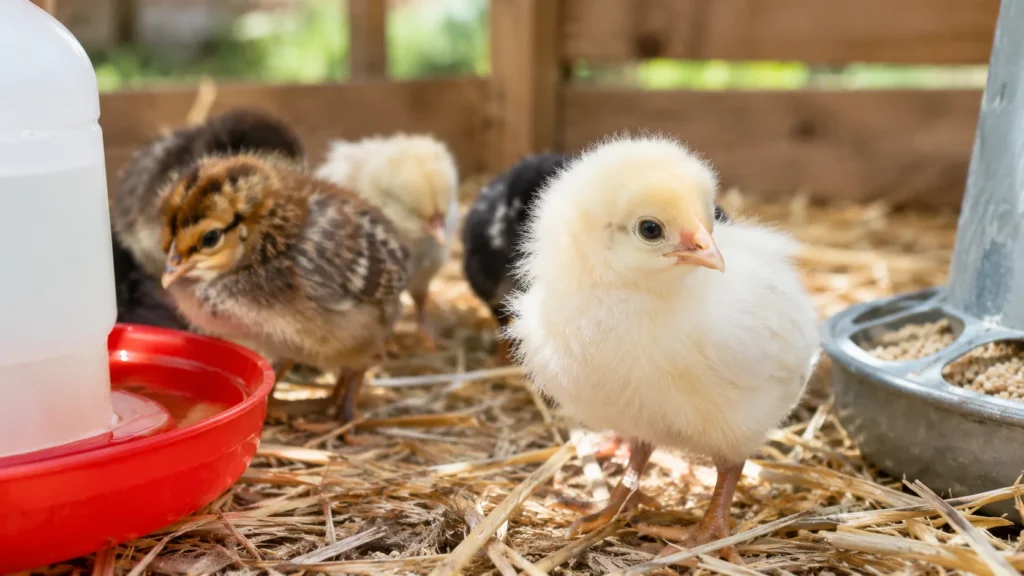
Newly hatched chicks can usually go up to about 24 to 72 hours without drinking because they absorb the yolk sac before hatch, but once they are in your care, they should have clean water available immediately. After the first day or two, chicks should not be left without water for more than a few hours, and heat-stressed or weak chicks can become dangerously dehydrated much faster.
This guide explains how long chicks can go without water, why the answer changes by age and brooder conditions, and how to set up a safe watering routine. It is written for backyard chicken keepers, first-time brooders, and anyone bringing home shipped chicks, hatchery chicks, or chicks hatched at home.
Why Does Water Matter So Much for Baby Chicks?
Water is not just something chicks drink when they feel thirsty. It helps them regulate body temperature, digest starter feed, move nutrients through the body, and keep normal organ function going during a very fast growth stage.
A chick’s small size works against it. A tiny body has less fluid reserve than an adult chicken, so dehydration can progress quickly, especially under a heat plate, heat lamp, or in a warm shipping box.
The confusing part is that newly hatched chicks are designed to survive a short window without food or water after hatch. That does not mean withholding water is safe once they are settled in a brooder. Expert tip: if chicks are eating dry starter feed, water access becomes even more urgent because digestion depends on it.
How Long Can Chicks Go Without Water? Safe Timeline and Brooder Checklist
The safest practical answer is simple: healthy newly hatched chicks may survive a limited post-hatch window without water, but chicks in a brooder should have fresh water at all times. Do not plan around the maximum survival window; plan around preventing stress before it starts.
Age, temperature, chick strength, and whether the chicks have started eating all change the risk level. A chick under warm brooder conditions can dehydrate faster than one resting comfortably at the right temperature.
| Chick situation | Safe water guidance | Why it matters |
|---|---|---|
| Just hatched and still in incubator | Usually okay for up to 24 hours while drying and resting | The yolk sac provides short-term nutrition and moisture, but the chick still needs water once moved to the brooder |
| Shipped day-old chicks | Offer water immediately on arrival | Shipping time, warmth, and stress can leave chicks thirsty even if they look alert |
| Chicks 1 to 7 days old | Keep clean water available continuously | First-week chicks are fragile, grow quickly, and have little reserve if water is spilled or blocked |
| Chicks already eating starter feed | Never intentionally remove water | Dry feed increases the need for drinking so chicks can swallow and digest properly |
| Hot brooder or warm weather | Check water several times daily | Heat raises water needs and can turn a minor shortage into dehydration quickly |
| Weak, pasty, or lethargic chicks | Give immediate supervised access and monitor closely | Sick or chilled chicks may not find the waterer on their own and can decline fast |
Step-by-Step Water Plan for New Chicks
Prepare before arrival: Set up the brooder, heat source, bedding, chick starter, and waterer before the chicks arrive or hatch. Water should be room temperature, not icy cold, because chilled chicks are slower to drink and recover.
Use a chick-safe waterer: Choose a shallow chick waterer with a narrow drinking lip, not an open bowl. Open dishes are easy to spill and can soak bedding, chill chicks, or create a drowning risk.
Show them the water: When each chick goes into the brooder, gently dip the tip of its beak into the water once, then let it lift its head and swallow. Do not force the head underwater or repeatedly dunk a chick that is struggling.
Watch the first hour: Stay nearby long enough to confirm that several chicks return to the waterer on their own. The University of Minnesota Extension notes that chicks need proper brooder temperature, feed, and water right away for a healthy start, which is why early observation matters.
Prevent spills and bedding buildup: Raise the waterer slightly on a stable block or small platform so the drinking edge sits around chick back height. This keeps shavings out while still letting every chick reach comfortably.
Refresh water often: Replace dirty or warm water at least twice daily, and more often if bedding, droppings, or feed are getting into it. Chicks are messy, and contaminated water can discourage drinking or spread problems through the brooder.
Check chick behavior: Content chicks spread out, drink, eat, and sleep in cycles. If they pile tightly under heat, avoid the heat, cry constantly, or become weak, fix the brooder environment and check water access immediately.
Can baby chicks survive overnight without water?
Baby chicks should not be left overnight without water once they are in the brooder. While a newly hatched chick has some yolk reserve, a brooder chick that has started eating and living under artificial heat needs steady access to fresh water.
If a waterer runs dry overnight, do not panic, but act quickly. Refill it with clean room-temperature water, guide weak chicks to drink, and watch the group for lethargy, pasty butt, or failure to eat.
| Option | Best for | What to expect |
|---|---|---|
| Small quart chick waterer | Small brooders with frequent checks | Easy to clean, but may run out or fill with bedding quickly |
| Larger chick waterer | Medium broods or longer workdays | More reserve, but must be stable so chicks cannot tip it |
| Nipple waterer designed for chicks | Keepers who train chicks early | Cleaner bedding, but chicks must be observed to confirm they learn it |
| Backup second waterer | Large groups or hot weather | Extra safety if one waterer spills, clogs, or gets buried in bedding |
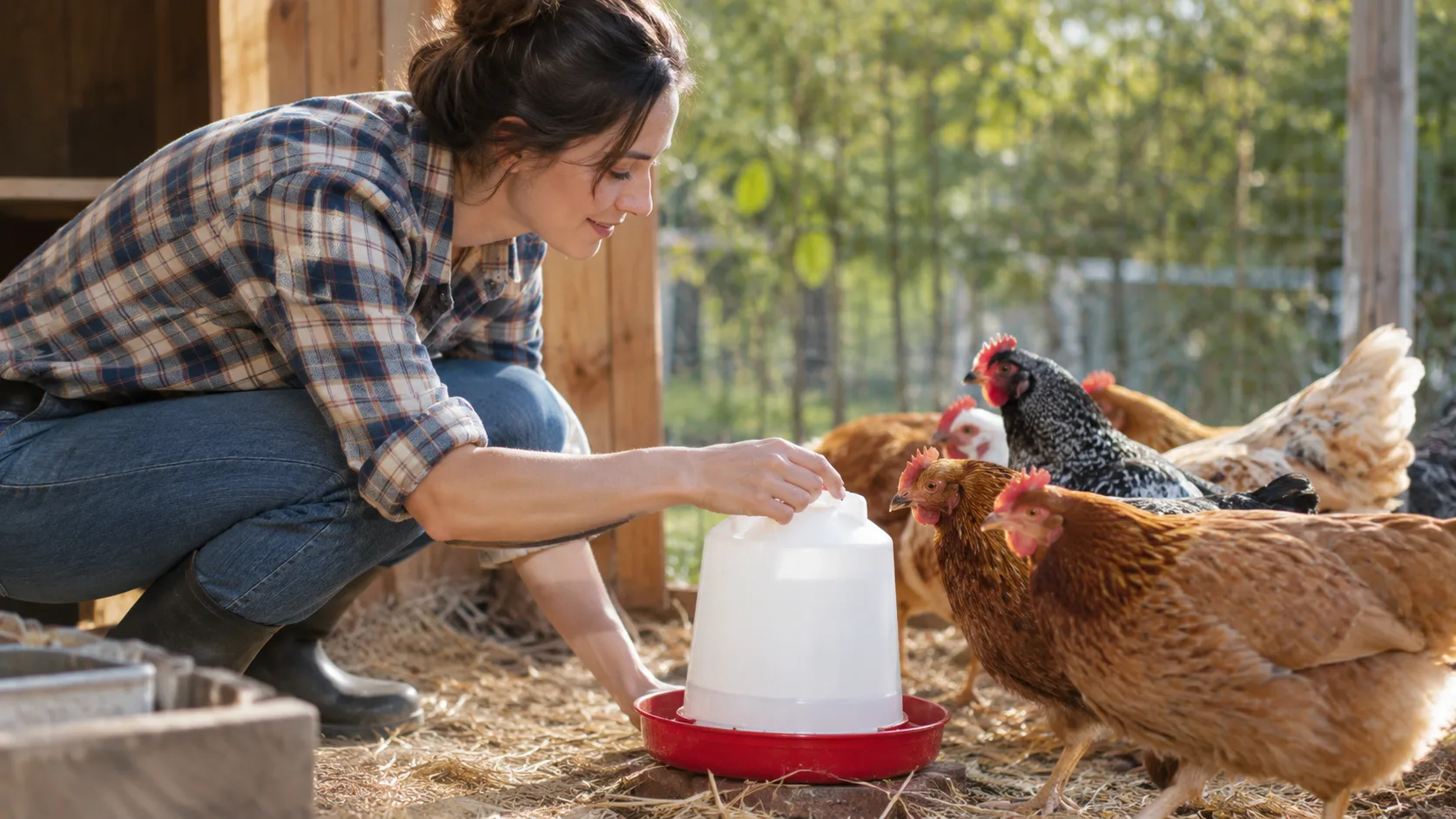
How to Adjust Water Care for Different Chick Situations
For a shipped chick order: Have the brooder warm and water ready before opening the shipping box. Offer water before feed so thirsty chicks drink first, and spend extra time watching for any chick that stands apart or keeps its eyes closed.
For a home hatch: Chicks can remain in the incubator while they dry and fluff, but they should move to the brooder with water once they are active and ready. Do not rush wet chicks into a drafty setup just to make them drink sooner.
For a large brooder group: Use more than one water station so timid chicks are not crowded away. Place waterers far enough apart that a bossy or energetic group cannot block access to all drinking spots at once.
For hot weather brooding: Check the brooder more often because chicks drink more and water warms quickly. Keep the brooder out of direct sun, and make sure chicks can move away from the heat source.
For weak or small chicks: Place water very close to the warm resting area without putting it directly under a heat lamp where it overheats. A weak chick may need repeated supervised access, but if it cannot drink or stand, contact a poultry-savvy veterinarian or local extension office.
Companion Advice for Raising Strong Chicks
Water is only one part of the first-week care system. Chicks also need the right starter feed, steady brooder warmth, safe footing, and enough space to move away from heat when they are comfortable.
If you are still setting up your chick feeding routine, Cedar & Cluck’s guide to what to feed newborn chickens in the first week pairs directly with this watering plan. Feed and water should be managed together because chicks that eat dry starter need reliable drinking access.
As your chicks grow, their water needs and outdoor transition plan will change. Before moving them out of the brooder, read when chicks can go outside safely so you can avoid chilling, overheating, or exposing young birds before they are ready.
Common Chick Water Problems and How to Fix Them
| Problem | Likely cause | Easy fix |
|---|---|---|
| Chicks are not drinking | They do not know where the water is or are too chilled to move | Dip beaks once, warm chilled chicks, and place the waterer close to the main activity area |
| Waterer keeps filling with shavings | Waterer is sitting directly on loose bedding | Set it on a stable riser at chick back height |
| Bedding is wet around the waterer | Waterer is tipped, too full, or poorly leveled | Level the waterer, reduce wobble, and replace wet bedding immediately |
| One chick is weak while others look fine | It may be failing to find water, chilled, or stressed from shipping | Offer supervised drinks and monitor separately in a warm, safe area if needed |
| Chicks have pasty butt | Shipping stress, brooder temperature issues, or dehydration can contribute | Clean gently, correct temperature, and make sure all chicks are drinking |
| Water smells bad or looks cloudy | Feed, droppings, or bedding contamination | Wash the waterer and replace with fresh water more often |
Most chick water problems are management problems, not complicated medical mysteries. If you keep water clean, reachable, and available, you remove one of the biggest preventable stressors in the brooder.
Waterer Maintenance for Healthy Chicks
Wash chick waterers daily with hot water and a clean brush, especially during the first week. Biofilm can build up on plastic surfaces even when the water looks mostly clear, and chicks peck bedding and droppings into the tray all day.
Sanitize when needed, rinse thoroughly, and let equipment dry before reuse. The Centers for Disease Control and Prevention backyard poultry guidance emphasizes handwashing and safe handling around poultry because chicks can carry germs even when they look healthy.
Keep a spare waterer on hand so cleaning does not leave chicks without water. A backup also protects you if a base cracks, a jar leaks, or a larger chick knocks the only waterer sideways during the night.
Frequently Asked Questions
How long can chicks go without water after hatching?
Newly hatched chicks can often manage about 24 to 72 hours on the absorbed yolk sac, which is why hatcheries can ship day-old chicks. However, once chicks are in your brooder, they should have clean water available right away.
How long can chicks go without water in a brooder?
Brooder chicks should not be intentionally left without water. If water runs out for a few hours, refill it promptly and observe the chicks for weakness, loud distress calling, or pasty butt.
Should I give sugar water to new chicks?
Plain clean water is the standard choice for healthy chicks. Some keepers use electrolytes for stressed shipped chicks, but follow the product label and do not use supplements as a replacement for good brooder temperature, clean water, and starter feed.
Can chicks drown in a water dish?
Yes, chicks can drown in open bowls or become chilled after falling into water. Use a chick waterer with a narrow drinking area, or add clean marbles or stones to a shallow dish only as a temporary emergency setup.
Why are my chicks pecking the waterer but not drinking?
Young chicks explore by pecking, so some pecking is normal. If you do not see swallowing, dip each beak once and make sure the water level is visible and easy to reach.
How often should I change chick water?
Change chick water at least twice a day, and more often if it is dirty, warm, or full of bedding. In busy brooders, frequent small cleanups are better than waiting for the waterer to become obviously foul.
Keep Water Simple, Steady, and Safe
The key lesson is that chicks may survive a short time without water right after hatch, but they thrive when water is available, clean, and easy to find from the moment brooder care begins. Do not stretch the survival window; build a routine that prevents dehydration.
For more practical chick and backyard flock care, keep learning with Cedar & Cluck at https://cedarandcluck.com/.
