
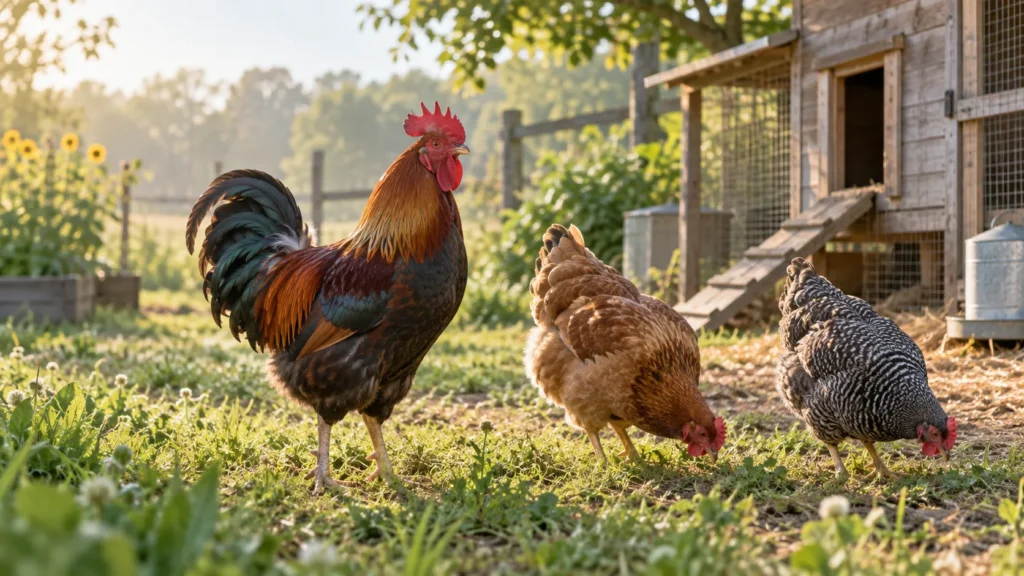
To tell whether a chicken is a hen or rooster, compare its age, breed, comb and wattles, feather development, saddle and hackle feathers, legs, and behavior. The most reliable clues change as a bird matures: sex-linked coloring or professional vent sexing can help with chicks, while pointed feathers, crowing, mounting, and spur development are stronger clues in older birds.
This guide explains how to tell a hen or rooster without relying on a single unreliable sign. It is written for new backyard keepers identifying chicks, juveniles, and adult birds before choosing flock members, planning housing, or deciding whether a local rooster is suitable.
What Makes Hen or Rooster Identification So Difficult?
Chicken sex is not always obvious because breeds mature at different rates. Some males show a larger comb early, while others look nearly identical to pullets until their neck and saddle feathers develop. A hen can also have a prominent comb, be assertive, or occasionally crow, so no individual clue proves sex by itself.
Age matters more than many beginner guides suggest. A chick may be impossible to identify visually, a six-week-old juvenile may offer useful clues, and a mature bird is usually much easier to classify. Breed genetics matter too: sex-linked crosses can be identified by down color or feather pattern, but those markings do not work across every breed.
The expert tip is to photograph the bird from the side every week rather than judging it once. Comparing the same bird at two-week intervals makes changes in comb color, feather shape, and posture much easier to recognize than memory alone.
Hen or Rooster: The Practical Identification Checklist
| Clue to check | What to look for | Why it matters |
|---|---|---|
| Age and breed | Note the bird’s age and breed or cross | Timing and reliable clues vary significantly by genetics |
| Comb and wattles | Compare size, color, and early reddening with flockmates | Males often develop larger, redder facial tissue sooner, but breed differences create exceptions |
| Feather shape | Look for narrow, pointed hackle and saddle feathers after juvenile plumage | Pointed adult feathers are one of the strongest visual clues in many breeds |
| Tail and posture | Check for sickle tail feathers, upright carriage, and thicker legs | These features support a male identification but are not conclusive alone |
| Behavior and voice | Listen for crowing and watch mounting, guarding, and sparring | Adult male behavior can confirm a pattern, though hens may occasionally show male-like behavior |
| Egg production | Look for a mature bird laying eggs | An egg-laying bird is a hen, but lack of eggs does not prove a bird is male |
How to Tell if a Chicken Is a Hen or Rooster Step by Step
1. Record the bird’s age and breed: Start with the information that prevents the most mistakes. Write down the hatch date, breed, color variety, and whether the bird came from a known sex-linked cross. If the source sold it as a straight-run chick, treat that label as uncertain rather than as evidence of sex.
2. Compare it with same-age flockmates: Place the bird’s observations beside birds of the same breed and age. Compare comb development, leg thickness, feather coverage, and body posture rather than judging size by itself. A naturally large pullet may outweigh a smaller cockerel, especially in mixed-breed flocks.
3. Inspect the comb and wattles: At several weeks of age, many cockerels develop a comb that is wider, redder, and more pronounced than their sisters’. Look for a trend across several days because excitement, heat, and lighting can temporarily change facial color. This is a clue, not a verdict, particularly in rose-combed, pea-combed, or slow-maturing breeds.
4. Examine juvenile and adult feathers: Once the bird begins replacing chick feathers, inspect the neck and back closely. Roosters commonly develop narrow, pointed hackle feathers and pointed saddle feathers; hens generally retain rounded feather tips in those areas. Do not pluck feathers or handle the bird roughly, and remember that the distinction may not be visible until the first mature plumage.
5. Watch the bird’s behavior: Observe the flock during calm periods and at feeding time. Repeated mounting, a protective stance, herding flockmates, sparring, and a developing crow support a rooster identification. The University of Minnesota Extension’s chicken-raising guidance emphasizes observing flock behavior and managing birds according to their housing and welfare needs, rather than depending on one superficial trait.
6. Listen for the adult voice: A clear, repeated crow is strong evidence of a rooster, although a young cockerel may produce broken squeaks before a recognizable crow. Hens can occasionally crow because of hormonal changes, ovarian problems, or the absence of a rooster, so an unusual vocalization should be combined with physical clues. Record a short video if you need help comparing the sound over time.
7. Check for mature male features: Older roosters often develop curved sickle feathers, longer saddle feathers, thicker legs, and spurs or spur buds. Spurs are variable and hens can grow spur-like structures, so they are supporting evidence rather than a guaranteed test. If the bird lays an egg, it is a hen, but many healthy hens lay infrequently or pause during molt, winter, stress, or illness.
8. Use professional methods when the decision matters: Do not try to vent sex a chick at home. Vent sexing requires training and can injure or kill a chick when performed incorrectly. A hatchery with trained sexers, a veterinarian, or a breed-specific genetic test is safer when you need early, dependable identification.
People Also Ask: How Can You Tell if a Baby Chicken Is a Hen or Rooster?
Most baby chickens cannot be identified reliably by appearance alone. The best early options are professional vent sexing, a reputable sex-linked cross, or a breed with established color-sexing rules. Wing-feather comparisons, head spots, and leg color may help with certain lines but should not be treated as universal tests.
| Option | Best for | What to expect |
|---|---|---|
| Sex-linked coloring | Known sex-linked crosses | Male and female chicks hatch with different colors or markings when the cross is designed for it |
| Professional vent sexing | Commercial hatchery identification | Useful when done by an experienced professional; unsafe as a home experiment |
| Visual observation | Patient backyard keepers | Uncertain in chicks but increasingly useful from the juvenile stage onward |
| DNA testing | Valuable, rare, or difficult-to-sex birds | Can be dependable when the sample and test are handled correctly, with added cost and waiting time |
How to Customize the Hen or Rooster Check
For a day-old chick: Avoid making a permanent decision from fluff, leg size, or how quickly the chick moves. Keep clear records, use the hatchery’s stated sexing method, and ask whether the breed is sex-linked. Provide the same brooder care regardless of your early guess.
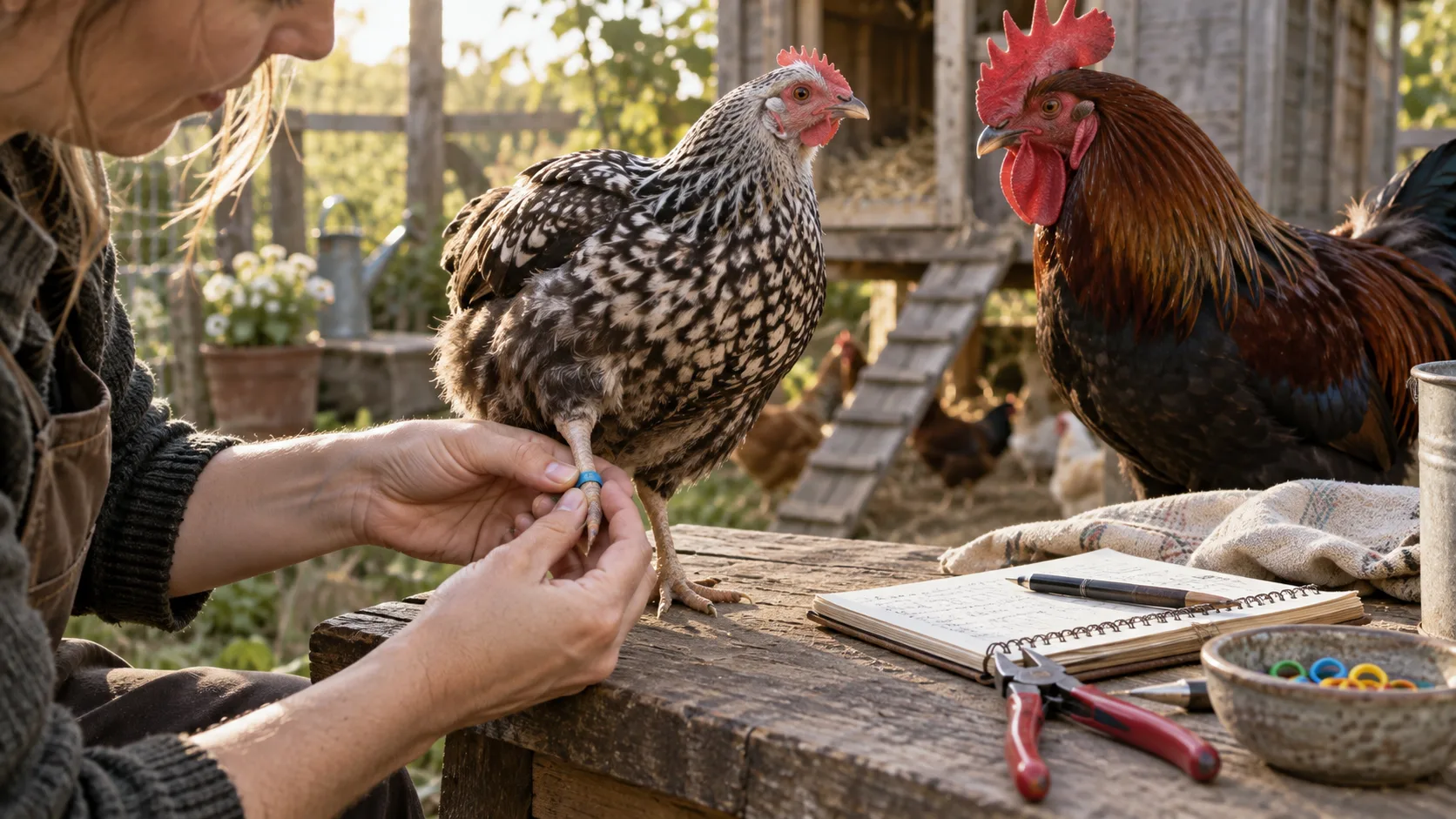
For a four- to eight-week-old juvenile: Take weekly side photographs under similar lighting. Compare comb growth and feather development with same-age birds of the same breed, but wait for multiple clues before rehoming or labeling the bird. This is often the stage when cockerels begin to separate visually, but not every breed follows the same schedule.
For a slow-maturing or ornamental breed: Give more weight to mature feather shape and adult vocalization than to early comb size. Silkies, Polish, Brahmas, and other unusual breeds can be harder to sex because crests, comb types, or slow growth obscure typical clues. Breed-specific experience is especially valuable.
For a mixed-breed flock: Judge each bird against its own likely parentage, not against a standard commercial layer. Mixed birds can combine a hen’s body shape with a rooster’s coloring or develop features at unpredictable times. Keep a flock log with dates, photos, first crow, and first egg.
For a flock where roosters are not allowed: Confirm local rules and your housing plan before buying straight-run chicks. Have a humane rehoming plan before the birds mature, and never abandon an unwanted rooster. If you keep one, plan for adequate space, predator protection, multiple hens, and safe separation if aggression develops.
Practical Flock Planning After You Identify the Sex
Once you know which birds are likely hens and roosters, review the flock’s space before adding or removing anyone. A rooster does not make hens lay eggs, so a laying flock can function without one. If you are raising pullets for eggs, the guide to when chickens start laying eggs can help you distinguish normal age-related waiting from a genuine laying problem.
Keep nesting boxes, roosts, feeders, and drinkers arranged so a dominant bird cannot guard every resource. If a rooster repeatedly injures hens, causes blood, or prevents subordinate birds from eating, separate him promptly and assess the flock rather than waiting for the problem to resolve itself.
Common Hen or Rooster Identification Problems and How to Fix Them
| Problem | Likely cause | Easy fix |
|---|---|---|
| Red comb means the bird is labeled a rooster | Comb color varies with breed, age, temperature, and maturity | Check comb size alongside feather shape, behavior, and age |
| A large bird is called a rooster | Body size is being judged without breed context | Compare same-breed flockmates and inspect the neck and saddle feathers |
| The bird has not crowed, so it is called a hen | Young cockerels may crow late or make quiet attempts | Use physical clues and keep observing through maturity |
| The bird occasionally crows, so it is called a rooster | Some hens can crow because of hormonal or reproductive changes | Look for male feathering and consult a veterinarian if the change is sudden |
| Spurs are used as the only test | Hens can develop spur growth and young males may have none | Treat spurs as supporting evidence, not proof |
| A chick is vent-sexed at home | Professional technique is mistaken for a simple visual check | Do not manipulate the vent; use a trained hatchery, veterinarian, or later visual identification |
| A late-laying hen is labeled a rooster | Stress, molt, season, age, or illness can stop egg production | Evaluate health and laying conditions before deciding sex |
When clues conflict, wait if the bird is healthy and your housing allows it. A wrong early label is less harmful than rough handling, rushed vent sexing, or an unsuitable rehoming decision. If you must decide quickly, use a qualified professional and explain the breed, age, and reason for identification.
Maintaining a Healthy Flock While You Wait
Sex identification should never replace routine health checks. Handle birds calmly, wash your hands after contact, and watch for weight loss, breathing problems, lameness, diarrhea, wounds, or a bird being excluded from feed and water. Quarantine new or returning birds according to a veterinary plan before mixing them with the flock.
Use the Merck Veterinary Manual’s poultry health-management guidance as a reliable reference for prevention, observation, and disease-control principles. Housing design also matters: the United States Department of Agriculture’s avian health information explains why biosecurity and limiting disease exposure are important for poultry keepers.
For long-term flock stability, keep notes on each bird’s approximate age, breed, source, sex clues, health events, and reproductive changes. Those records make it easier to recognize whether a new behavior is normal maturity, social stress, or a medical issue.
Frequently Asked Questions
At what age can you tell if a chicken is a rooster?
Some cockerels show noticeable comb and wattles growth at four to eight weeks, but dependable identification often takes longer. Pointed hackle and saddle feathers, crowing, and male behavior become more useful as the bird approaches maturity. Breed and individual genetics can shift this timeline.
Can you tell if a chick is male by its wings?
Wing-feather sexing works only with certain genetically selected crosses and at a specific age. It is not a dependable method for ordinary mixed-breed or straight-run chicks. Unless the breeder confirms the method, treat wing differences as inconclusive.
Do all roosters have large combs?
No. Comb size and shape depend heavily on breed, genetics, and age. A small-combed rooster can be perfectly healthy, while a hen from a large-combed breed may develop a prominent comb.
Can a hen crow like a rooster?
Yes, although it is uncommon. Hens may crow when hormonal changes affect the ovary or when a flock lacks a dominant rooster. Confirm the bird’s sex using feathering, body features, and reproductive history, and seek veterinary advice if the behavior appears with illness or other sudden changes.
Can a rooster lay an egg?
No. A bird that lays an egg is female, even if it has an unusually large comb, spurs, or assertive behavior. A rooster may fertilize eggs, but it cannot produce them.
Is vent sexing safe for backyard chicken owners?
Not when attempted without specialized training. The technique requires precise handling and can seriously injure a chick. For a backyard flock, professional identification or patient observation is the safer choice.
Give Your Flock Time to Tell You
The best answer to “hen or rooster how to tell” is a combination of age, breed knowledge, physical development, and repeated observation. Comb growth can suggest an answer, but mature feather shape, consistent behavior, and eventually egg laying or crowing provide a much stronger identification than any single shortcut.
Keep your notes, handle birds gently, and plan housing before the flock reaches maturity. For more practical, researched guidance on choosing and caring for backyard chickens, visit Cedar & Cluck.
