
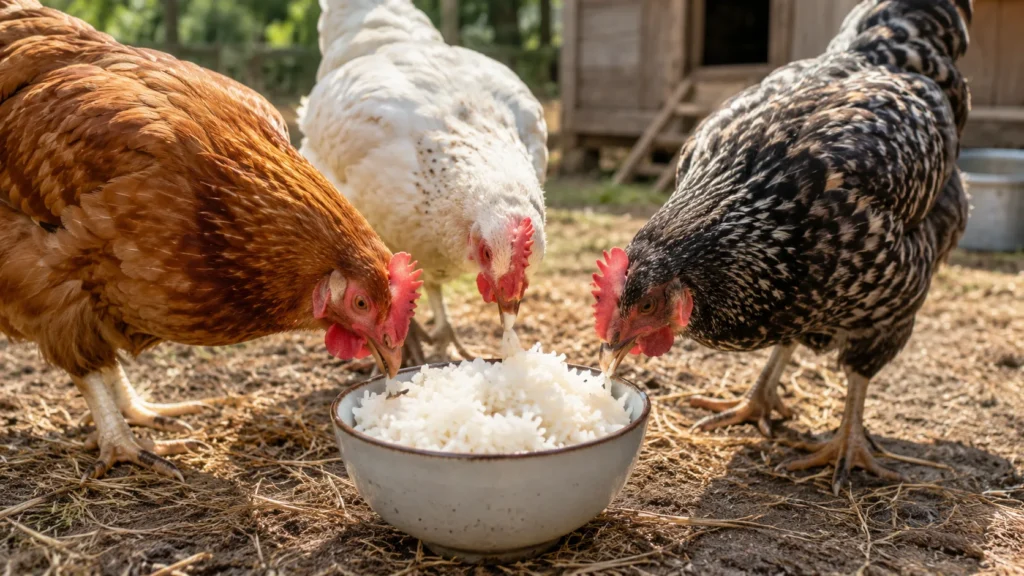
Yes, chickens can eat cooked rice as an occasional treat, provided it is plain, fully cooked, cooled, and free from salt, sauces, onions, garlic, and other seasonings. Serve only a small amount alongside a complete chicken feed, because rice is a treat rather than a nutritionally complete diet.
This guide explains how much rice to offer, which types are safest, how to prepare it, and what problems to watch for. It is written for backyard chicken keepers who want a practical answer to “can I feed cooked rice to chickens?” without replacing the balanced ration their flock needs every day.
What Makes Cooked Rice Safe for Chickens?
Plain cooked rice is a soft, digestible source of carbohydrates. Chickens can eat white rice, brown rice, and several other cooked rice varieties when the grains are unseasoned and served in moderation. Rice should not replace commercial layer feed, chick starter, or a properly formulated all-flock ration.
The main safety issue is not the rice itself but what is mixed into it. Leftover fried rice, rice casserole, takeout rice, and seasoned rice may contain excessive sodium, oil, spicy ingredients, onion, garlic, or other foods that are poor choices for chickens. Cooked rice also spoils more quickly than dry grain, especially in warm weather.
A useful expert tip is to spread cooled rice thinly on a clean plate rather than putting a sticky mound in a feeder. This reduces clumping, helps every bird get a fair share, and makes it easier to notice whether the rice is being eaten promptly.
Can I Feed Cooked Rice to Chickens? The Safe Serving Plan
| Item | Amount or specification | Why it matters |
|---|---|---|
| Cooked rice | About 1 tablespoon per adult chicken, occasionally | Keeps the treat portion small enough that the flock continues eating its balanced feed. |
| Rice ingredients | Plain rice cooked in water; no salt, oil, sauce, onion, or garlic | Seasonings and rich additions can create unnecessary digestive and dietary risks. |
| Serving temperature | Cool or lukewarm, never hot | Prevents mouth and crop discomfort and makes handling safer. |
| Serving surface | Clean shallow dish or scattered on clean ground | Limits contamination and reduces a sticky pile that can spoil quickly. |
| Removal time | Take away leftovers after about 20 to 30 minutes | Cooked food can attract flies, rodents, and bacteria, especially in warm conditions. |
| Primary diet | Complete age-appropriate chicken feed available every day | Feed supplies the protein, vitamins, minerals, and calcium that rice lacks. |
For most adult hens, a tablespoon of cooked rice per bird is a conservative starting point. A small flock can share a few spoonfuls, but do not turn rice into a daily bowl of free-choice food. Treats, including rice, should remain a small part of the overall diet.
Do not feed visibly moldy, sour-smelling, slimy, or stale rice. Do not use rice that has been sitting at room temperature for a long time, particularly if it contains meat, dairy, eggs, sauce, or other perishable ingredients.
How to Feed Cooked Rice to Chickens Step by Step
1. Check the ingredients: Use plain rice cooked in water, or reserve a small portion before adding seasonings to a human meal. Reject rice containing onion, garlic, heavy salt, spicy sauce, gravy, butter, or an unknown seasoning blend.
2. Confirm it is fresh: Cooked rice should be clean-smelling and free from mold, slime, or unusual discoloration. If you are unsure how long it has been unrefrigerated, discard it rather than feeding it to the flock.
3. Cool it completely: Spread the rice in a thin layer on a clean dish and let it cool to room temperature. Never feed rice straight from a hot pot, and do not offer a frozen clump that birds may struggle to break apart.
4. Measure a small portion: Start with about one tablespoon per adult chicken. Chicks, sick birds, and birds with digestive problems should not receive treats unless a poultry veterinarian recommends them.
5. Offer it separately: Put the rice in a shallow, clean dish or scatter it over a clean area. The Penn State Extension poultry nutrition guidance emphasizes the importance of a nutritionally complete ration, so provide normal feed first or keep it freely available.
6. Watch the flock: Check that timid hens are not being pushed away and observe whether any bird shows loose droppings, unusual lethargy, or crop discomfort. A small portion should disappear quickly without replacing the flock’s normal appetite.
7. Remove leftovers: Pick up uneaten rice within 20 to 30 minutes, or sooner if the weather is hot, humid, or wet. Wash the dish before using it again, and do not leave cooked food in the coop overnight.
Can Chickens Eat Rice Every Day?
Chickens can eat a small amount of plain cooked rice occasionally, but daily rice feeding is not recommended as a routine practice. Rice is low in several nutrients chickens need for body maintenance, feather growth, immune function, and egg production. Treats should supplement—not displace—a complete feed.
| Option | Best for | What to expect |
|---|---|---|
| Plain cooked white rice | An occasional soft treat | Easy to eat and usually well accepted, but nutritionally limited. |
| Plain cooked brown rice | Keepers wanting a less processed grain treat | More fiber and a firmer texture; still only a treat. |
| Dry uncooked rice | Not a preferred serving method | Hard grains are less convenient to eat and offer no clear advantage over cooked rice. |
| Seasoned or fried rice | Not appropriate for chickens | May contain too much salt, fat, onion, garlic, or sauce. |
How to Adjust Cooked Rice for Different Chickens
For laying hens: Keep the regular layer ration and calcium source as the foundation of the diet. A small spoonful of plain rice will not supply enough calcium or protein to support consistent egg production, so do not use it as a replacement for layer feed.
For chicks: Skip cooked rice unless a poultry professional specifically advises otherwise. Young chicks have narrow nutritional requirements and need properly formulated starter feed; treats can dilute the diet before they have room for dietary mistakes.
For broody hens: A broody hen may eat less while sitting on eggs, but rice is not a solution for poor appetite. Place fresh water and complete feed within easy reach, and investigate weight loss, weakness, or persistent refusal to eat.
For older or underweight birds: Use rice only as a small appetite-stimulating treat, not as a weight-gain plan. An older hen losing weight needs an assessment of parasites, dental or crop problems, illness, bullying, and access to feed.
For a mixed flock: Offer a measured portion in a wide dish so smaller or lower-ranking birds can eat. If roosters, pullets, and laying hens share one run, make sure the main feed is suitable for the flock or provide separate rations where needed.
Rice Feeding: Helpful Companion Advice
Rice works best as one small part of a sensible treat routine. Review this practical backyard feeding guide for what to feed chickens before adding several treats, because a flock can easily fill up on low-protein extras.
If you are comparing rice with vegetables, use this guide to vegetables chickens can eat daily for ideas that add variety without turning the treat bowl into the main diet. Fresh water, grit when appropriate, and clean feeding equipment matter just as much as the choice of treat.
Common Cooked Rice Feeding Problems and How to Fix Them
| Problem | Likely cause | Easy fix |
|---|---|---|
| Loose droppings after rice | Too much treat, sudden diet change, or spoiled rice | Stop the rice, provide normal feed and water, and monitor the flock closely. |
| Rice left in the dish | Portion is too large or dominant birds prevent access | Serve less, use a wider dish, and remove leftovers promptly. |
| Rice smells sour or looks slimy | Food has spoiled from warm storage or prolonged exposure | Discard it and clean the dish; never try to salvage questionable cooked food. |
| Hens ignore their regular feed | Too many treats or rice offered before balanced feed | Stop treats temporarily and make complete feed the only readily available food. |
| Birds cough or seem distressed while eating | Sticky clumps, competition, or a separate respiratory issue | Offer smaller loose grains, reduce crowding, and seek veterinary help if signs continue. |
| One hen becomes aggressive at the dish | Limited feeding space or flock pecking order | Use multiple shallow dishes spaced apart and supervise the first servings. |
One unusual dropping after a treat is not automatically an emergency, but persistent diarrhea, weakness, crop problems, breathing difficulty, or refusal to eat deserves prompt attention. Remove the suspected food and contact a poultry veterinarian when symptoms are severe, spread through the flock, or do not improve.
Safe Storage and Freshness for Cooked Rice
Cooked rice should be cooled and stored promptly in a clean, covered container if you intend to use it later. Keep it refrigerated and serve only a fresh, small portion to the flock; do not repeatedly warm and cool the same batch.
The USDA guidance on leftovers and food safety provides general advice for refrigerating cooked foods and handling leftovers safely. Chickens should not be used as a way to dispose of food that would be questionable for people.
Clean the serving dish after each use, especially when rice sticks to the surface. During hot or wet weather, shorten the time food remains outside and check the feeding area for ants, flies, rodents, and damp bedding.
Frequently Asked Questions
Can chickens eat white cooked rice?
Yes, chickens can eat plain cooked white rice in a small portion. Serve it cooled and free from salt, oil, sauces, onion, garlic, and other seasonings. Keep complete chicken feed available as the primary diet.
Can chickens eat brown cooked rice?
Yes, plain cooked brown rice is generally suitable as an occasional treat. Its firmer texture and extra fiber may make it less immediately appealing to some birds, so serve a small amount and watch how the flock handles it.
Can chickens eat leftover fried rice?
It is safer not to feed leftover fried rice. Fried rice commonly contains oil, excess sodium, sauces, onion, garlic, or other ingredients that are not appropriate as routine chicken food. Plain rice reserved before seasoning is a better choice.
Can baby chicks eat cooked rice?
Baby chicks should generally not receive cooked rice as a casual treat. Their starter feed is carefully formulated for rapid growth, and rice can dilute the protein, vitamins, and minerals they need. Ask a poultry veterinarian before giving treats to chicks with a special health concern.
Does cooked rice help chickens lay more eggs?
No. Cooked rice does not reliably increase egg production and does not provide the balanced protein, calcium, and other nutrients needed for laying hens. Egg production depends on age, breed, daylight, health, stress, water, and a complete diet.
What should I do if a chicken eats too much rice?
Remove the remaining rice and return the flock to fresh water and its normal complete feed. Watch for diarrhea, crop discomfort, lethargy, or reduced appetite over the next day. Contact a veterinarian if symptoms are severe, persistent, or affecting multiple birds.
A Small Treat That Stays in Its Place
Cooked rice is safe for most adult chickens when it is plain, fresh, cooled, and offered in a modest portion. The practical rule is simple: use rice for occasional variety, not as a substitute for complete feed, and remove anything left behind before it spoils.
For more tested, beginner-friendly guidance on feeding and caring for a backyard flock, visit Cedar & Cluck and build your feeding routine around what keeps chickens healthy over the long term.
