
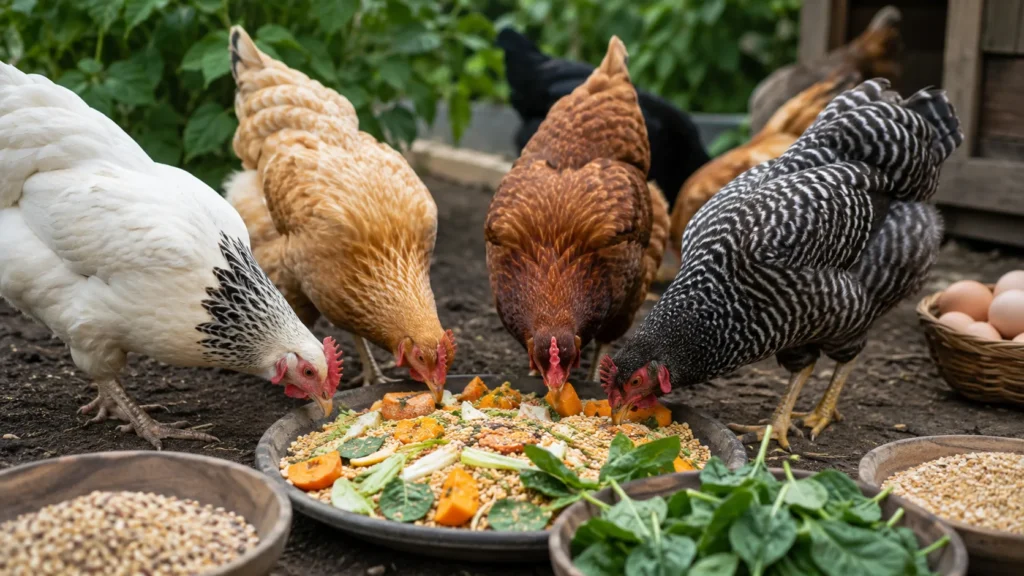
If you are wondering what to feed chickens, the simple answer is this: most backyard chickens should eat a complete commercial feed that matches their age and purpose, with fresh water available at all times. Layers usually need a calcium-rich layer feed, while chicks and growers need a starter or grower ration with the right protein level.
This guide explains what chickens should eat every day, how to adjust feed by age, breed, and season, and which treats are safe in moderation. It is for beginners who want a practical feeding plan and for keepers who want to tighten up their flock’s nutrition without overcomplicating it.
What Makes a Good Chicken Feeding Plan?
A good feeding plan starts with balance. Chickens need energy, protein, vitamins, minerals, and clean water in the right proportions, and commercial feed is designed to do that job better than kitchen scraps alone.
The biggest mistake new keepers make is using treats to fill too much of the diet. Treats can be useful, but they should support the ration, not replace it, because an unbalanced diet can reduce growth, shell quality, feather condition, and egg production.
Think of feed as the foundation and treats as a small extra. If you want healthy hens, steady laying, and fewer nutrition problems, the ratio matters more than the individual treat.
Expert tip: offer scratch grains only after your flock has eaten its main feed, so you do not train chickens to skip the nutrition they actually need.
What to Feed Chickens: The Core Daily Plan
The best daily diet for most backyard chickens is a complete feed suited to their life stage, plus unlimited water and a few carefully chosen extras. For laying hens, that usually means a layer feed with about 16% protein and added calcium; for chicks and growers, it means starter or grower feed instead of layer feed.
Use the table below as your baseline. If your flock is mixed-age, feed separately by age whenever possible so chicks do not get too much calcium and laying hens do not get too little.
| Item | Amount/Spec | Why it matters |
|---|---|---|
| Complete starter feed | For chicks, typically 18% to 20% protein | Supports fast growth and healthy early development |
| Complete grower feed | For pullets before laying, usually lower calcium than layer feed | Helps young birds build frame and muscle without excess calcium |
| Complete layer feed | For laying hens, commonly around 16% protein with added calcium | Supports egg production and strong shells |
| Clean water | Available at all times, refreshed daily | Dehydration quickly reduces feed intake and egg laying |
| Calcium source | Free-choice oyster shell for laying hens | Lets hens regulate extra calcium for shell formation |
| Treats and scratch | Keep to about 10% or less of daily intake | Prevents nutrient dilution and keeps hens eating balanced feed |
| Grit | Offer if birds do not have access to natural grit | Helps chickens grind food in the gizzard |
If you want a quick rule, feed the flock first, then offer treats second. That one habit solves a lot of feeding problems before they start.
Step-by-Step: How to Feed Chickens Well Every Day
Step 1: Match feed to age. Start chicks on a chick starter, move growing pullets to grower feed, and switch laying hens to layer feed once they are actively laying. Do not give layer feed to chicks, because the extra calcium is not appropriate for young birds.
Step 2: Keep feed available in a clean feeder. Chickens usually do best with steady access to their main ration. A feeder that stays dry and reduces waste is better than dumping feed on the ground where it gets contaminated or scattered.
Step 3: Provide water first. Fresh water is as important as feed, and birds drink more when the waterer is easy to reach and kept clean. In hot weather, check water several times a day because heat stress can cut feed intake fast.
Step 4: Add calcium only for laying hens. Give oyster shell separately so hens can choose how much to eat. That approach is better than mixing extra calcium into every bird’s feed, because non-layers do not need the same level.
Step 5: Use treats sparingly. Safe treats include small amounts of vegetables, fruit, cooked grains, and mealworms, but keep them limited. For a full list of unsafe foods, Cedar & Cluck’s guide to what chickens cannot eat is a useful companion.
Step 6: Watch body condition and behavior. A healthy chicken should be active, alert, and neither bony nor overly heavy. If birds are ignoring feed, losing weight, or producing thin shells, adjust the ration before the problem worsens.
Step 7: Balance feeds with season and life stage. Young birds, molting hens, and heavy winter layers all have different needs, so one bag of feed may not fit every bird forever. The USDA’s National Agricultural Library and extension resources are good references for basic poultry nutrition principles, especially if you want to compare feed labels.
What Should I Feed Chickens Every Day?
What should I feed chickens every day? For most flocks, the answer is a complete commercial ration appropriate to their age, plus water, limited treats, and access to grit if needed. If you are keeping laying hens, layer feed should make up the bulk of the diet because it is formulated for egg production.
Here is a simple way to think about daily feeding choices.
| Option | Best for | What to expect |
|---|---|---|
| Layer feed | Hens that are laying regularly | Good shell quality and a balanced laying diet |
| Starter/grower feed | Chicks and young pullets | Proper development without excess calcium |
| Scratch grains | Training, enrichment, and cold-weather extra calories | Useful as a treat, but not nutritionally complete |
| Kitchen scraps | Occasional variety | Fine in tiny amounts if safe, but never a main food source |
If you are unsure whether your hens are in the laying phase yet, Cedar & Cluck’s guide to when hens start laying eggs can help you time the feed transition correctly.
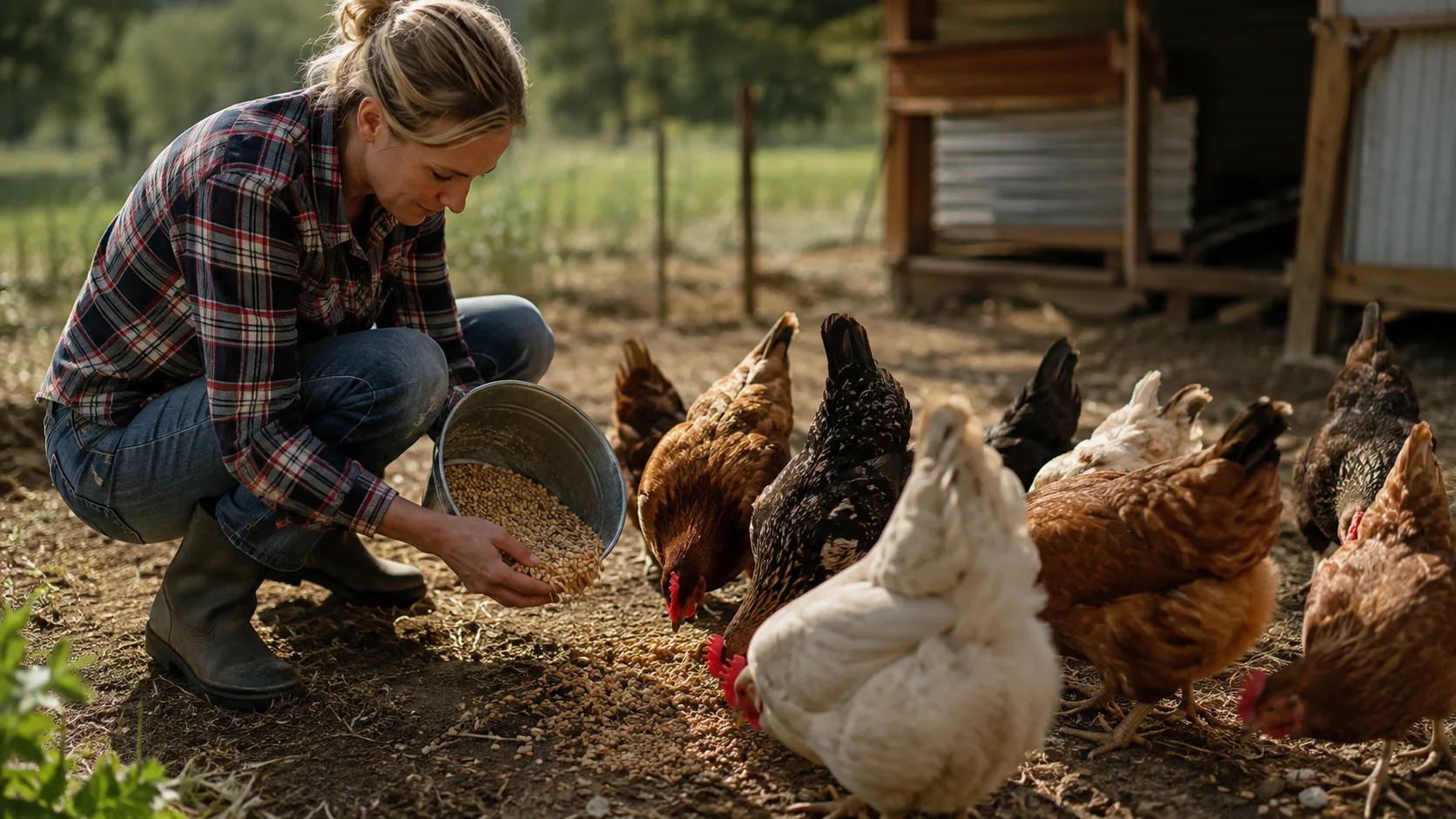
How to Adapt What to Feed Chickens for Your Flock
For a small backyard flock: keep feeding simple with one feeder of complete feed, one waterer, and a separate dish of oyster shell for layers. Small flocks waste less when feeders are hung at back height and checked daily for damp feed or spilled grain.
For mixed ages: separate chicks from layers whenever you can, or use a feeder system that lets birds eat different rations by group. Mixed-age flocks are where feeding mistakes happen most often, because the needs of a growing bird and a laying hen are not the same.
For winter feeding: keep the main ration the same, but expect hens to eat a little more as temperatures drop. Extra calories from scratch can help in extreme cold, but the ration still needs to stay centered on balanced feed, not filler foods.
For summer heat: focus on cool, fresh water and avoid heavy feeding in the hottest part of the day. Birds often eat less when temperatures rise, so clean water and shade matter as much as the feed itself.
For free-range flocks: remember that foraging does not replace a balanced ration. Grass, bugs, and garden scraps are helpful extras, but they are too unpredictable to count as the main diet.
Pairing Feed with Other Backyard Chicken Basics
Good feeding works best when the rest of the setup supports it. Hens that have enough space, clean nesting areas, and a calm coop are more likely to eat well and keep laying consistently. If you are planning your flock from scratch, pair your feeding plan with how big a chicken coop should be so birds do not compete too heavily around feeders.
Egg production also ties directly to nutrition. If you are trying to understand why one hen is laying while another is not, Cedar & Cluck’s guide on why chickens are not laying eggs is a smart next read after you fine-tune the feed.
Common What to Feed Chickens Problems and How to Fix Them
| Problem | Likely cause | Easy fix |
|---|---|---|
| Thin or weak eggshells | Not enough calcium or hens not eating enough layer feed | Offer oyster shell free-choice and check that hens are on the right ration |
| Chicks are growing slowly | Wrong feed stage or low-protein diet | Use a chick starter with the proper protein level |
| Hens stop eating feed | Too many treats, stale feed, or dirty water | Cut back treats, replace feed, and clean waterers daily |
| Loose droppings after feeding | Too many rich kitchen scraps or sudden diet change | Return to the main ration and reduce extras |
| Feed is molding | Moisture, heat, or poor storage | Store feed in a dry bin and buy smaller amounts more often |
| Birds fight at the feeder | Not enough feeder space for flock size | Add feeder space or split birds into multiple feeding spots |
Most feeding issues improve quickly once the flock gets the right ration, enough feeder space, and cleaner water. If a problem continues after you fix those basics, look at health, parasites, or stress in the coop rather than assuming the feed itself is the only issue.
How to Store Chicken Feed for the Best Results
Feed stays useful only if it stays dry, cool, and sealed from pests. Buy only as much as your flock will use in a reasonable time, because even good feed loses quality when it sits open in heat and humidity.
The FDA’s animal food and feeds guidance emphasizes basic feed safety practices like keeping feed clean, protected, and properly stored. In practice, that means using a lidded bin, keeping feed off concrete if moisture is an issue, and throwing out feed that smells musty or shows mold.
For longevity, rotate stock first in, first out, and rinse feeders before refilling them. A few minutes of maintenance each week protects both flock health and egg production better than buying premium feed and storing it badly.
Frequently Asked Questions
Can chickens eat kitchen scraps every day?
They can have small amounts of safe scraps, but not as a main meal. Treats and scraps should stay limited so the birds still eat enough complete feed to meet their nutritional needs.
Do laying hens need oyster shell if they get layer feed?
Many hens do well with layer feed alone, but free-choice oyster shell is still a smart option. It lets each hen regulate extra calcium based on her laying demand.
Can I feed chickens bread?
Bread is not toxic, but it offers very little nutrition and can fill birds up too much. It should be an occasional treat, not something you rely on.
How much feed does a chicken eat per day?
It depends on breed, size, season, and whether the bird is laying. Many standard-size hens eat roughly a quarter pound per day, but you should adjust based on body condition and actual intake.
What is the best feed for backyard chickens?
The best feed is a complete ration made for the bird’s current life stage. For most laying flocks, that means a quality layer feed with added calcium and a protein level suited to egg production.
Should chickens have access to grit?
If chickens do not have access to natural soil, small stones, or foraging areas, grit is helpful. It supports digestion by helping the gizzard grind food properly.
A Simple Feed Plan That Actually Works
When you strip away the noise, what to feed chickens comes down to one rule: make balanced feed the main event and everything else a small supplement. Match the ration to age, keep water clean, and use treats carefully so your birds stay healthy and productive.
If you want more practical chicken-keeping help, keep learning with Cedar & Cluck and explore the guides at Cedar & Cluck for clear, tested advice you can use in your own coop.
