
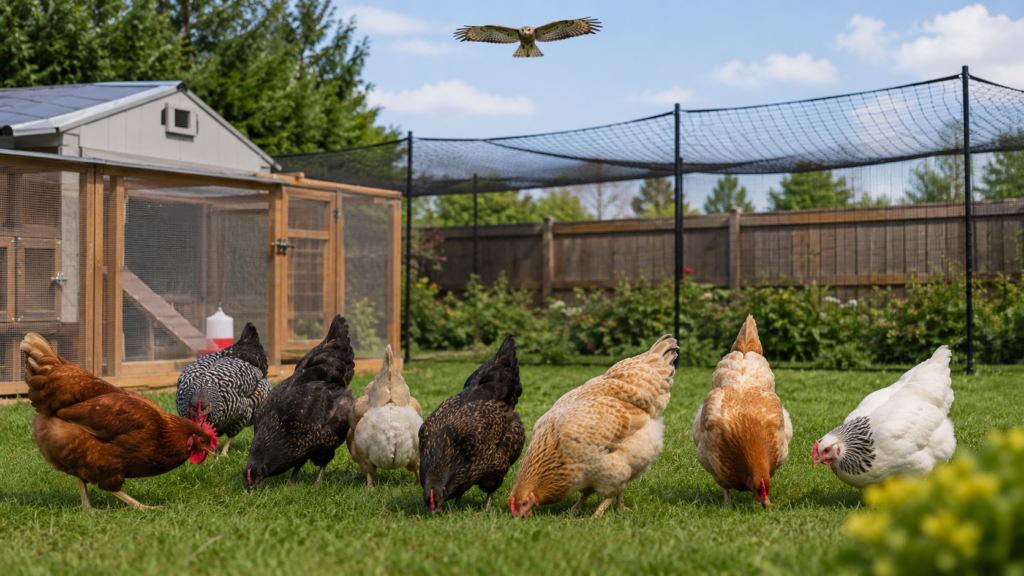
If you want to know how to protect chickens from hawks, the most effective answer is to keep birds under solid overhead cover, use secure fencing or netting, and supervise any time they are outside a fully enclosed run. Hawks are daytime hunters, so shade cloth, wire mesh, and constant visual cover do more than scare tactics alone.
This guide explains the safest setup, the best deterrents, and the mistakes that leave flocks exposed. It is for backyard chicken keepers who want practical, tested steps that reduce risk without making daily care harder.
What Makes Hawk Protection Work?
Hawks usually attack when they can see a clear path to a bird and a quick escape route after the strike. That means the best defense is not one trick, but layered protection that removes easy access from above and limits surprise from the sides.
Scare devices can help for a short time, but hawks learn fast. Physical barriers, predictable routines, and cover that changes the bird’s visibility are more reliable over time.
Think of hawk protection as making your flock look unprofitable. A bird that is always under netting, close to cover, and hard to isolate is far less likely to become a target.
One expert tip that many keepers miss: keep feed spills cleaned up, because a run full of spilled grain can draw small birds that attract hawks to the area in the first place.
How to Protect Chickens From Hawks: The Core Plan
The strongest approach is a three-part system: cover, confinement, and routine. Cover blocks the strike, confinement keeps birds in a protected space, and routine keeps them under protection during the most dangerous hours.
| Item | Amount/Spec | Why it matters |
|---|---|---|
| Overhead run cover | Bird netting, welded wire, or solid roof over the entire run | Prevents hawks from diving straight down onto birds |
| Run fencing | At least 6 feet if possible, with no large gaps | Makes it harder for birds to scatter and easier to keep them contained |
| Hiding cover | Tarps, shrubs, pallets, or visual barriers | Breaks line of sight so chickens have somewhere to duck under |
| Supervised free-range time | Only when someone is present | Lets you respond quickly if a hawk appears |
| Predator-safe shelter | Secure coop or covered tractor | Gives birds immediate protection when danger shows up |
| Motion and activity | Frequent human presence, dogs on duty, or active yard use | Discourages hawks from treating the yard like an easy hunting lane |
Bird netting works well for many backyards, but it must be tight and properly supported. Loose netting sags into the run, snags feathers, and gives predators a place to test weak spots.
Hard cover is even better if your space and budget allow it. A roofed run also helps with rain, snow, and fallen debris, which makes it a multi-use upgrade rather than a single-purpose deterrent.
Step-by-Step: How to Protect Chickens From Hawks
1. Map the danger zone: Walk your yard and look for open sightlines, fence gaps, and exposed feeding spots. Hawks prefer clear approaches, so identify the places where a bird could be isolated within a few seconds.
2. Add overhead cover first: Start with the run, not with scare tactics. If you can cover the entire chicken area, you remove the hawk’s biggest advantage, which is a clean dive from above.
3. Create hiding pockets: Add low shelters, shade cloth panels, or lean-to covers inside the run. Chickens need a place to break line of sight fast, especially if a hawk appears while they are feeding or dust bathing.
4. Change free-range timing: Let birds out only during times you can watch them closely. Midday exposure in an open yard is the most risky, and even a few minutes without supervision can be enough for an attack.
5. Use deterrents as support, not a plan: Reflective tape, scare eyes, and moving flags may help briefly, but they are not dependable on their own. The U.S. Fish & Wildlife Service notes that hawks are protected migratory birds, so the goal is deterrence and exclusion, not harm.
6. Keep the flock tight and calm: Birds spread out more when they have too much space and no cover. A smaller, protected area makes it easier for the flock to stay together and harder for one chicken to become a target.
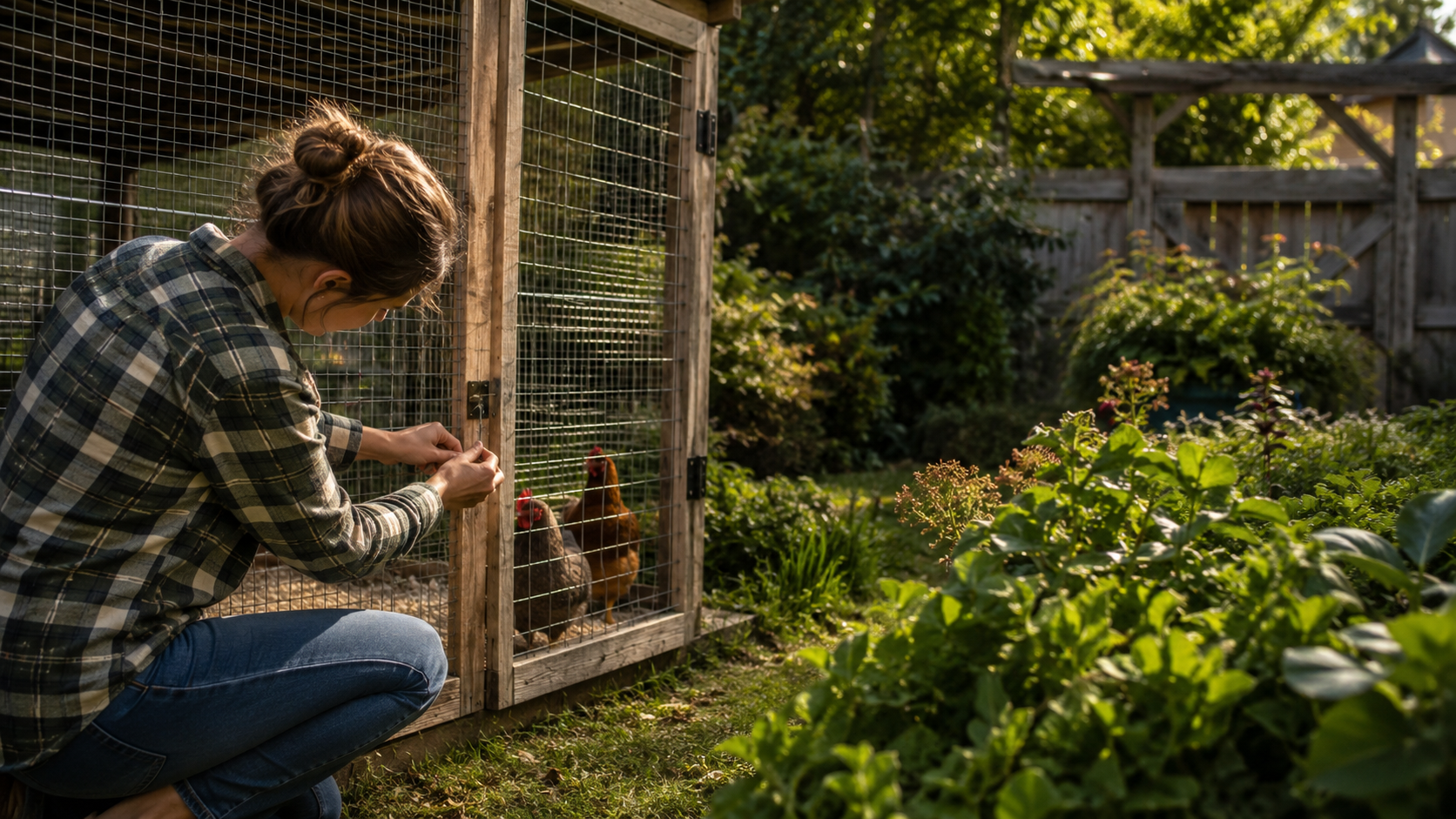
7. Review and repair weekly: Walk the run edges, roof lines, and gates every week. A single sagging section or broken latch can undo the rest of your setup.
What Is the Best Way to Keep Hawks Away From Chickens?
The best way to keep hawks away from chickens is to give them no safe strike opportunity. That means a covered run, frequent supervision for any open-air time, and enough shelter inside the run that birds can disappear from view quickly.
In practice, the strongest choice depends on your setup. A fully roofed run is the most reliable, while netting and motion-based deterrents work better as backups than as the main defense.
| Option | Best for | What to expect |
|---|---|---|
| Covered run | Most backyard flocks | Highest level of protection with the least daily stress |
| Netting over open run | Medium budgets and flexible layouts | Good protection if installed tightly and maintained well |
| Supervised free-range time | Small flocks and active owners | Useful, but only safe when you are present and alert |
| Scare devices | Short-term support | May help briefly, but hawks often ignore them over time |
How to Adapt Hawk Protection for Different Backyards
For a small urban yard: A compact covered run is usually the easiest solution. Focus on full overhead coverage and a clean perimeter instead of trying to make free-ranging safe in a tight, visible space.
For a large rural property: Distance can create more risk because hawks have room to stalk and circle. Use a secure run as the default and reserve open pasture time for times when someone is outside with the flock.
For a flock with young birds: Pullets and smaller chickens are easier targets than large adult hens. Keep juveniles under cover longer, and avoid exposing them in wide-open spaces until they are bigger and faster.
For a mixed predator area: If hawks are not your only problem, prioritize a stronger roof and sturdy latches. A system that works for aerial predators should also stand up to raccoons, dogs, and other common threats.
For a temporary setup: Use a tractor or portable pen with top coverage and move it often. Portable systems work best when they are genuinely enclosed and not just fenced on the sides.
Practical Pairing Advice for Safer Chickens
Hawk protection works best when it fits into the rest of your chicken care routine. A roomy, well-planned enclosure makes birds easier to protect, and the right setup also makes daily chores simpler. If you are still designing your flock space, our guide to how big a chicken coop should be can help you balance comfort, airflow, and security.
Food and shelter routines matter too. If you are building a broader care plan, it helps to understand feeding and housing together, especially when birds spend more time in protected areas. For a bigger-picture flock budget, see the cost to keep chickens.
Common Hawk Protection Problems and How to Fix Them
| Problem | Likely cause | Easy fix |
|---|---|---|
| Hawks still appear over the run | Coverage has gaps or sags | Tighten netting or add more complete overhead cover |
| Chickens panic and scatter | No hiding cover inside the run | Add panels, tarps, or low shelters they can duck under |
| Deterrents stop working | Birds adapt quickly to repeated visual tricks | Use deterrents only as a supplement to physical barriers |
| Attacks happen during free-range time | Birds are outside without supervision | Shorten the window and only range when you are present |
| A single bird gets targeted | It is isolated or separated from the flock | Keep birds in a tighter group and reduce open space |
| Run protection fails after storms | Wind, snow, or debris loosened the structure | Inspect supports and fasteners after every major weather event |
The main fix for most hawk problems is consistency. A setup that works every day is better than a stronger setup that only gets used sometimes.
Keeping Hawk Protection Effective Over Time
Long-term success comes from treating predator defense like coop maintenance, not a one-time project. Replace torn netting, retighten supports, and test gates and latches on a schedule so small failures do not grow into big ones.
For legal context, remember that raptors are protected under the U.S. Fish & Wildlife Service’s migratory bird protections, so trapping or harming hawks is not the answer. The durable solution is exclusion, supervision, and making the chicken area less attractive as a hunting ground.
It also helps to seasonally adjust your setup. In winter, open visibility may increase when trees lose leaves, and in summer, chickens often spend more time outdoors, which means more chances for a predator to notice them.
Frequently Asked Questions
Will a rooster protect chickens from hawks?
Sometimes a rooster will alarm the flock, but he is not reliable as the only defense. A rooster cannot stop a diving hawk, and he may even become a target himself. Physical cover still matters more than flock behavior.
Do shiny objects keep hawks away?
Sometimes they delay a hawk’s approach, but birds of prey learn fast. Reflective tape and spinning objects are best used as extra layers, not as the main protection. If a hawk can still reach the birds, the deterrent is not enough.
Can chickens be safe in an open yard?
They can be safer if you are present, the flock stays close together, and there is nearby cover. Even then, open yards are always riskier than enclosed runs. The more open the space, the more the birds depend on you being there.
Is bird netting enough on its own?
It can be enough when it is tight, secure, and fully covers the area. Loose or partially installed netting leaves gaps and weak spots that reduce protection. Inspect it often so wind and weather do not create problems.
What time of day are hawks most active?
Hawks are daytime hunters, so daylight hours are the concern. Many keepers notice more risk when birds are out and visible in the middle of the day. That is why supervised scheduling matters.
Should I use a covered tractor instead of free-ranging?
Yes, if your area has frequent hawk pressure and you still want birds to graze safely. A covered tractor gives movement plus protection, which is a useful compromise. It is often the easiest way to keep birds safer without fully giving up outdoor access.
A Safer Yard Starts With Better Cover
How to protect chickens from hawks comes down to one simple idea: make the flock hard to see, hard to reach, and hard to isolate. If your birds have overhead protection, a secure enclosure, and a routine that keeps them covered during daylight risk, you have already solved most of the problem.
For more practical chicken-keeping advice, continue building your flock plan with Cedar & Cluck at https://cedarandcluck.com/.
