
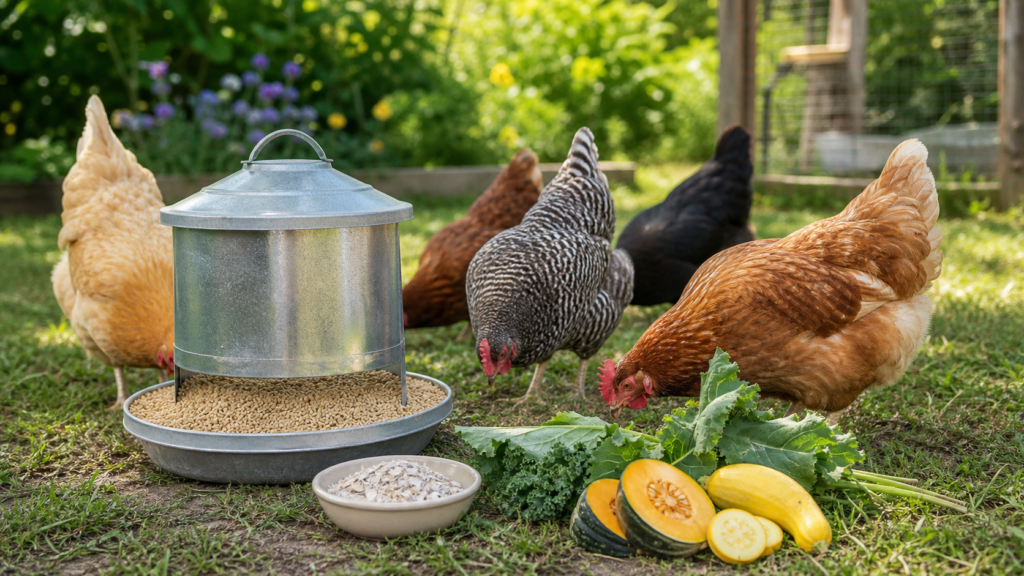
Chicken feeding does not need to be complicated. The safest beginner plan is to feed the right complete feed for the bird's age, keep clean water available, and use treats as extras, not the main diet.
Quick Answer
Feed chicks a chick starter feed, growing pullets a grower feed, and laying hens a complete layer feed with separate oyster shell available. Keep treats under about 10% of the diet, provide clean water daily, and adjust protein during molting or stressful seasons.
Chicken Feeding Chart
What Chicks Should Eat
Baby chicks should eat chick starter feed. It is made for growth and gives them the protein, vitamins, and minerals they need.
Avoid giving chicks too many treats. If you offer anything beyond starter feed, provide chick grit so they can digest it.
What Pullets Should Eat
Pullets are young female chickens that are not laying yet. They usually need grower feed until they are close to laying age.
Do not switch to layer feed too early. Layer feed contains extra calcium for egg shells, and young birds that are not laying do not need that much calcium.
What Laying Hens Should Eat
Laying hens should eat a complete layer feed. This supports egg production and shell quality.
Also offer oyster shell in a separate dish. Hens that need extra calcium will take it; birds that do not need it can ignore it.
Good Chicken Treats
Safe treats can include leafy greens, squash, pumpkin, berries, melon, cooked plain eggs, mealworms in moderation, and scratch grains in moderation.
Treats should not replace complete feed. Too many treats can reduce protein and minerals, which can hurt egg production.
Foods Chickens Should Not Eat
Avoid moldy food, very salty food, chocolate, alcohol, coffee grounds, raw dried beans, spoiled kitchen scraps, large amounts of onion or garlic, and avocado pit or skin.
Feeding Chickens In Winter
In winter, chickens may eat more because they burn energy staying warm. Keep feed available, make sure water does not freeze, and consider a little extra protein during molt.
Scratch grains can be used as a small evening treat, but they should not replace balanced feed.
Feeding Chickens In Summer
In summer, water matters as much as feed. Heat stress can reduce appetite and egg production.
Provide shade, cool water, and feed during cooler parts of the day if needed. Wet feed can spoil quickly in hot weather, so clean dishes often.
The Bottom Line
The easiest beginner feeding system is simple: chick starter for chicks, grower feed for pullets, layer feed for laying hens, clean water every day, oyster shell on the side, and treats in moderation.
