
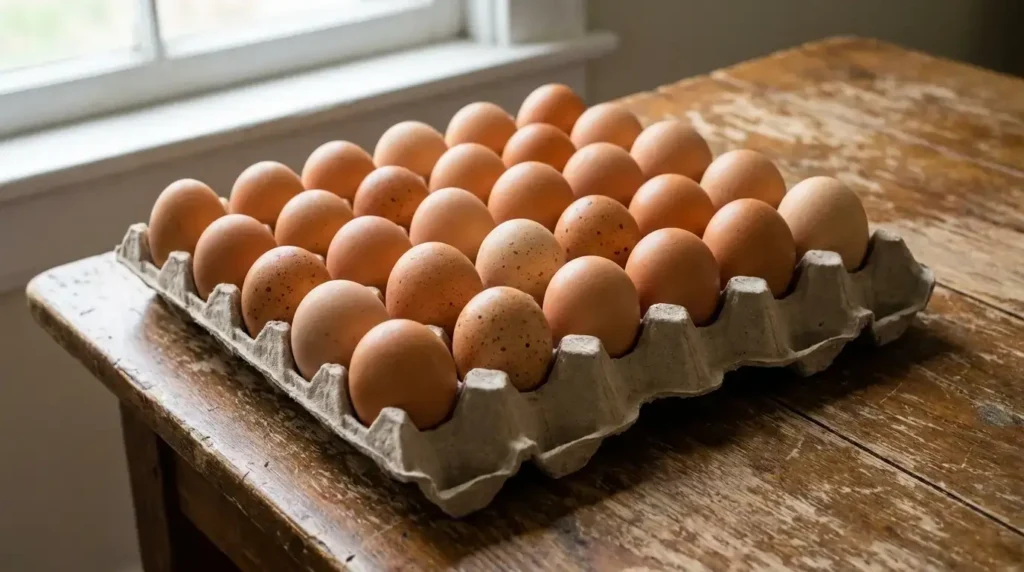
If you’re new to chickens, you might picture a hen popping out an egg every morning like clockwork. The reality is a little different — and once you understand the hen’s natural laying cycle, the pattern makes perfect sense. Here’s exactly how often chickens lay, what’s normal at different ages and seasons, and how to figure out how many hens you need for your egg supply.
The quick answer
A healthy laying hen produces about 4 to 6 eggs per week — not quite one a day. Here’s the range:
- Per day: at most one egg (never more), and often none
- Per week: 4–6 eggs for a good layer; 2–3 for a heritage or ornamental breed
- Per year: 250–300 for top production breeds, 150–200 for dual-purpose, 80–150 for heritage breeds
The reason she can’t lay more than one a day comes down to simple biology — her egg-making cycle takes longer than 24 hours.
Why chickens don’t lay an egg every day
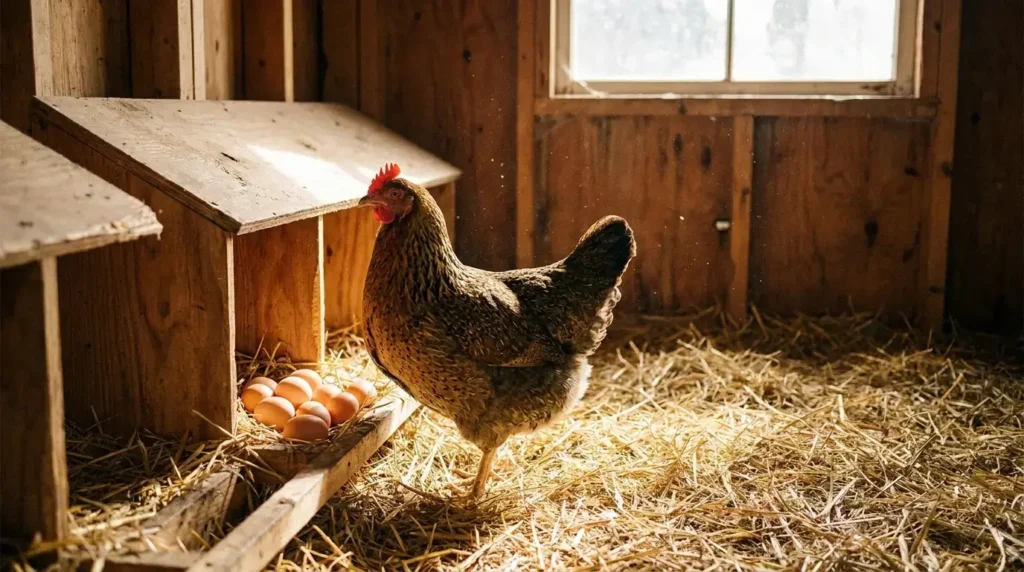
It takes a hen roughly 24 to 26 hours to form a single egg from start to finish — the yolk is released, then travels down the oviduct gaining the white, membranes, and finally the shell before being laid. The moment one egg is laid, her body begins forming the next.
Because that cycle runs a bit longer than a full day, a hen lays a little later each day. Eventually her laying time drifts into the late afternoon or evening — and since egg formation is triggered by daylight, she’ll skip a day and reset the next morning. That’s why even an excellent layer “takes a day off” now and then, and why more than one egg per day is essentially impossible.
How often chickens lay by breed
Breed is the single biggest factor in laying frequency. Birds bred for production lay far more often than heritage or ornamental breeds:
| Breed type | Eggs per week | Eggs per year |
|---|---|---|
| Production layers (ISA Brown, Leghorn, Golden Comet) | 5–6 | 250–300 |
| Dual-purpose (Rhode Island Red, Plymouth Rock, Sussex) | 3–4 | 150–200 |
| Heritage / ornamental (Silkie, Cochin, Brahma) | 2–3 | 80–150 |
So when someone asks “how often do chickens lay eggs?”, the honest answer is always: it depends what breed you keep.
How age affects laying frequency
A hen’s age changes how often she lays just as much as her breed:
- Pullets (under ~18 weeks): not laying yet.
- Point of lay (18–24 weeks): the first eggs arrive — small and irregular at first as her cycle establishes.
- Prime years (1–2 years old): peak production, the most frequent laying of her life.
- Middle years (3–4 years): a gradual decline, with fewer eggs each year — though they’re often larger.
- Older hens (5+ years): laying slows significantly, with only occasional eggs, but many hens keep laying for years.
This is why some keepers add a few new pullets each year — so the flock always has first-year birds at peak output.
What else affects how often hens lay
Even within the same hen, laying frequency rises and falls with:
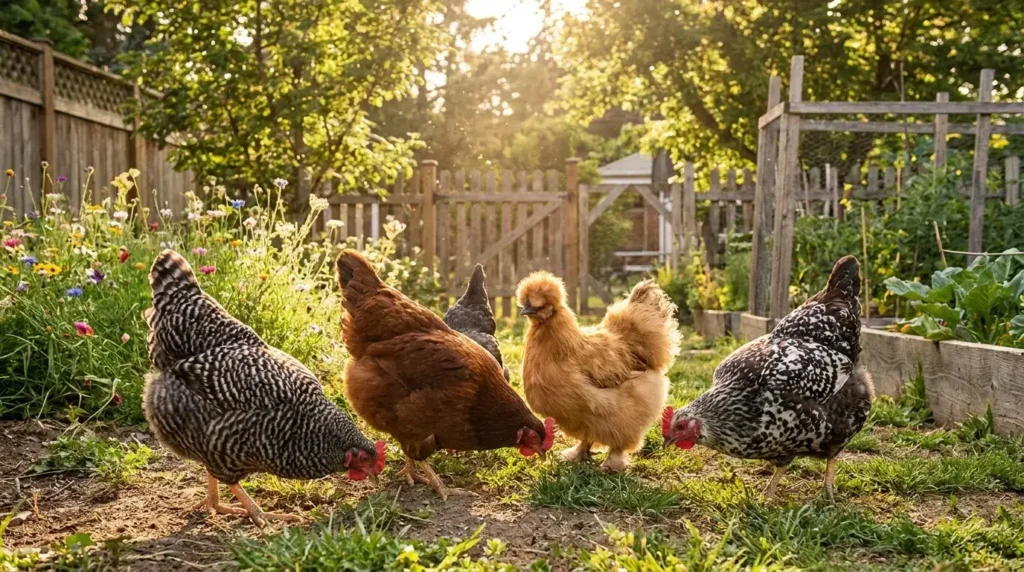
- Daylight. Hens need about 14–16 hours of light to lay consistently. Production naturally drops in fall and winter as days shorten, and can stop entirely without supplemental light.
- Molting. Once a year (usually fall), hens drop and regrow their feathers and pause laying while they do — a normal annual “vacation.”
- Diet. Without enough protein and calcium from a complete layer feed, laying becomes less frequent and shells get weaker.
- Stress and heat. A predator scare, a move, overcrowding, or a heat wave all reduce laying as hens divert energy elsewhere.
- Health. Illness or parasites can cut production, so a sudden drop in an otherwise healthy season is worth investigating.
In short: the same hen who lays six eggs a week in June might lay two a week — or none — in December. That’s normal.
How many hens do you need? (simple egg math)
To plan your flock, don’t assume an egg per hen per day. A reliable rule of thumb is that about two-thirds of your hens lay on any given day, averaged across the year:
- Number of hens × ⅔ = eggs per day (roughly)
- Or, working backward: if you want 6 eggs a day, keep about 9 hens.
For a simpler weekly estimate, assume 3–5 eggs per hen per week averaged across the whole year (this factors in winter, molting, and aging). So:
- 3 hens → about a dozen eggs a week
- 5 hens → roughly 1.5–2 dozen a week
- 6 hens → plenty for a typical family with extras to share
For most households, 4 to 6 hens is the sweet spot.
