
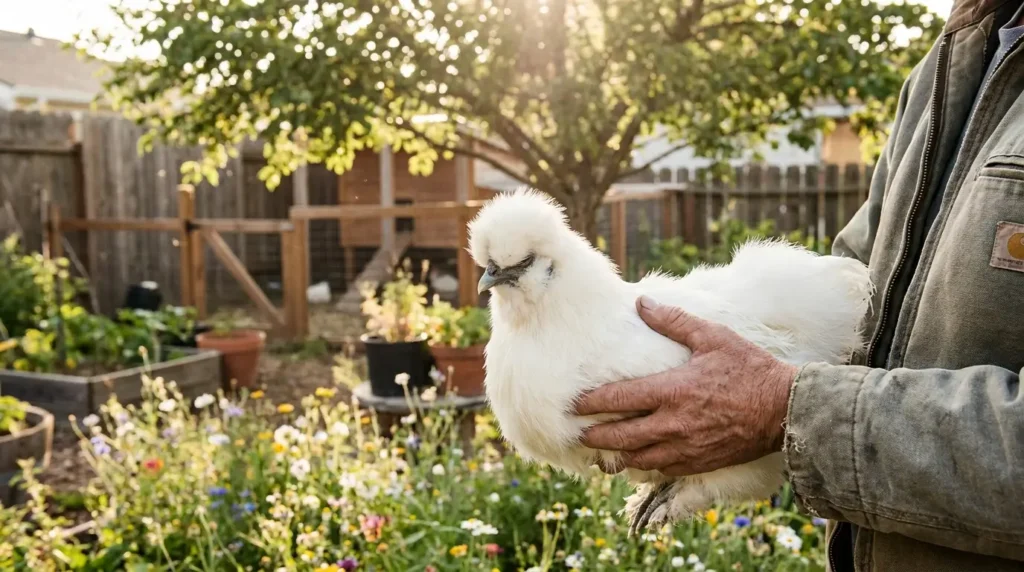
Not all chickens are created equal when it comes to personality. Some breeds are flighty and standoffish, while others will hop into your lap, follow you around the yard, and tolerate being cuddled by kids. If you want a flock that’s a joy to be around — not just an egg machine — these are the friendliest chicken breeds, what makes each one special, and how to raise any chicken to be more affectionate.
The quick answer
The friendliest, most docile chicken breeds are:
- Silkie — the cuddly lap chicken
- Buff Orpington — the “golden retriever” of chickens
- Cochin — the gentle, fluffy giant
- Speckled Sussex — the curious follower
- Brahma — the calm, huggable giant
- Faverolles — the affectionate clown
- Easter Egger — the friendly colored-egg layer
- Plymouth Rock — the trusting all-rounder
All eight are calm, rarely aggressive, and great with children. One thing to know up front: temperament varies bird to bird, and how you raise them matters as much as the breed (more on that at the end).
The 8 friendliest chicken breeds
1. Silkie — the cuddliest of all
If you want a chicken that acts like a lapdog, the Silkie is the breed. With fur-like, fluffy plumage and an incredibly sweet nature, Silkies love attention — they’ll happily sit on your lap for hours and enjoy being petted. They’re small, easy to handle, and consistently voted the friendliest breed, which makes them a favorite pet for children. They’re poor layers (around 120 small eggs a year) and not built for temperature extremes, but as a gentle companion, nothing beats them.
Best for: families wanting a true pet chicken; kids.
2. Buff Orpington — the gentle classic
Nicknamed the “golden retriever of chickens,” the Buff Orpington is big, soft, and endlessly good-natured. They bond with their keepers, often seek out affection, and are patient and calm around children. Their thick golden plumage makes them cold-hardy, and they’re solid layers of brown eggs on top of their lovely temperament. The one caution: they’re so docile they can get bullied by pushier breeds in a mixed flock.
Best for: an all-round friendly, productive family flock.
3. Cochin — the fluffy gentle giant
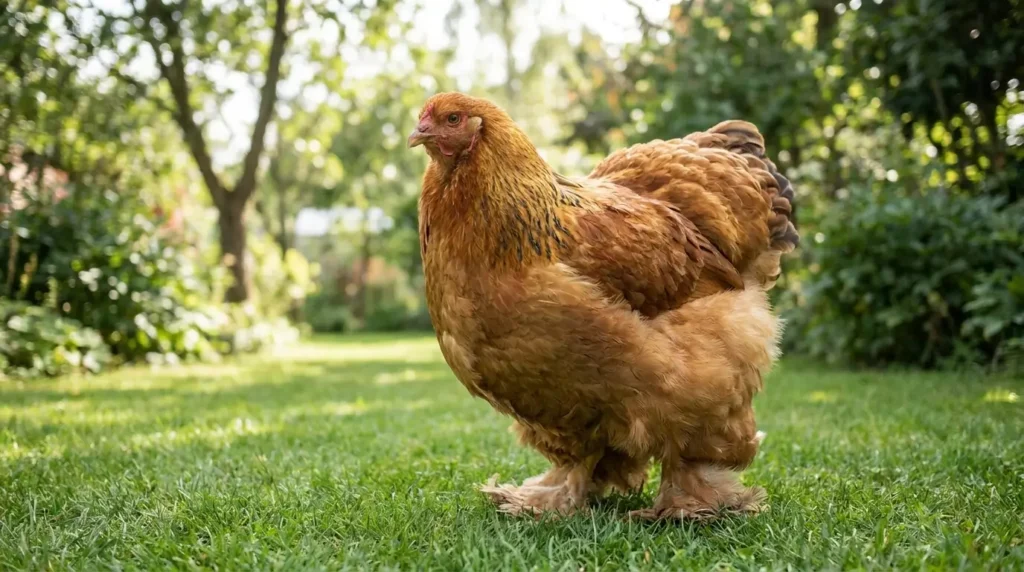
The Cochin is a large bird buried under so much loose, fluffy feathering — right down to its feet — that it looks like a walking ball of fluff. Behind all that plumage is a famously calm, laid-back, submissive personality. Cochins are quiet, easy to handle, and make wonderful mothers, even adopting other animals’ young. They’re so mellow they can be prone to putting on weight, so watch their treats.
Best for: keepers who want a quiet, huggable, low-drama bird.
4. Speckled Sussex — the friendly shadow
The Speckled Sussex is curious, social, and genuinely entertaining — these hens will follow you around the yard and try to join in whatever you’re doing. They love being held, talked to, and petted, and their beautiful dark feathers gain more white speckles after every molt. On top of the personality, they’re good layers of brown eggs and very cold-hardy.
Best for: families who want personality plus steady eggs.
5. Brahma — the calm, huggable giant
Brahmas are gentle giants — large, feather-legged birds with profuse fluffy plumage and a remarkably mellow disposition. Despite their impressive size (which can briefly intimidate small kids), they’re among the most docile breeds, don’t mind being handled, and can even be trained. Their heavy feathering makes them excellent cold-weather birds.
Best for: cold climates; families wanting a calm, impressive bird.
6. Faverolles — the affectionate clown
Faverolles are the jokers of the flock — comical, curious, and genuinely affectionate, with fluffy facial muffs, beards, and feathered feet. They love cuddling and “chatting” with their keepers and make excellent, gentle pets. One important note: they’re a bit sensitive and tend to get picked on by pushier breeds, so they do best kept with other Faverolles or other gentle birds.
Best for: keepers wanting a sweet, characterful pet (in a calm flock).
7. Easter Egger — the friendly colored-egg layer
Easter Eggers bring the best of both worlds: friendly, social personalities and a basket of blue, green, or pink eggs. They’re relaxed, low-energy birds that are happy to sit with you, and their varied, colorful plumage means no two look alike. They’re also hardy and good layers — a genuine crowd-pleaser, especially with kids who love the rainbow eggs.
Best for: families who want friendly birds and colorful eggs.
8. Plymouth Rock — the trusting all-rounder
The Barred Rock is friendly, easygoing, and quick to trust you as part of the flock if you’re kind to them. They’re trainable, handle being around children well, and tolerate all kinds of weather — all while being one of the better layers on this list. A dependable, sociable bird that’s hard to go wrong with.
Best for: a friendly, hardy, productive backyard flock.
Friendliness at a glance
| Breed | Personality | Eggs/year | Notes |
|---|---|---|---|
| Silkie | Cuddly lap chicken | ~120 | Best pet; poor layer |
| Buff Orpington | Affectionate, gentle | 200–280 | Can be bullied |
| Cochin | Calm, laid-back | ~150 | Quiet, great mother |
| Speckled Sussex | Curious, follows you | ~250 | Good layer |
| Brahma | Mellow gentle giant | ~150 | Very cold-hardy |
| Faverolles | Affectionate, comical | ~200 | Keep with gentle breeds |
| Easter Egger | Friendly, relaxed | 200–280 | Lays colored eggs |
| Plymouth Rock | Trusting, trainable | 200–280 | Hardy all-rounder |
Breeds to avoid if you want a cuddly flock
A few popular breeds are excellent birds but tend to be more flighty or standoffish — not ideal if friendliness is your priority:
- Leghorns — superb white-egg layers, but skittish and not keen on handling.
- Many bantam and high-production layers — often more “uppity” and less interested in human contact.
These aren’t bad chickens; they just aren’t lap chickens.
How to make any chicken friendlier
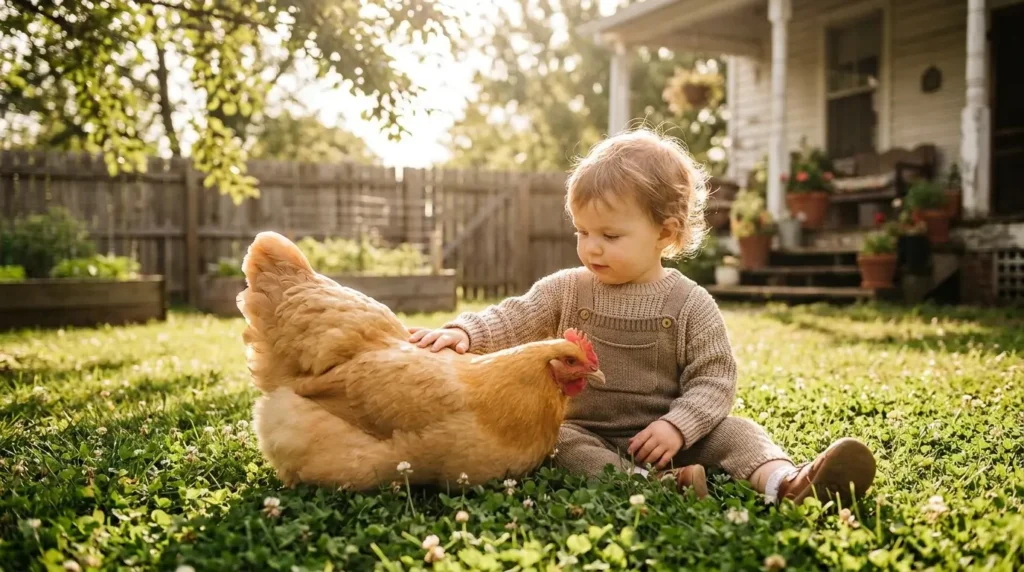
Breed sets the tendency, but your handling shapes the personality. Even a naturally shy bird becomes friendlier with the right approach:
- Handle them young. Gently hold and interact with chicks from an early age so they grow up seeing you as safe.
- Move slowly and talk softly. Sudden movements and chasing make chickens nervous; calm, predictable behavior builds trust.
- Use treats. Offering favorites like mealworms or leafy greens from your hand teaches them to associate you with good things.
- Be consistent. Regular, positive daily interaction turns even older hens into friendlier birds over time.
Never chase your chickens to catch them — it teaches them to fear you. Let them come to you, and trust builds naturally.
