
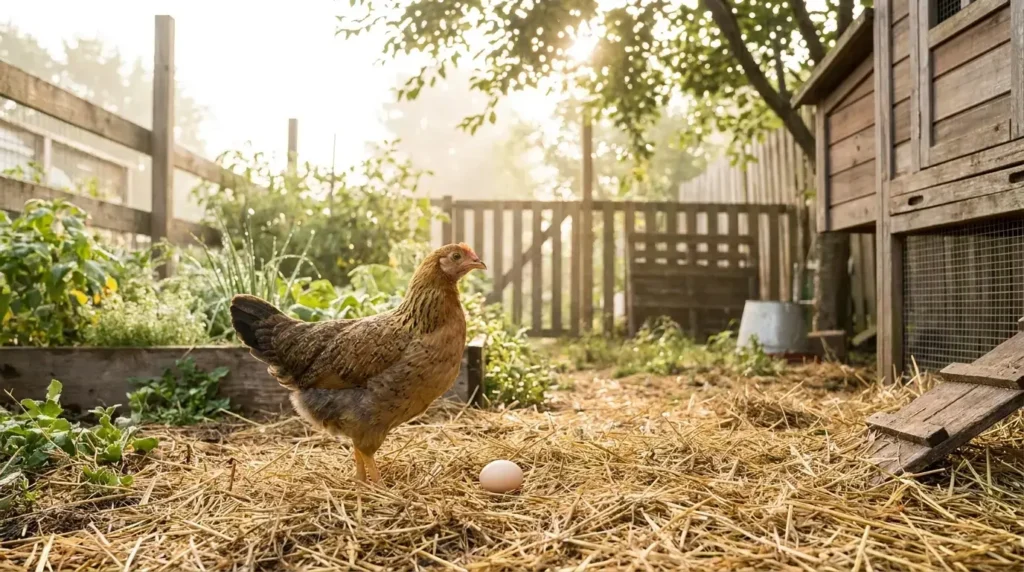
Waiting on your first egg is one of the most exciting parts of raising chickens — and one of the most impatient. The short answer: most hens start laying around 18 to 22 weeks of age, but it varies by breed, season, and the individual bird. Here’s exactly when to expect that first egg, how to spot the signs it’s coming, and what to do if your hens are taking their time.
The quick answer
Most hens begin laying eggs at 18 to 22 weeks old — roughly four to five months. But the full range is wider than that:
- Production breeds (ISA Brown, Leghorn, Golden Comet, Rhode Island Red, Australorp): as early as 16 to 18 weeks.
- Heritage and heavier breeds (Orpington, Wyandotte, Brahma, Plymouth Rock): often 24 to 28 weeks, sometimes longer.
- Easter Eggers are famously among the last to start.
So if your pullet hasn’t laid by 20 weeks, there’s almost certainly nothing wrong — her breed and the time of year just set her own schedule.
What age do chickens lay eggs, by breed?
The single biggest factor in laying age is breed. Birds developed for egg production mature fast; birds bred for size or show take their time.
| Breed type | Typical first egg |
|---|---|
| Production layers (ISA Brown, Leghorn, Golden Comet) | 16–18 weeks |
| Dual-purpose (Rhode Island Red, Australorp, Sussex) | 18–22 weeks |
| Heritage / heavy (Orpington, Wyandotte, Brahma) | 24–28 weeks |
| Easter Egger | 22–28+ weeks |
A young female chicken under a year old is called a pullet, and the moment she’s ready to begin laying is called point of lay — a term you’ll see often when buying birds.
Signs your hen is about to lay
Hens give clear physical and behavioral signals a week or two before the first egg. Watch for:
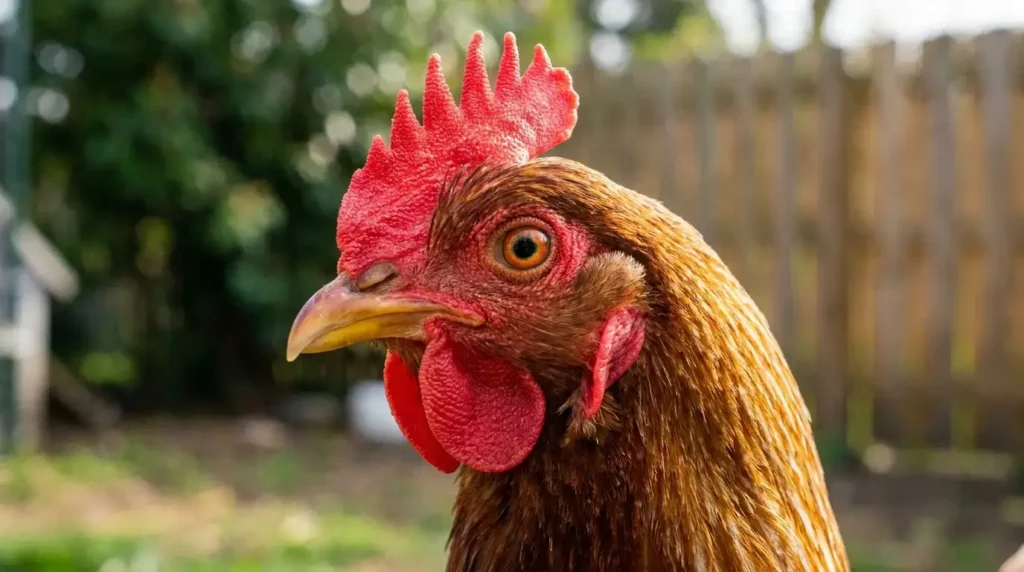
- Reddening comb and wattles. A pullet’s comb and wattles grow larger and turn from pale pink to a deep, bright red as she matures — the clearest sign laying is near.
- The “squat.” When you reach toward her, she crouches low with wings slightly out and stays still. This submissive squat means she’s hormonally ready to lay.
- Exploring the nesting boxes. She’ll start poking around the boxes, scratching at the bedding, and testing them out.
- Louder, more vocal behavior. Many pullets get noisier — including the “egg song” — as laying approaches.
- Bigger appetite and interest in calcium. Her body is gearing up to produce shells.
When you see the squat and red combs together, that first egg is usually days away.
Get ready before the first egg
A common beginner mistake is waiting until you see laying signs to set up the nesting boxes. By then, some pullets have already picked a “secret” spot on the floor and trained themselves to lay there. So get ahead of it:
- Have nesting boxes in place by 16–18 weeks, so hens can explore and settle on them early. (The rule is one box per 3–4 hens, with at least two.)
- Switch to a complete layer feed at around 18 weeks, with free-choice calcium (oyster shell) to support strong shells.
- Keep the coop calm, clean, and dry — stress and disruption can delay that first egg.
What the first eggs are like
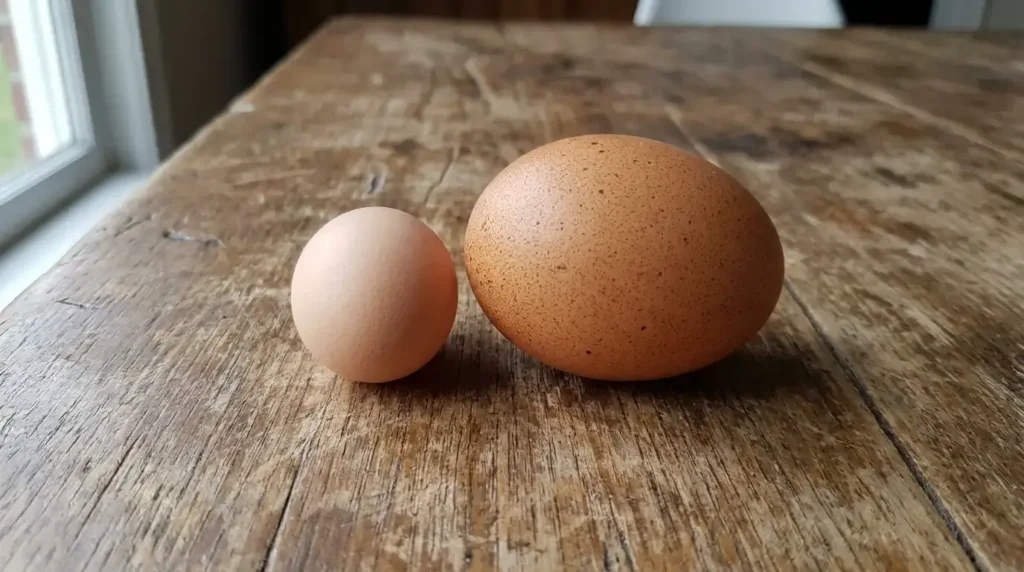
Don’t expect perfection right away. The first eggs a pullet lays are often small, oddly shaped, or have soft or wrinkled shells, and they may come irregularly for the first few weeks. This is completely normal as her reproductive system gets up to speed. Within a month or so, she’ll settle into laying full-sized, regular eggs. Those first little eggs are perfectly safe to eat as long as they have a proper shell and you collect them promptly.
Interesting quirk: once one hen in the flock starts laying, the others often follow within a week or two, as if a signal goes out across the coop.
Why are my hens not laying yet?
If your pullets are past the expected age and still no eggs, run through these common, usually harmless causes:
- Breed. Heritage and heavy breeds simply start later — patience is the fix.
- Season and daylight. Hens need about 14–16 hours of light to lay. Pullets that reach maturity in fall or winter often wait until spring days lengthen before starting.
- Nutrition. Without enough protein and calcium from a proper layer feed, laying is delayed.
- Stress. A move, a predator scare, overcrowding, or flock bullying can all hold things up.
- Health. Less commonly, illness or parasites delay laying. If a bird also seems unwell — lethargic, not eating — treat it as a health issue first.
In most cases, the answer is simply time. A healthy pullet of a later-maturing breed, or one coming into lay during short winter days, is doing exactly what’s normal.
