
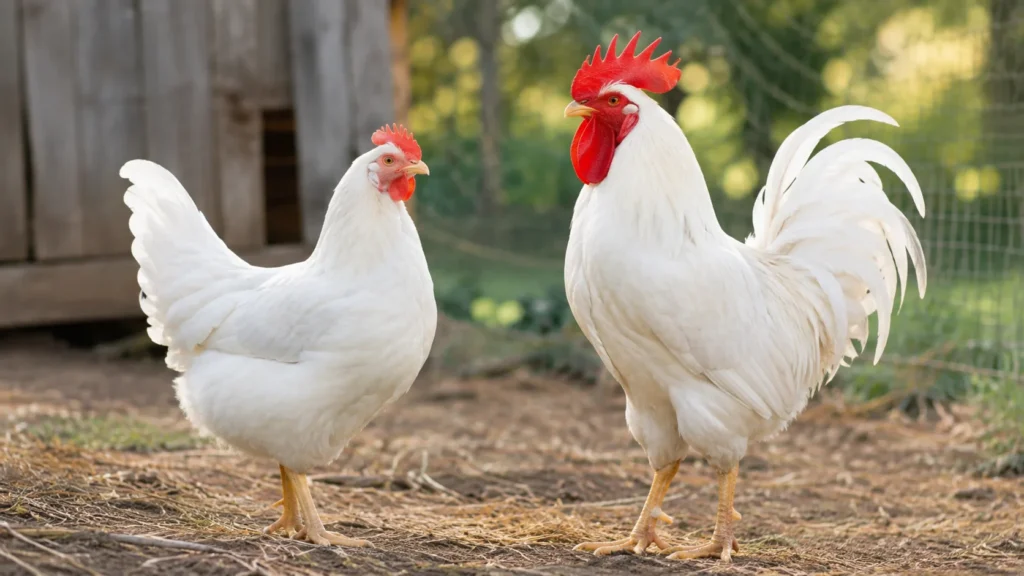
A white leghorn hen or rooster can often be identified earlier than many breeds because Leghorns develop large combs and wattles quickly, especially males. A young White Leghorn rooster usually shows a larger, redder comb by 4 to 6 weeks, thicker legs, bolder posture, and later develops pointed saddle and hackle feathers, while a hen stays slimmer, quieter, and eventually lays white eggs.
This guide is for backyard keepers trying to sex White Leghorn chicks, started pullets, or young birds before keeping or rehoming roosters. You’ll learn the most reliable age-by-age signs, how to avoid common mistakes, and what to do if your bird is still too young to call with confidence.
Why Is a White Leghorn Hen or Rooster Hard to Tell at First?
White Leghorns are a lightweight Mediterranean egg breed, and both sexes can look alert, upright, and active from a young age. Unlike heavy dual-purpose breeds, they often mature quickly, which helps, but it can also trick beginners because even pullets may grow noticeable combs earlier than expected.
The key is not to rely on one feature. Comb size, comb color, wattle growth, feather shape, stance, voice, and behavior all matter more when you read them together and compare birds of the same age and strain.
One non-obvious expert tip: judge comb color in natural daylight, not under red brooder bulbs or warm coop lighting, because artificial light can make a pullet’s pale comb look falsely red.
White Leghorn Hen or Rooster Checklist: The Most Reliable Signs
The best method is to combine several clues by age. A single large comb does not automatically mean rooster in Leghorns, but a large red comb plus early wattles, thicker legs, upright carriage, and pointed male feathering is a much stronger call.
| Sign | What to look for | Why it matters |
|---|---|---|
| Comb size | Roosters often show a taller, wider comb by 4 to 6 weeks | Male hormones push early comb development, especially in fast-maturing breeds |
| Comb color | Roosters redden earlier; pullets usually stay pink or pale longer | Early deep red color is often a stronger clue than size alone |
| Wattles | Roosters develop larger, redder wattles sooner | Wattle growth usually follows the same hormonal pattern as the comb |
| Leg thickness | Roosters tend to have heavier shanks and larger feet | Body structure often hints at sex before adult feathers fully appear |
| Posture | Roosters stand taller, scan more, and carry themselves boldly | Male birds often show a more upright, watchful stance as they mature |
| Feather shape | Roosters develop pointed hackle and saddle feathers around 10 to 14 weeks | Adult male feathering is one of the most reliable visual confirmations |
| Voice | Roosters may practice crowing; hens make pullet calls and later egg songs | Vocal development can confirm suspicions, though timing varies widely |
| Egg laying | Only hens lay eggs, typically white eggs in Leghorns | Once laying begins, sex is no longer a guess |
How to Tell a White Leghorn Hen or Rooster Step by Step
Start with age: First, estimate the bird’s age as accurately as possible. Sexing a 2-week-old Leghorn by appearance is mostly guesswork, while a 10- to 14-week-old bird gives you much better evidence. If you bought chicks from a hatchery, check the hatch date before making a decision.
Compare birds side by side: Look at birds from the same batch rather than comparing your Leghorn to another breed. White Leghorn pullets may have bigger combs than slower-maturing breeds, so breed-to-breed comparisons can mislead you. In a group of Leghorns, the likely cockerels often stand out.
Check comb and wattle development: At 4 to 6 weeks, note which chicks have the largest, reddest combs and the most visible wattles. A pale but tall comb can still belong to a pullet, but a bright red comb with matching wattles is more suspicious. Take photos weekly so you can track changes instead of relying on memory.
Watch body shape and stance: Stand back and observe the flock before feeding time. Young roosters often walk more upright, pause to scan the area, and may step between flockmates and a perceived threat. Hens usually look more streamlined and spend more time scratching, foraging, and moving with the group.
Look for pointed feathers: Around 10 to 14 weeks, inspect the neck and saddle area near the base of the tail. Roosters develop narrow, pointed hackle and saddle feathers, while hens keep rounder feather ends. The University of Kentucky Cooperative Extension notes that feather and body development are useful management clues when evaluating growing chickens.
Listen for voice changes: A young rooster may produce a raspy, awkward first crow before he looks fully mature. Some start early, while others stay quiet for months, especially if a dominant rooster is already present. Do not rely on crowing alone, because a quiet cockerel is still a cockerel.
Confirm with behavior, not aggression alone: Sparring, chest bumping, and boldness can point toward cockerels, but pullets can do these things too. Look for repeated patterns such as tidbitting, guarding, crowing practice, and mounting attempts. A single bossy pullet should not be mislabeled as a rooster based on attitude.
Wait for the final proof if needed: If the bird is healthy and you are allowed to keep roosters temporarily, waiting a few more weeks often prevents mistakes. By 16 to 20 weeks, most White Leghorns are much easier to identify. Hens will be approaching lay, while roosters will usually show clear male feathering and behavior.
At what age can you tell if a White Leghorn is a rooster?
You can often make an educated guess by 4 to 6 weeks, especially if one chick has a much larger red comb and wattles than the others. A more reliable call usually comes around 10 to 14 weeks, when male feathering and behavior become clearer.
For complete certainty, wait until the bird either crows, develops obvious pointed saddle feathers, or lays an egg. Leghorns mature early, but individual birds can still surprise you.
| Option | Best for | What to expect |
|---|---|---|
| 4 to 6 weeks | Early guesses | Comb and wattle clues may appear, but mistakes are common |
| 8 to 10 weeks | Better sorting | Leg thickness, posture, and color differences become more useful |
| 10 to 14 weeks | Visual confirmation | Pointed male feathers may start showing on cockerels |
| 16 to 20 weeks | High confidence | Crowing, laying, and mature feathering usually settle the question |
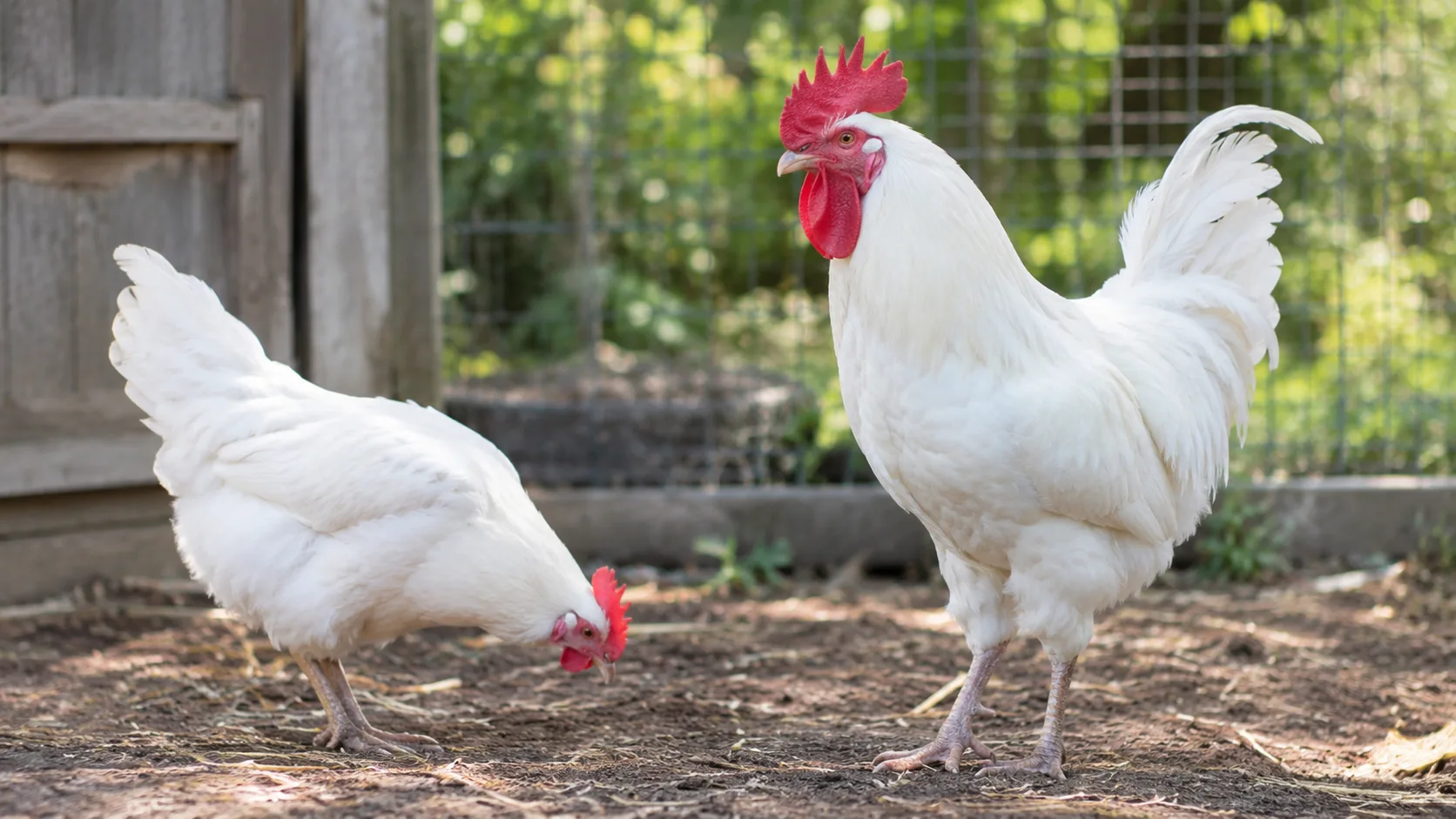
How to Adapt the Method for Different White Leghorn Situations
For a single chick: Use weekly photos because you do not have flockmates for comparison. Photograph the comb, wattles, legs, tail, and side profile in natural light. Growth rate over time will tell you more than one snapshot.
For a hatchery sexed pullet: Treat the hatchery label as helpful but not perfect. Vent sexing at hatch is skilled work, yet errors can happen, so keep watching for early male signs. If your “pullet” develops a red comb at 5 weeks and starts crowing later, trust the bird over the receipt.
For a mixed-breed brooder: Compare your White Leghorn only with other Leghorns if possible. A Leghorn pullet may look more developed than a Plymouth Rock or Brahma chick of the same age. Breed maturity differences can create false rooster alarms.
For a backyard flock with rooster restrictions: Begin evaluating early and have a rehoming plan before crowing starts. Take clear photos at 5, 8, and 12 weeks so experienced keepers or your local poultry group can help you confirm. Do not wait until neighbors complain if roosters are prohibited in your area.
For show or breeding stock: Identification is only the first step. Also evaluate body type, comb quality, vigor, and temperament. A confirmed rooster is not automatically a good breeding rooster, and a confirmed hen should be judged for health and production traits too.
Companion Advice for Raising White Leghorns Well
White Leghorns are excellent layers, but they are energetic, alert birds that do best with enough space, good ventilation, and a predictable routine. If you are still choosing breeds, compare their strengths with other productive options in Cedar & Cluck’s guide to the best egg laying chickens.
If your main concern is whether you need to keep a male at all, remember that hens do not need roosters to lay eggs. For a practical explanation of egg laying, fertility, and flock management, read this guide on whether chickens need a rooster to lay eggs.
Because Leghorns are active and light-bodied, they also benefit from secure runs and predator-aware management. Their flightiness can be useful for avoiding danger, but it does not replace strong fencing, covered runs, and a coop that closes reliably at night.
Common White Leghorn Hen or Rooster Problems and How to Fix Them
| Problem | Likely cause | Easy fix |
|---|---|---|
| Large comb on a bird you thought was a pullet | Leghorn pullets can mature early, or the bird may be a cockerel | Check comb color, wattles, feather shape, and weekly growth before deciding |
| No crowing yet | Young age, quiet personality, or presence of a dominant rooster | Look for saddle feathers and behavior instead of waiting only for crowing |
| Bossy pullet mistaken for a rooster | Normal pecking order behavior | Do not sex by attitude alone; use physical traits and age-based clues |
| Two birds look identical at 8 weeks | Same sex or slow-developing male traits | Wait until 12 to 14 weeks and recheck hackle and saddle feathers |
| Rooster signs appear suddenly | Hormonal development accelerated with maturity | Confirm with photos and plan housing or rehoming if needed |
| Comb looks red in brooder photos | Warm artificial lighting distorts color | Evaluate in daylight or neutral light |
| Neighbors notice crowing before you are ready | Cockerel matured earlier than expected | Have a rooster plan by 8 to 10 weeks if local rules are strict |
When in doubt, slow down and gather more evidence. A White Leghorn can look dramatic at a young age, and rushing the call is the most common reason keepers accidentally rehome a pullet or keep a rooster longer than allowed.
Long-Term Care Once You Know the Sex
Once you know whether you have a White Leghorn hen or rooster, adjust management to match the bird’s role. Hens need a complete layer feed when they approach lay, steady calcium access, clean nest boxes, and protection from stress that can interrupt egg production.
Roosters need enough space, careful handling, and a flock setup that prevents overbreeding. One rooster with too few hens can cause feather loss and stress, while multiple cockerels in a small backyard setup may fight as they mature.
For general poultry health and biosecurity, the USDA Animal and Plant Health Inspection Service recommends practical disease-prevention habits such as separating new birds, cleaning equipment, and watching for signs of illness. Good identification matters, but daily care is what keeps both hens and roosters useful, healthy, and safe.
Frequently Asked Questions
Do White Leghorn hens have big combs?
Yes, White Leghorn hens can have large combs compared with many other breeds. This is why comb size alone is not enough to identify a rooster. Comb redness, wattle growth, feather shape, and behavior should all be considered together.
What color eggs do White Leghorn hens lay?
White Leghorn hens lay white eggs. They are one of the classic high-production white egg breeds and are commonly used in commercial egg production. Backyard hens may lay very steadily when fed well and kept under low stress.
Can a White Leghorn hen crow?
It is uncommon, but hens of many breeds can occasionally make crow-like sounds, especially in unusual flock dynamics. A true repeated crow from a young bird is more often a rooster sign. Confirm by checking feathers, comb development, and whether the bird ever lays eggs.
Are White Leghorn roosters aggressive?
White Leghorn roosters are often alert, active, and reactive, but temperament varies by line and handling. Some are manageable, while others become too defensive for a family backyard flock. Give them space, avoid teasing or rough handling, and do not keep a dangerous rooster.
When do White Leghorn hens start laying?
Many White Leghorn hens begin laying around 16 to 20 weeks, though timing depends on nutrition, season, health, and light exposure. Early maturing pullets may show reddening combs shortly before laying. A bright red comb on a near-laying pullet is not automatically a rooster sign.
Is vent sexing more accurate than looking at combs?
Professional vent sexing at hatch is usually more accurate than guessing from combs, but it requires training and is not perfect. Most backyard keepers should not attempt vent sexing because it can injure chicks if done incorrectly. Visual sexing becomes safer and more reliable as the bird matures.
The Practical Takeaway for White Leghorn Keepers
The easiest way to tell a White Leghorn hen from a rooster is to combine age, comb color, wattles, stance, leg thickness, feather shape, and behavior. Early guesses can be useful, but the most dependable signs appear as the bird approaches 10 to 14 weeks and beyond.
If you are building a productive backyard flock, keep observing, take weekly photos, and make decisions based on patterns instead of one trait. For more practical chicken-keeping guides, visit Cedar & Cluck.
