
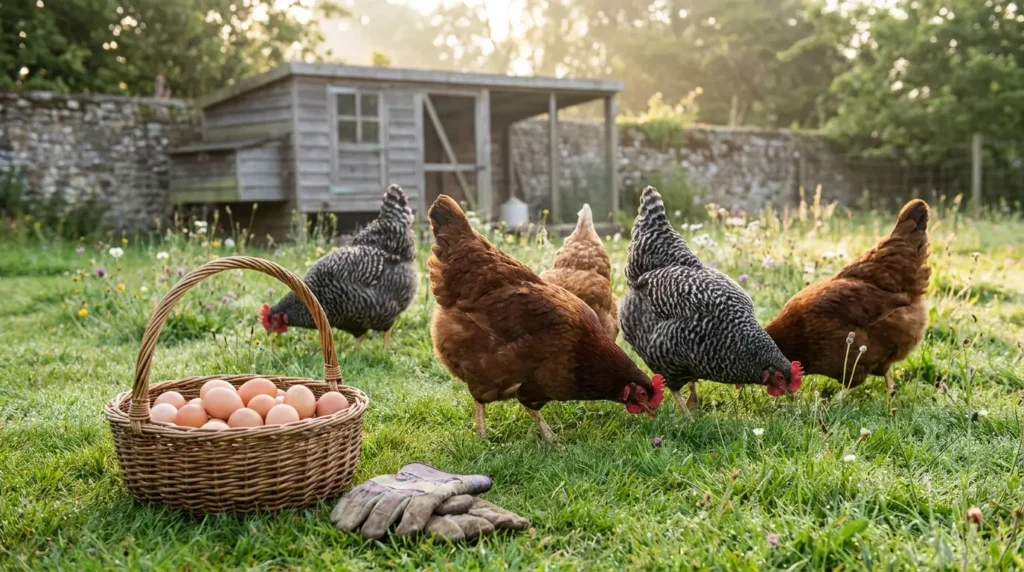
No. Hens lay eggs whether or not a rooster is around. A rooster is only needed if you want fertilized eggs that can hatch into chicks. For the eating eggs most backyard keepers want, your hens will lay just fine on their own.
The short version
Hens lay on their own schedule, driven by daylight and age — not by a rooster. A rooster’s only role in egg-laying is fertilization, which turns an egg into one that can become a chick. Fertilized and unfertilized eggs look, taste, and cook the same, and adding a rooster will not make your hens lay more eggs.
Why hens lay eggs without a rooster
A hen’s body produces eggs as part of her natural cycle, much like a woman ovulates whether or not a partner is present. Once a pullet reaches laying age — usually around 18 to 22 weeks — her reproductive system releases a yolk roughly every 24 to 26 hours. That yolk travels down the oviduct, gets wrapped in white, membranes, and a shell, and is laid as an egg. No rooster is involved at any step.
What actually controls how often she lays is daylight (hens need about 14 to 16 hours of light to lay consistently), her age, her breed, and her health — which is why laying slows in the colder months.
So what does a rooster actually do?
A rooster brings three things to a flock — and none of them is “more eggs”:
- Fertilization. He mates with hens so their eggs can develop into chicks. Without him, the eggs are simply unfertilized.
- Flock protection. A good rooster watches for predators and sounds the alarm, sometimes putting himself between danger and his hens.
- Order in the flock. Roosters help settle the pecking order and will lead hens to food.
If you are not hatching chicks, that first point is irrelevant — and the other two come with trade-offs we cover below.
Fertilized vs. unfertilized eggs: does it matter for eating?
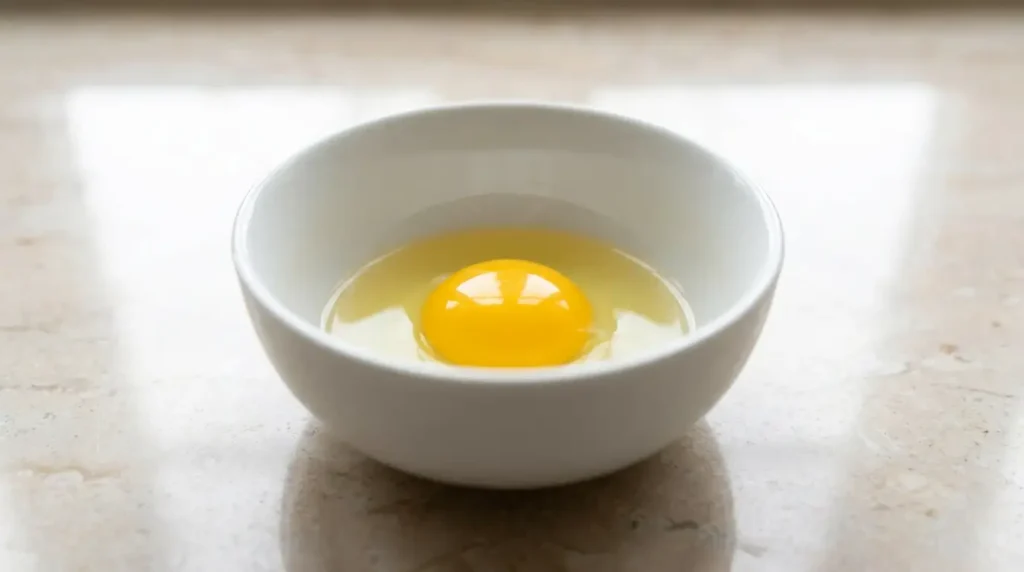
For eating, there is no practical difference. The taste, nutrition, and cooking are identical, and both are equally safe as long as you collect eggs daily and store them properly.
A fertilized egg only develops into a chick if a broody hen or an incubator keeps it warm (around 99 to 100°F) for about 21 days. An egg sitting in your fridge will never turn into a chick.
To tell them apart, crack an egg and look at the small spot on the yolk: an unfertilized egg has a solid white dot, while a fertilized egg has a faint ring or bullseye. Both are perfectly fine to eat.
Do you actually need a rooster?
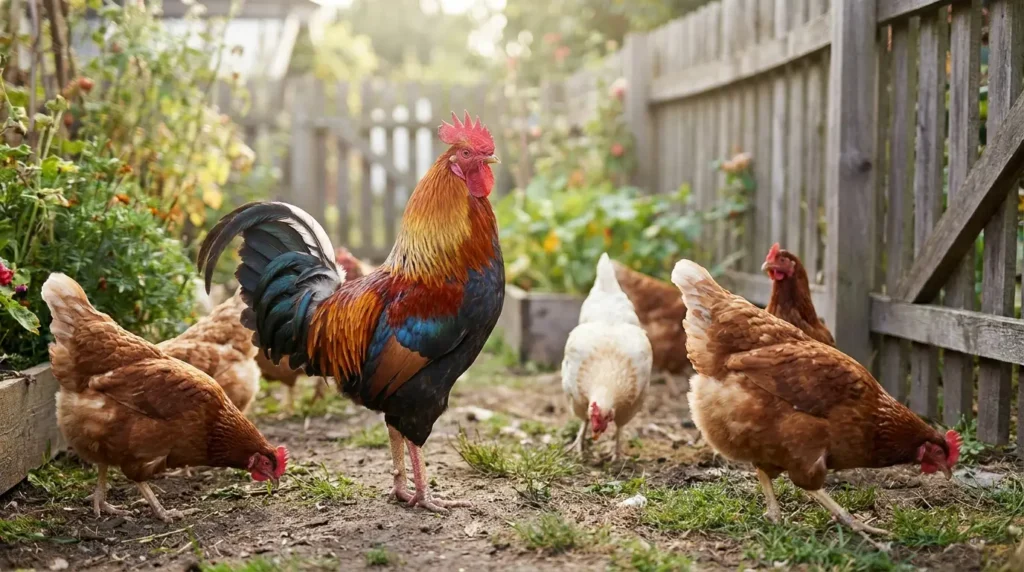
You need a rooster only if you want to hatch your own chicks. Otherwise it is optional — and often more hassle than it is worth for a small backyard flock kept for eggs. Weigh it honestly:
- Reasons to keep one: you want to breed and hatch chicks, you free-range and want extra predator awareness, or you simply enjoy the natural flock dynamic.
- Reasons to skip one: roosters crow loudly and often, many cities and HOAs ban them, some turn aggressive toward people, and one rooster can over-mate and stress a few hens.
For most beginners keeping a few hens for eggs, going without a rooster is the simpler, quieter, and often the only legal choice. Check your local ordinance before deciding.
Will a rooster make my hens lay more eggs?
No — this is one of the most common backyard chicken myths. Egg production is controlled by daylight, age, breed, and health, not by the presence of a male. If your hens have slowed down, the fix is usually more light, better feed, or simply time (molting and winter both reduce laying), never a rooster.
The bottom line
Your hens will fill a basket of eggs with no rooster anywhere in sight. Add a rooster only if you want fertilized eggs to hatch chicks — and even then, check your local laws and be ready for the noise. For everyday eating eggs, your hens have it covered all on their own.
