
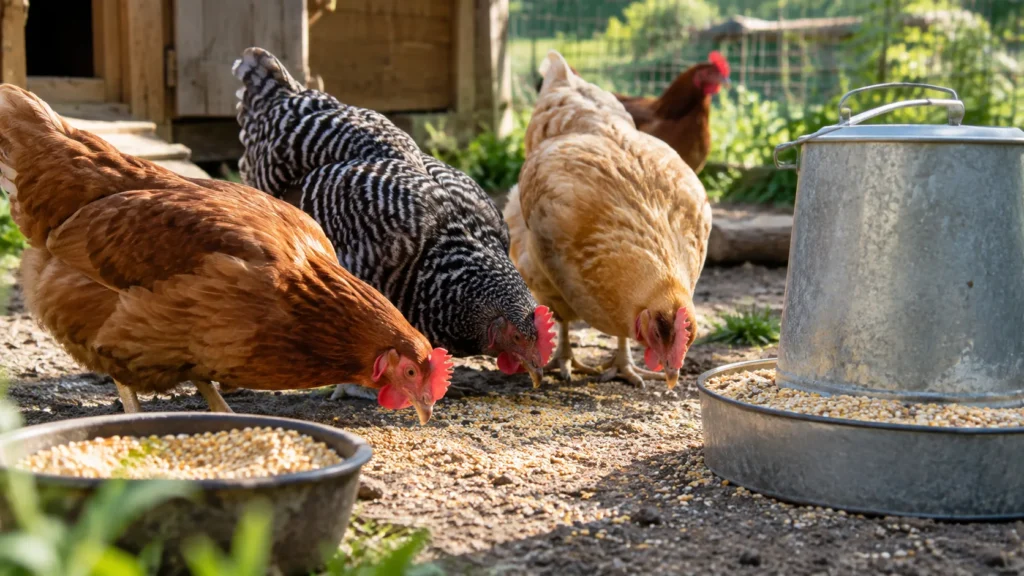
Most adult chickens need about 4 to 6 ounces of complete feed per day, or roughly 1/4 to 1/3 pound per bird. A typical laying hen eats close to 1/4 pound daily, but weather, body size, age, breed, activity, forage, and feed quality can change the amount.
This guide explains how much to feed chickens per day, how to measure feed for a flock, when chicks and growing birds need different rations, and how to use treats without unbalancing the diet. It is written for backyard keepers who want a practical starting point and a reliable way to adjust feeding based on what their chickens actually need.
What Makes the Right Daily Chicken Feed Amount?
The correct amount is not a single number for every flock. A small, active laying hen may eat less than a large breed, while cold weather can increase energy needs and hot weather can reduce feed intake. Chickens that spend much of the day foraging may consume less from the feeder, although pasture rarely supplies every nutrient they need.
Complete poultry feed should remain the foundation because it is formulated to provide the protein, energy, vitamins, and minerals chickens require at their life stage. Treats, kitchen scraps, grass, and insects should supplement that ration rather than replace it. Clean water matters just as much: a chicken may eat poorly if water is dirty, frozen, or difficult to reach.
An often-missed expert tip is to weigh a sample portion instead of relying only on a scoop. Feed density differs between pellets, crumbles, and brands, so one cup of one product may not weigh the same as one cup of another.
How Much to Feed Chickens Per Day: The Core Plan
Use the table below as a starting point for healthy birds with regular access to water and a complete ration. Measure the daily amount for the whole flock, then observe leftovers and body condition for a week before making small adjustments.
| Bird or feed item | Amount or specification | Why it matters |
|---|---|---|
| Adult laying hen | 4–6 ounces of layer feed per day | Supplies daily energy, protein, calcium, and other nutrients for maintenance and egg production. |
| Five adult hens | 20–30 ounces per day, or 1.25–1.875 pounds | Gives you a practical flock estimate while allowing for differences in size and activity. |
| Growing pullets | Use a complete grower ration according to the label and age | Pullets need a different nutrient balance from laying hens and should not be pushed into early laying with excess calcium. |
| Chicks | Keep a suitable chick starter available throughout the day | Young chicks grow quickly and need frequent access to a properly formulated starter feed. |
| Treats and scraps | Keep them to about 10% or less of the daily diet | Too many low-nutrient foods dilute the complete ration and can contribute to obesity or poor laying. |
| Oyster shell for laying hens | Offer separately and free-choice | Hens can take the extra calcium they need without forcing non-laying birds to consume it. |
| Grit | Offer insoluble poultry grit when birds eat whole grains or forage | Grit helps chickens grind fibrous or coarse foods because they do not have teeth. |
For a simple routine, offer enough complete feed each morning to cover the flock’s expected daily need, then check the feeder before evening. If it is completely empty hours before bedtime and birds are actively searching for food, increase the next day’s amount slightly. If large quantities remain, reduce the portion modestly while checking that timid birds still get access.
How to Measure and Adjust the Daily Chicken Feed
1. Count the birds: Separate chicks, pullets, roosters, and laying hens when calculating portions because they may need different rations. Start with the number of birds that actually use each feeder, not the number you originally purchased.
2. Choose the right ration: Feed chicks a chick starter, growing birds a pullet or grower ration, and laying hens a layer ration when they begin producing eggs. The Merck Veterinary Manual’s poultry nutrition guidance explains why nutrient needs change with age and production stage.
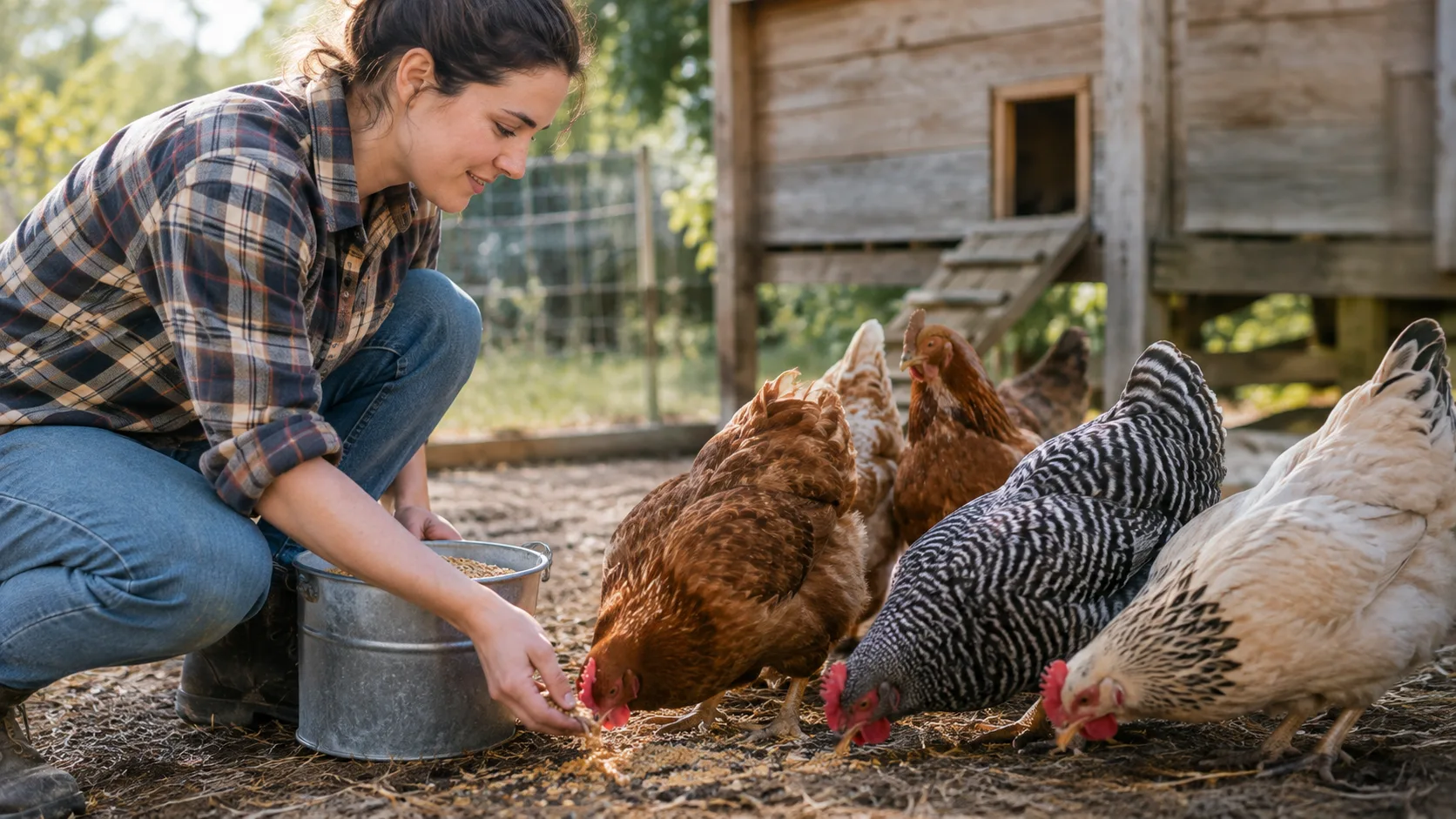
3. Weigh a normal portion: Place an empty kitchen scale container on the scale, zero it, and add the feed you normally use. Record how many cups or scoops equal 4, 5, or 6 ounces so you can portion the flock consistently without weighing every meal.
4. Divide the flock’s total: Multiply the starting amount by the number of birds. For example, six adult hens at 5 ounces each need approximately 30 ounces, or 1.875 pounds, of feed per day before accounting for forage and waste.
5. Protect access: Use enough feeder space for all birds to eat without crowding, and place the feeder at the height of the birds’ backs to reduce scratching and contamination. Check that dominant hens are not guarding the only feeding point.
6. Supply water and minerals: Keep fresh water available at all times and replace it whenever it becomes dirty. Offer oyster shell separately to laying hens, and provide insoluble grit if birds eat whole grains, fibrous plants, or substantial amounts of forage.
7. Review leftovers: Check the feeder at the same time each day for seven days. A small amount of remaining feed can be normal, but wet, moldy, or heavily soiled feed should be discarded rather than counted as useful leftovers.
8. Adjust slowly: Change the daily portion by about 5% to 10% at a time, then observe body condition, egg production, manure, and behavior for several days. Sudden feed changes can cause digestive upset and make it harder to identify the real problem.
How Much Feed Does a Chicken Eat Per Day?
An average adult backyard chicken commonly eats around 4 to 6 ounces of complete feed per day. That is a planning range, not a rigid quota: a large, active bird may need more, while a smaller hen with access to forage may eat less from the feeder.
| Option | Best for | What to expect |
|---|---|---|
| Free-choice feeding | Most small backyard flocks | Feed is available throughout the day, which helps birds regulate intake but may increase waste. |
| Measured morning feeding | Keepers tracking costs or portions | Creates a clear daily baseline and makes leftover feed easier to evaluate. |
| Two feedings daily | Flocks with pests, wet weather, or limited feeder security | Splitting the ration can keep feed fresher and reduce the time it is exposed. |
| Forage plus complete feed | Pastured or free-ranging birds | Birds may eat less commercial feed, but their ration still needs to provide dependable nutrition. |
How to Customize the Amount for Your Flock
For a laying flock: Begin near 5 ounces per hen per day and use a complete layer feed as the main ration. Provide oyster shell in a separate dish and monitor shell quality, but do not assume thin shells always mean the flock simply needs more feed; age, stress, disease, and nutrition can also be involved.
For large breeds: Start at the upper end of the range and watch body condition rather than trying to feed by breed name alone. Large birds often need more total feed, but excessive weight can strain legs and reduce reproductive performance.
For a free-ranging flock: Keep complete feed available even when birds spend hours outdoors. Insects and plants add variety, but seasonal forage changes quickly and may not supply enough protein, energy, calcium, or essential vitamins.
For cold weather: Keep the normal complete ration available and expect intake to rise in prolonged cold, especially for birds spending energy to stay warm. Do not replace balanced feed with scratch grains; a small evening portion of grain can be useful, but it is less nutrient-dense.
For hot weather: Birds may eat less during the hottest part of the day, so offer feed during cooler morning and evening hours. Provide shade, ventilation, and several clean water points, and investigate lethargy or a sharp intake drop rather than assuming it is normal heat behavior.
Related Feeding and Flock Planning Advice
Daily portions are easier to manage when you understand the difference between a complete ration and optional foods. Cedar & Cluck’s practical backyard guide to what to feed chickens covers staple feeds, treats, and common mistakes in more detail.
Feed waste also affects the real cost of keeping a flock. For a broader budget, compare your measured consumption with Cedar & Cluck’s guide to the cost of keeping chickens, including feed, bedding, equipment, and routine care.
Common Daily Chicken Feeding Problems and How to Fix Them
| Problem | Likely cause | Easy fix |
|---|---|---|
| Feed disappears immediately | Portion is too small, feed is being spilled, or wild birds are taking it | Observe the feeder, raise it to back height, and increase the amount gradually if the birds truly finish it. |
| Large amounts remain | Overfeeding, stale feed, poor palatability, or birds finding other food | Measure leftovers, check freshness, and reduce the next portion by 5% to 10%. |
| Wet or moldy feed | Rain, condensation, leaking equipment, or spilled water | Discard contaminated feed, clean and dry the feeder, and move it under a covered, ventilated area. |
| Dominant birds gain weight | Competition at one feeder or too many treats | Add feeding space, separate aggressive birds if necessary, and limit high-calorie extras. |
| Thin or soft egg shells | Insufficient calcium intake, age, stress, disease, or an imbalanced ration | Confirm the layer feed is fresh, offer separate oyster shell, and seek veterinary advice if the issue persists. |
| Reduced appetite | Heat, illness, parasites, spoiled feed, or sudden ration change | Check water, manure, breathing, crop, and behavior; isolate and contact a poultry veterinarian for concerning signs. |
| Feed attracts rodents | Spillage, overnight access, or unsecured storage | Clean spills promptly, use a rodent-resistant container, and remove exposed feed at night where practical. |
Do not judge the ration from a single day. Look for trends in body condition, droppings, activity, feather quality, egg production, and the amount of wasted feed. A bird that is losing weight, isolating itself, or refusing food needs an illness assessment rather than simply a larger portion.
Storing Feed and Maintaining a Reliable Routine
Store feed in a clean, dry, cool, pest-resistant container with a secure lid. Keep it off the floor, protect it from rain and condensation, and use older feed before newer bags. Discard feed that smells rancid, feels damp, contains visible mold, or has been contaminated by rodents.
Clean feeders regularly and make sure their design does not encourage birds to scratch feed onto the ground. The USDA Animal and Plant Health Inspection Service guidance on defending poultry flocks emphasizes biosecurity practices such as limiting contamination and keeping equipment clean.
For additional nutrition context, the National Agricultural Library’s poultry nutrition resources provide a useful starting point for understanding feed, minerals, and production needs. Follow the specific feeding directions on your product label when they differ from a general estimate.
Frequently Asked Questions
How much should I feed six chickens per day?
Six adult hens usually need about 24 to 36 ounces of complete feed per day, or 1.5 to 2.25 pounds. Starting near 30 ounces gives you a useful middle point, which you can adjust after monitoring leftovers, body condition, and access to forage.
Should chickens have food available all day?
Many backyard flocks do well with free-choice access to a complete ration during daylight hours. Measured feeding can work too, provided every bird has enough opportunity to eat and the daily total meets the flock’s needs.
Can chickens eat only scraps and garden food?
No. Scraps and garden foods are not dependable substitutes for a balanced poultry ration. They can be offered in small amounts, but complete feed should provide most of the diet.
Do chickens eat more in winter?
They may eat more during prolonged cold because maintaining body temperature requires additional energy. Keep the complete ration available, prevent frozen water, and avoid relying on scratch grains as the main winter feed.
How much scratch grain can chickens have?
Keep scratch grain and other treats to roughly 10% or less of the daily diet. Offer it as a small supplement rather than a replacement for complete feed, especially for laying hens and growing birds.
How can I tell if I am feeding too much?
Persistent leftovers, obesity, excessive waste, and reduced interest in normal activity can indicate overfeeding or too many treats. Check whether feed is spilling before reducing portions, because apparent leftovers may be hidden beneath bedding or scattered outside the feeder.
A Steady Feeding Routine Builds a Healthier Flock
The best answer to how much to feed chickens per day is a measured starting range, followed by careful observation. Begin with about 4 to 6 ounces of complete feed per adult bird, provide constant clean water, keep treats modest, and adjust gradually for size, weather, forage, and body condition.
Small daily checks prevent larger problems and make feed costs easier to control. For more practical, researched chicken-keeping guidance, visit Cedar & Cluck and build a routine that works for your real backyard flock.
