
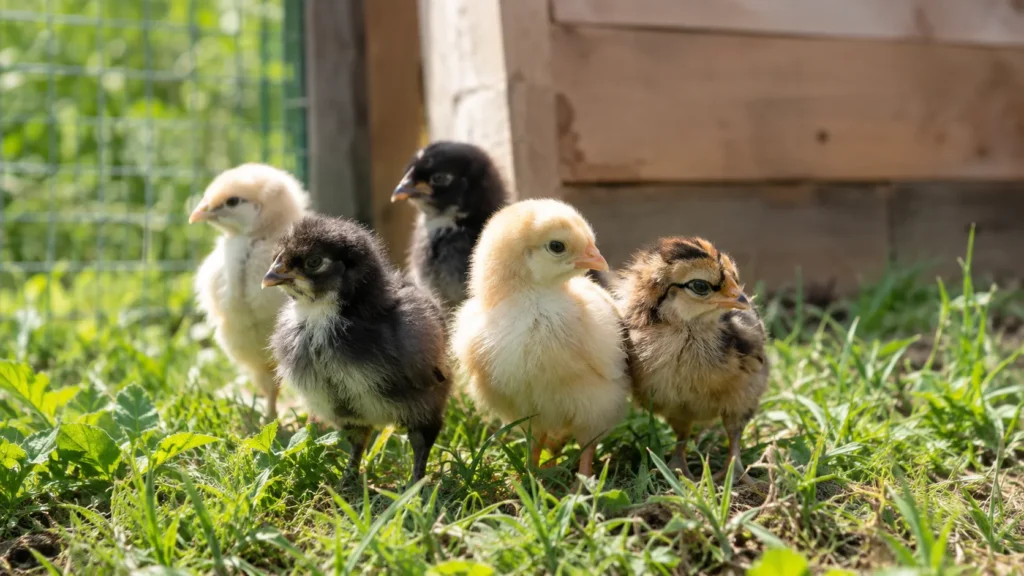
Chicks can usually go outside permanently at about 5 to 8 weeks old, when they are mostly or fully feathered, the outdoor temperature is suitable, and their coop is dry, secure, and draft-free. They can have brief supervised outdoor time earlier in warm weather, but young chicks still need protection from cold, wet conditions, predators, and adult hens.
This guide explains when chicks can go outside, how to judge readiness instead of relying only on age, and how to move them from a brooder to a coop and run safely. It is written for new backyard keepers raising chicks in spring, summer, fall, or a mild winter climate.
What Makes Chicks Ready to Go Outside?
Age is only a starting point. A chick’s feathers, body condition, weather, and housing all determine whether it can regulate body temperature outdoors. Newly hatched chicks depend on supplemental heat because they have little insulation and cannot respond well to sudden temperature changes.
By roughly 5 to 8 weeks, most chicks have developed enough feathers to cope with normal outdoor conditions, particularly when daytime temperatures are mild. They still need a warm, dry sleeping area, protection from wind, and access to feed and water at all times.
A useful expert tip is to watch how chicks behave after the brooder temperature is reduced. Chicks that huddle tightly are cold, while chicks that pant, avoid the warm area, or spread their wings may be overheated. Comfortable chicks move, eat, drink, and rest evenly throughout the space.
When Can Chicks Go Outside? The Readiness Checklist
Use the checklist below before moving chicks outdoors. Meeting most of these conditions is safer than choosing a date based only on the calendar.
| Readiness check | Recommended standard | Why it matters |
|---|---|---|
| Age and feathering | Usually 5–8 weeks old and mostly feathered | Feathers provide insulation that down cannot provide. |
| Outdoor temperature | Mild, stable weather; avoid cold snaps and wet conditions | Sudden cold or dampness can overwhelm young birds. |
| Night shelter | Dry coop with solid walls, bedding, and no drafts at chick level | Chicks lose heat quickly while sleeping. |
| Predator protection | Covered, secure run with strong wire and a closed coop | Young birds are vulnerable to hawks, cats, raccoons, and other predators. |
| Food and water | Chick starter feed and clean water available outdoors | Growing chicks need frequent access to nutrition and hydration. |
| Flock compatibility | Separate from adult chickens unless introductions are managed | Adult hens may bully, injure, or prevent chicks from eating. |
For a first move, choose a calm, dry day and keep the chicks in a protected run rather than allowing unrestricted free-ranging. A secure run makes it easier to monitor their behavior and bring them back inside if the weather changes.
How to Move Chicks Outside Step by Step
1. Confirm their feathering: Check the breast, back, and shoulders rather than looking only at the wings. Chicks that still have large areas of exposed down usually need more brooder time, especially overnight. Some slow-feathering breeds and larger breeds may need several additional days.
2. Check the forecast: Pick a stretch of dry weather without strong wind, heavy rain, or a sharp overnight temperature drop. Begin with a short daytime outing and avoid putting chicks outdoors for the first time late in the afternoon. The USDA Animal and Plant Health Inspection Service guidance on avian health also supports taking biosecurity seriously when raising and moving poultry.
3. Prepare the coop: Remove construction debris, add clean absorbent bedding, and check for gaps larger than a chick can safely pass through. Ventilation should remove moisture above the birds without creating a direct draft across the sleeping area. Make sure doors and latches close securely before the chicks arrive.
4. Set up a protected run: Use predator-resistant fencing and cover the top if hawks, owls, or climbing predators are a concern. Keep the run shaded in warm weather and provide a dry area where chicks can retreat from wind or rain. A small temporary enclosure inside the run can prevent wandering and make supervision easier.
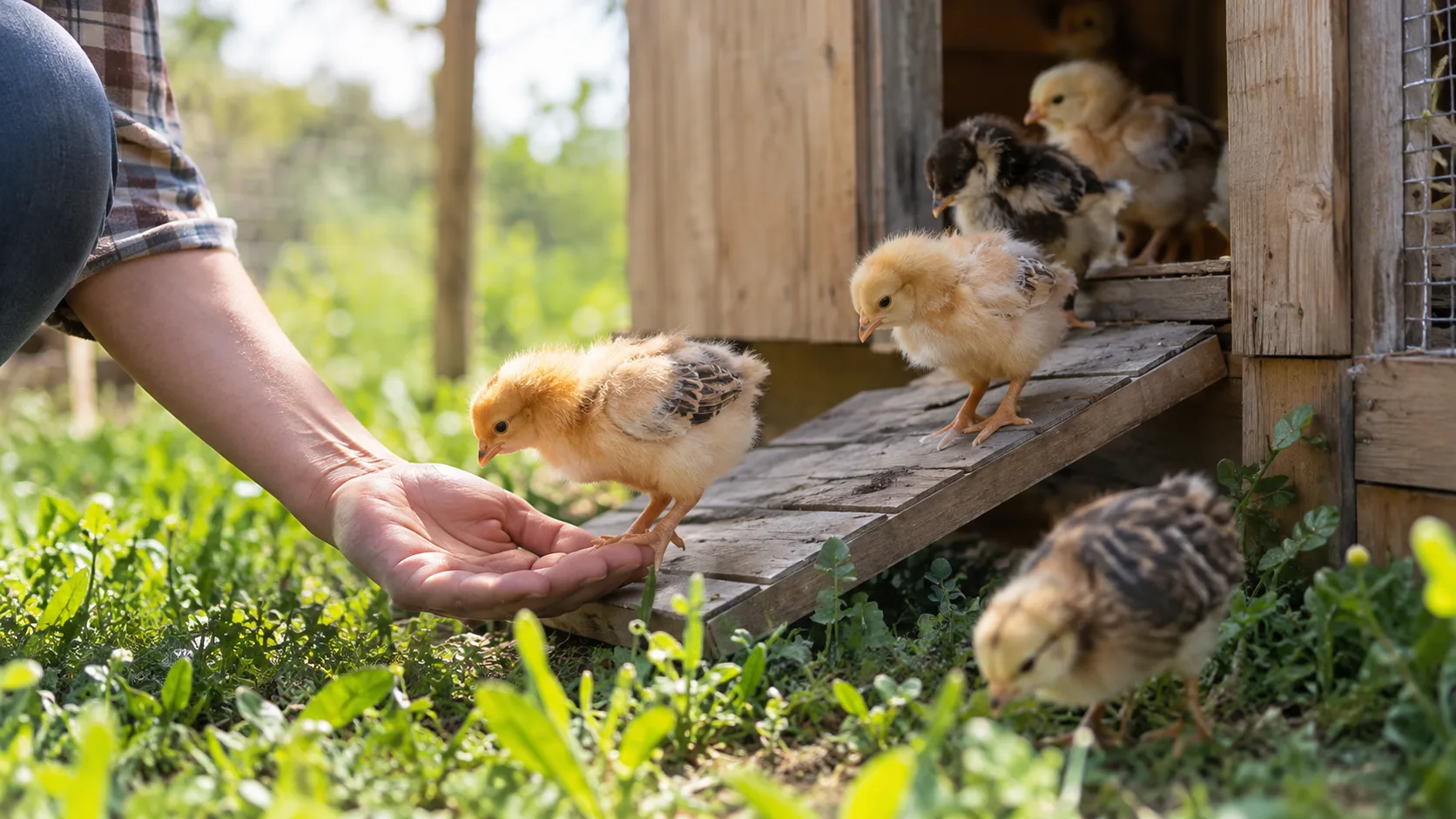
5. Start with supervised outings: Put the chicks outside for 30 to 60 minutes during the warmest part of the day. Watch their behavior instead of assuming the temperature is safe. Return them to the brooder if they huddle, chirp sharply and continuously, become sluggish, or appear cold.
6. Extend outdoor time gradually: If the first outing goes well, increase the time outside over several days. Move from an hour to several hours, then to a full mild day. Keep the brooder available until the chicks remain comfortable outdoors and the nighttime housing is reliably warm and dry.
7. Move them overnight when ready: Once the chicks are well feathered and handling the outdoor daytime temperatures comfortably, let them sleep in the prepared coop. Check them shortly after dusk and again in the morning. If they are huddled in a corner or seem chilled, improve the shelter and delay the next overnight move.
8. Monitor the first week: Weighing a sample of chicks is useful if you are concerned about growth, but daily observation is essential. Confirm that every chick can reach feed and water, inspect feet and vents, and look for bullying. Keep the brooder equipment available until the transition is clearly successful.
How Cold Is Too Cold for Chicks to Go Outside?
There is no single outdoor temperature that applies to every chick. Fully feathered chicks tolerate cool weather far better than partly feathered chicks, while wet, windy conditions are dangerous even when the thermometer reading seems moderate.
| Option | Best for | What to expect |
|---|---|---|
| Brief supervised outing | Partly feathered chicks in mild, dry weather | Use a protected area for 30–60 minutes, then return them to warmth. |
| Daytime outdoor housing | Mostly feathered chicks during stable weather | Provide shade, shelter, food, and water, and monitor behavior throughout the day. |
| Full-time coop and run | Fully feathered chicks with a dry, secure coop | They can remain outside day and night if temperatures are stable and the shelter is suitable. |
| Delayed transition | Young, small, sick, wet, or slow-feathering chicks | Keep them in a properly managed brooder until they can stay warm without huddling. |
If you are uncertain, delay the transition rather than rushing it. A few extra days indoors are usually less risky than exposing under-feathered chicks to cold rain or a sudden overnight freeze.
How to Customize the Transition for Your Chicks
For a spring hatch: Expect changing temperatures and damp ground. Use short daytime outings, keep the coop bedding dry, and wait for a stable forecast before allowing the chicks to sleep outside.
For a summer hatch: Heat can be as dangerous as cold. Provide deep shade, cool clean water, and good airflow, while avoiding the hottest part of the afternoon. Never place a brooder or small run in direct sun without a cooler retreat.
For a fall hatch: Reduce the pace of the transition because nights cool quickly and daylight fades early. Prioritize a well-insulated sleeping area and introduce daytime outdoor time before attempting overnight housing.
For a cold-climate flock: Choose hardy, well-feathered chicks and make the move during a settled weather period. The coop should block wind and precipitation while retaining safe ventilation; do not seal it airtight to hold heat.
For a mixed-age flock: Keep chicks separated but visible to adult hens at first. Use a divider or adjoining pen so the birds can become familiar without direct attacks, then supervise carefully when they begin sharing space.
Practical Care to Pair With the Outdoor Move
Prepare the destination before carrying the chicks outside. A secure run, suitable bedding, and reliable latches matter more than making the space decorative. If hawks are common in your area, review this practical guide on how to protect chickens from hawks before the first outing.
Keep chick starter feed available rather than switching abruptly to adult layer feed. For a clear feeding routine, use this guide to what to feed chickens during backyard care. Place feeders and waterers where chicks cannot easily spill bedding into them, and clean them whenever they become contaminated.
Do not assume outdoor access means chicks can safely free-range. Young birds may hide, become separated, eat unsafe objects, or encounter parasites and predators before they understand the flock’s routine.
Common Chick Outdoor Transition Problems and How to Fix Them
| Problem | Likely cause | Easy fix |
|---|---|---|
| Chicks huddle tightly | Cold, wind, dampness, or insufficient shelter | Return them to warmth, dry the housing, and shorten the next outing. |
| Chicks pant or hold wings away | Heat stress or direct sun | Add shade and airflow, provide cool water, and move outings to a cooler time. |
| Chicks become wet | Rain exposure or poor run drainage | Bring them inside, dry them gently, and repair the covered shelter before trying again. |
| One chick is bullied | Adult flock aggression or competition at feeders | Separate the victim, add multiple feeding points, and restart introductions gradually. |
| Chicks disappear in the run | Openings in fencing or unsecured doors | Inspect the entire perimeter at chick level and cover gaps with appropriate hardware cloth. |
| Chicks stop eating or drinking | Stress, inaccessible supplies, illness, or bullying | Move supplies closer, isolate any weak chick, and contact a poultry veterinarian if it persists. |
| Predator visits the enclosure | Weak fencing, exposed feed, or uncovered run | Secure the roof and perimeter, remove spilled feed, and lock chicks in the coop overnight. |
Behavior is the most useful real-time indicator. Healthy chicks should be active, responsive, and interested in feed and water; persistent lethargy, breathing difficulty, diarrhea, or isolation deserves prompt veterinary advice rather than a simple temperature adjustment.
Maintaining a Safe Outdoor Setup as Chicks Grow
Inspect the coop and run weekly because growing chicks quickly expose weaknesses in fencing, ramps, roosts, and water placement. Replace wet bedding promptly, remove manure buildup, and keep ventilation open above the birds’ head level. As the chicks grow, confirm that the run still provides enough usable space and that larger flock members cannot trap them in corners.
The University of Minnesota Extension explains that small-scale poultry housing needs protection from weather, predators, and moisture while still providing ventilation. Its guidance on small-scale poultry housing is a useful reference when improving a temporary or permanent coop.
Continue observing the flock after the transition is complete. Outdoor success is not a one-time milestone; it depends on dry bedding, secure housing, clean water, appropriate feed, and quick responses to changing weather.
Frequently Asked Questions
Can 4-week-old chicks go outside?
Some 4-week-old chicks can have short, supervised outings in warm, dry weather, but many are not ready to live outdoors full time. They usually still need supplemental heat and a protected indoor sleeping area until they are better feathered.
Can chicks go outside in 50-degree weather?
Mostly feathered chicks may tolerate 50°F during a dry, calm daytime outing if they have shelter and are monitored closely. Partly feathered chicks or chicks exposed to wind and rain may become chilled at that temperature.
Do chicks need a heat lamp outside?
Not automatically. Heat lamps can create fire risks and may not be necessary once chicks are fully feathered, but younger chicks may need a safe, properly controlled heat source in a secure brooder setup. Never use a lamp as a substitute for dry, draft-protected housing.
Can chicks go outside in the rain?
Young chicks should not be intentionally exposed to rain. Wet feathers lose insulating ability, so wait for dry conditions and provide a covered run even after the chicks begin living outdoors.
When can chicks sleep outside overnight?
Most chicks can sleep outside at about 5 to 8 weeks when they are fully feathered, healthy, and comfortable during daytime outings. The coop must be dry, draft-free at chick level, predator-resistant, and suitable for the overnight temperature.
Can chicks go outside with adult chickens?
They should not be placed directly into an adult flock without a gradual introduction. Let the groups see each other through a barrier first, then supervise short meetings and provide multiple feeding and hiding areas.
A Confident First Step Beyond the Brooder
Knowing when chicks can go outside is less about reaching a precise birthday and more about matching feathering, weather, behavior, and housing. Start with brief supervised outings, extend outdoor time gradually, and keep the chicks dry, protected, and well fed throughout the transition.
With a little preparation, young chickens can move outdoors calmly and safely. For more practical, tested backyard chicken guidance, visit Cedar & Cluck and keep building a flock routine that works for your home.
