
If your main reason for keeping chickens is a full egg basket, the breed you choose makes a huge difference. The best layers produce 250 to 350 eggs a year, while a pretty-but-leisurely breed might give you barely half that. Here are the eight best egg-laying chickens, ranked by production, with the honest trade-offs that most “best layers” lists leave out.
The quick answer
The top egg-laying chicken breeds are:
- ISA Brown — 300–350 eggs/year
- White Leghorn — 280–320 eggs/year
- Golden Comet — 300–310 eggs/year
- Rhode Island Red — 250–300 eggs/year
- Australorp — 250–300 eggs/year
- Plymouth Rock (Barred Rock) — 280–300 eggs/year
- Sussex — 250 eggs/year
- Lohmann Brown — 300+ eggs/year
The big decision underneath these numbers is hybrid vs. heritage — and it’s the part that actually matters for your flock. More on that below.
The 8 best egg-laying breeds
1. ISA Brown — the production champion
The ISA Brown is a hybrid bred specifically for eggs, and it shows: 300 to 350 large brown eggs a year, often starting young and laying nearly daily, rarely going broody. It’s also friendly and easy to handle, which makes it a top pick for beginners who want maximum eggs with minimal fuss. The trade-off (shared by all hybrids): production crashes after about two years and its productive lifespan is shorter than a heritage bird’s.
2. White Leghorn — the record holder
The Leghorn is the classic high-volume layer, producing 280 to 320 large white eggs a year — and it holds the authenticated record of 371 eggs in a single year. Leghorns rarely go broody and lay reliably year-round. The catch for backyard keepers: they tend to be flighty and standoffish rather than cuddly, so they’re built for eggs, not lap time.
3. Golden Comet — the friendly powerhouse
Another sex-link hybrid, the Golden Comet delivers 300 to 310 brown eggs a year with a calm, friendly temperament that beginners love. Like the ISA Brown, it’s an efficient early starter — and carries the same hybrid trade-off of a shorter peak-laying window.
4. Rhode Island Red — the long-game winner
Rhode Island Reds lay 250 to 300 brown eggs a year, and here’s what most lists miss: because they keep producing steadily for five-plus years while hybrids fade after two, a Rhode Island Red often out-produces a hybrid over its full lifetime. They’re hardy, excellent foragers, and reliable winter layers. Hens can be a bit assertive, but they’re one of the best all-round choices for sustained eggs.
5. Australorp — the balanced all-star
The Australorp pairs excellent output — 250 to 300 brown eggs a year — with a famously calm, friendly nature, and it once set a record of 364 eggs in 365 days. Hardy in most climates and a steady winter layer, it’s the breed to pick if you want big egg numbers and a pleasant, manageable bird.
6. Plymouth Rock (Barred Rock) — the hardy classic
The Barred Rock is a backyard staple that lays 280 to 300 brown eggs a year despite being a dual-purpose breed. It matures early, lays for a good 2–3 years, tolerates cold superbly, and has an easygoing personality. A dependable, beginner-friendly producer.
7. Sussex — the dependable forager
The Sussex lays around 250 tinted brown eggs a year and keeps going through cooler months better than many. Curious, friendly, and a great forager, it’s a solid, well-rounded layer with a pleasant temperament.
8. Lohmann Brown — the commercial favorite
A hybrid widely used in commercial egg production, the Lohmann Brown lays 300-plus brown eggs a year with high efficiency. Like other production hybrids, it’s a generous early layer with a shorter productive lifespan.
Egg production at a glance
| Breed | Eggs/year | Egg color | Type | Temperament |
|---|---|---|---|---|
| ISA Brown | 300–350 | Brown | Hybrid | Friendly |
| White Leghorn | 280–320 | White | Heritage | Flighty |
| Golden Comet | 300–310 | Brown | Hybrid | Friendly |
| Rhode Island Red | 250–300 | Brown | Heritage | Confident |
| Australorp | 250–300 | Brown | Heritage | Calm, friendly |
| Plymouth Rock | 280–300 | Brown | Heritage | Easygoing |
| Sussex | ~250 | Tinted | Heritage | Friendly |
| Lohmann Brown | 300+ | Brown | Hybrid | Friendly |
Hybrid vs. heritage: the choice that really matters
This is the decision behind the numbers, and it’s worth understanding before you buy:
- Hybrids (ISA Brown, Golden Comet, Lohmann Brown) lay the most eggs in their first two years — they start early, lay almost daily, and are very feed-efficient. But production drops sharply after year two, they can be more prone to reproductive issues, and they’re typically replaced every 2–3 years.
- Heritage breeds (Rhode Island Red, Australorp, Plymouth Rock, Sussex) lay somewhat fewer eggs per year but keep producing steadily for five to seven years. Over a full lifetime, a good heritage hen can match or beat a hybrid’s total — while living longer and staying in your flock.
So the honest answer to “which lays the most” depends on your timeframe: for peak eggs fast, choose a hybrid; for the most eggs over many years (and a longer-lived flock), choose a heritage breed. Many keepers run a mix of both.
How many hens for your egg needs?
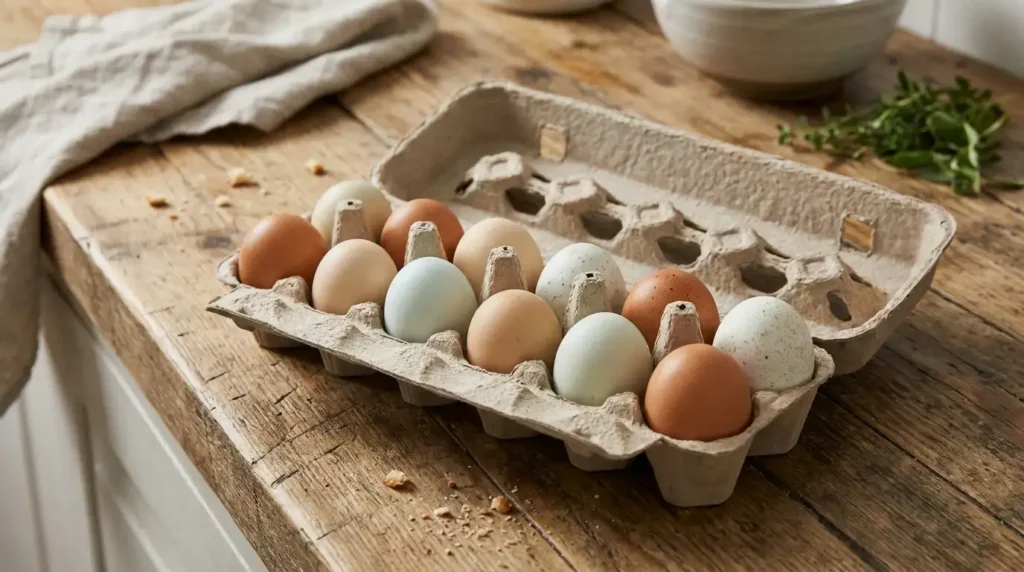
High-producing hens lay roughly 4–6 eggs a week each, so a small flock goes a long way:
- 3 hens → about a dozen and a half eggs a week
- 5 hens → roughly 2 dozen a week
- 6 hens → enough for a typical family with extras to share
For most households, 4 to 6 good layers is the sweet spot.
