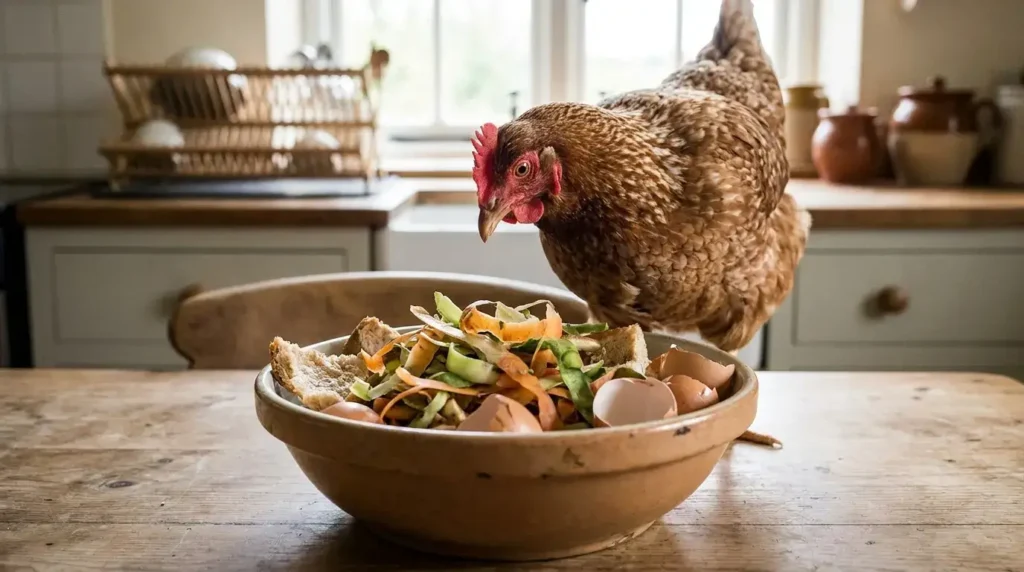
Chickens will eagerly gobble almost anything you toss them — which is exactly why it’s on you to know what’s off-limits. Most kitchen scraps are fine, but a handful of foods are genuinely toxic and a few others need real caution. Here’s the clear list of what chickens can’t eat, why each one is dangerous, and the safer way to handle the borderline cases.
The quick answer
Never feed your chickens these foods:
- Avocado pits and skins
- Green or raw potato and green peels
- Dried or raw beans
- Chocolate, coffee, and caffeine
- Large amounts of onion
- Moldy or spoiled food
- Very salty and junk food
- Green tomato, and tomato/potato plant leaves
- Raw eggs
- Rhubarb leaves
- Alcohol
- Candy and sugary processed food
Most of these are rare in a normal scrap bucket, but a few — avocado, green potato, moldy food, salty snacks — slip in easily. Below is what each one does and how to stay safe.
Foods that are toxic to chickens
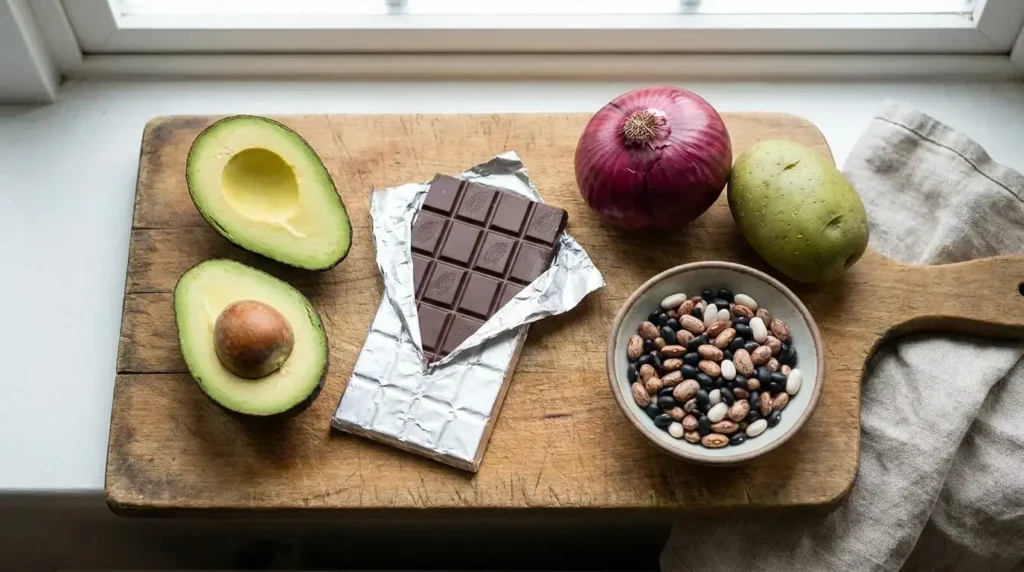
These contain real toxins and should never be fed, in any amount:
- Avocado pits and skins. They contain persin, which is toxic to birds and can affect the heart. The green flesh itself is safe, but it’s safest to skip avocado entirely rather than risk the pit or skin.
- Green or raw potato and green peels. Green potato and its peels contain solanine, a toxin. Plain cooked potato is fine, but never feed green or raw potato.
- Dried or raw beans. Uncooked and dried beans contain a compound (phytohaemagglutinin) that is highly toxic to chickens — among the most dangerous foods on this list. Only thoroughly cooked beans are safe.
- Chocolate, coffee, and caffeine. These contain theobromine and caffeine, both toxic to birds and capable of causing heart problems.
- Rhubarb leaves. They contain oxalic acid and are toxic. Keep chickens away from the leaves entirely.
- Alcohol. Toxic to chickens and never appropriate in any quantity.
Foods to avoid or feed only with caution
Not outright poisons, but problematic enough to keep off the menu — or limit carefully:
- Onions (large amounts). Onions contain a compound that can damage red blood cells and cause anemia if chickens eat a lot. A tiny bit cooked in a scrap is unlikely to hurt, but don’t make onion a regular treat.
- Moldy or spoiled food. Mold can produce mycotoxins that are dangerous to chickens. Never feed anything moldy — and check that their feed hasn’t gone moldy in storage, either.
- Salty and junk food. Chickens can’t process much salt, and salty snacks, chips, and processed human food can harm them. Skip it.
- Green tomatoes and nightshade plant parts. Ripe tomatoes are a fine treat, but green (unripe) tomatoes and the leaves and stems of tomato, potato, and eggplant plants are part of the nightshade family and contain toxins. Feed only ripe fruit, and keep the plant foliage away.
- Raw eggs. Nutritionally they’re not toxic, but feeding raw eggs can teach hens to recognize and eat their own eggs — a frustrating habit to break. Always cook eggs before offering them.
- Citrus (debated). Some keepers feed small amounts with no issue; others avoid it over concerns about calcium absorption. Since chickens generally aren’t keen on it anyway, it’s easy to simply leave out.
- Apple seeds. Apple flesh is a great treat, but the seeds contain a trace of cyanide. Just core apples before sharing them.
Why this matters more than you’d think
Chickens have some instinct to avoid harmful food — many will turn up their beaks at green potato peels or moldy scraps. But that instinct isn’t reliable, especially with curious or hungry birds, so you can’t count on it. The safe approach is to control what goes in the scrap bucket rather than trust the flock to sort it out.
It also helps to remember the bigger picture: treats and scraps should make up no more than about 10% of a chicken’s diet. Their real nutrition comes from a complete feed. Keeping treats limited naturally reduces the chance of a toxic food becoming a real problem.
Signs a chicken may have eaten something toxic
If a bird gets into something it shouldn’t, watch for:
- Lethargy or weakness
- Loss of appetite
- Diarrhea
- Difficulty breathing
- A sudden drop in laying
If you see these signs and suspect a toxic food, remove the source, provide fresh water, and contact a vet experienced with poultry. Quick action matters most with the genuinely toxic items like dried beans or avocado pit.
